
Bangkok street food vendors may raise made-to-order meal prices by 5 baht as costs climb
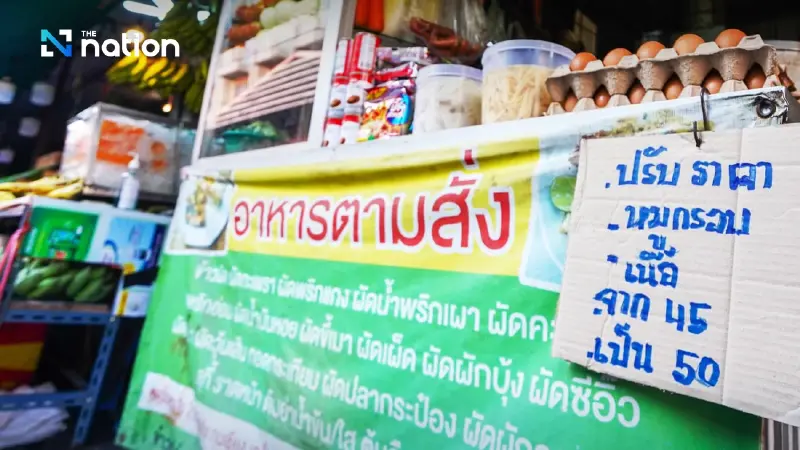


The Bangkok Vendors Association says rising fuel, transport and ingredient costs could push street vendors to lift prices for made-to-order dishes by around 5 baht per menu item this month, as margins are squeezed.
Street food vendors in Bangkok are preparing for possible price increases of around 5 baht per dish this month, as higher energy, transport and food input costs continue to bite, according to the Bangkok Vendors Association.
Yada Pornpetrampa, president of the association, said the recent rise in oil and energy prices, along with transport costs, has begun to affect prices across multiple categories—particularly among small and medium-sized operators whose products are not covered by government price controls. She said these businesses are likely to adjust prices within the month.
She added that the pressure is not limited to oil. Costs are also rising for ingredients, packaging and other consumables used in food sales, with steady increases particularly in fresh vegetables and staple items used daily by made-to-order eateries.
As an example, holy basil leaves—a key ingredient in many Thai dishes—previously cost around 35-40 baht per kilogram, but have now risen to about 50-55 baht, an increase of roughly 30-40%. Medium to large limes, which once averaged about 3 baht each, are now around 4.50-5 baht per lime.

Other costs have also increased, including plastic bags, hot and cold food bags, plastic cutlery, and packaging materials—key expenses for street vendors and small restaurants.
“After the international war-related tensions, many items have started rising quickly. Even if some transport costs have not increased immediately, some suppliers are worried about future costs and have begun adjusting prices in advance,” she said.
Yada said vendors do not typically raise prices in small increments of 1-2 baht. Instead, when increases become unavoidable, they tend to adjust by around 5 baht per menu item, which better matches the combined rise in multiple costs at the same time.
However, she said many vendors are trying to delay price increases as long as possible, concerned about consumers’ purchasing power. If prices climb too much, people may buy fewer ready-to-eat meals or cook at home more often, reducing vendors’ sales.
“Many vendors are willing to accept lower profits to keep their customer base, because most customers are regulars—especially office workers who often buy takeaway after work. If prices rise too sharply, customers may buy less frequently or switch to cooking at home,” she said.

She added that work-from-home policies have also hurt street vendors in several areas—particularly office districts such as Silom and Sathon—because many stalls rely heavily on office workers buying meals at lunchtime and after work. With fewer people on-site, footfall and sales have dropped, even as input costs continue to rise.
Yada said street vendors are economically vulnerable due to limited capital and little ability to stockpile ingredients or restructure costs, while relocating selling points is difficult because most areas already have established vendors.
She urged the government to monitor and regulate consumer goods prices more closely, not only fuel or transport costs, but pricing across the entire supply chain. During crises such as wars or natural disasters, she said, some price rises are driven by market anxiety and occur in advance.
“I want the relevant agencies to seriously inspect prices, because many items have already risen significantly. Without clear oversight measures, this could affect small vendors and the overall cost of living,” she said.
