
From Prison Walls to Design Halls: The Creative Rebirth of the South


How a former central prison and an industrial power barge are being transformed into Southern Thailand’s premier creative hubs
- A former central prison in Nakhon Si Thammarat, Southern Thailand, is being converted into a creative and design center (TCDC) to serve as a hub for local artisans and entrepreneurs.
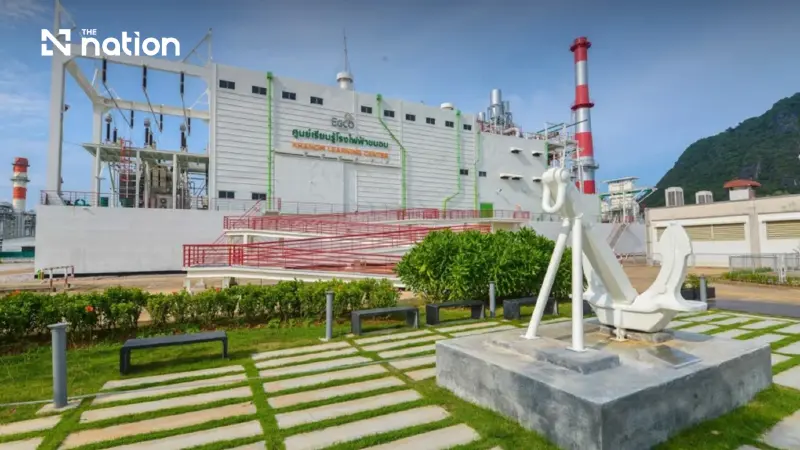
- In a similar act of adaptive reuse, Thailand's first floating power plant barge has been transformed into an award-winning interactive learning center in the Khanom district.
- These projects signify a new approach to regional development, using historical structures to foster innovation and decentralize Thailand's creative economy from its concentration in Bangkok.
How a former central prison and an industrial power barge are being transformed into Southern Thailand’s premier creative hubs.
Nakhon Si Thammarat, affectionately known as 'Khon' to locals, is rapidly redefining the parameters of cultural tourism and urban renewal in Thailand. Long celebrated for its ancient temples and rich culinary heritage, this Southern province is taking a bold, creative leap forward by transforming its historical relics into vibrant hubs of modern innovation.
Rather than allowing spaces associated with decay or confinement to fade into obscurity, the province is championing an enlightened approach to regional development.
A prime example of this progressive shift is the upcoming Thailand Creative & Design Center (TCDC) Nakhon Si Thammarat. In a brilliant feat of architectural rehabilitation, this new creative sanctuary is being ingeniously housed behind the imposing pink walls of the province's former central prison.
By shedding its dark, oppressive past of confinement and state surveillance, this heritage site is breaking physical and psychological boundaries. It will soon serve as a public incubator where local designers, artisans, and open-minded entrepreneurs can collaborate to develop modern Southern Thai art and "creative-economic" projects.

Further up the scenic coast, in the district of Khanom, the spirit of adaptive reuse takes on an industrial maritime twist. The Khanom Learning Center masterfully champions this ethos by repurposing Thailand's very first floating power plant barge into a world-class, interactive museum.
Operated by the Electricity Generating Public Company Limited (EGCO Group), this unique venue recently earned the prestigious Architectural Conservation Award.
The accolade recognises the project's success in preserving a massive piece of industrial maritime heritage while transforming its interior into an immersive learning space dedicated to Science, Technology, Engineering, Arts, and Mathematics (STEAM).

Together, these two landmarks represent a powerful shift in how regional Thailand approaches its own history. For decades, the creative economy was heavily centralised in Bangkok, forcing provincial talent to migrate to the capital to find funding and institutional support.
Projects like the TCDC prison conversion and the Khanom power barge challenge this status quo. They demonstrate that regional history is not a static museum piece to be preserved in amber but a dynamic foundation for future innovation.
For the modern traveller, design enthusiast, and museum-goer, these sites offer a profound experience. They bridge Nakhon Si Thammarat’s complex history with a bold, creative future, proving that with visionary design, even the most rigid structures of the past can be liberated to fuel the imagination of the next generation.

Photo Credit: Khanom Learning Center Page, EGCO
