
Tragedies that could have been averted … if only people were more responsible


Thai society has suffered several accidents or serious dangers that were unexpected without doubt. But most of them arose from pretentiousness, arrogance, machoism, and the carelessness of human beings of all genders, ages, and races.
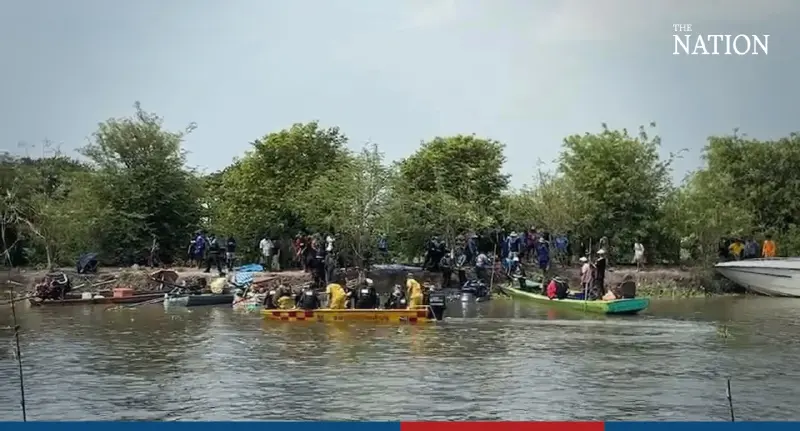
In the most recent case, the rider of a jet ski at Klong Bang Sao Thong, Samut Prakan province, abandoned his vehicle and plunged into the water. The jet ski drifted on without the rider and crashed into three people, killing them instantly.
Throughout the country, unscrupulous people are using small canals as their racing venues, endangering the many small boats and long-tailed boats that course along. Innocent people have lost their lives because of the irresponsible behaviour of a few.


I myself was involved in a road accident. But by being able to maintain my awareness, I could prevent the car from spinning out of control and colliding with others. Four or five cars were parked in the vicinity. They realised that I was losing control over my vehicle. If I had let it crash into another car, the damage would have been severe and could even have caused the death of a person. So I decided to let the car crash into the cement barrier, although, at a low speed. It left my eye socket bruised for several days. I’m sharing this personal tale to illustrate the concept of owning responsibility for one’s vehicle. If the driver is able to maintain awareness, you can sometimes minimise the impact of the accident to a certain extent, if not altogether avoid an accident.
Changing mindset
There’s a saying that the bus driver, boat driver, airplane pilot are responsible as the captain. They hold the controls and therefore they must remain with the vehicle until the last minute, and if necessary even make sacrifices to protect passengers. But the mindset of people in recent times is obsessed with oneself. The values of morality and sacrifice that the previous generations had treasured are now mostly overlooked.
My best intention of writing this article is to clarify to the open-minded reader that this is not about getting some satisfaction. I can only wish there was a greater sense of responsibility in all government agencies, such as the Marine Department, the administrative department, or perhaps collectively the Bangkok Metropolitan Authority. For example, we regularly see jet skis riding fast on the Chao Phraya River in the midst of large groups of Thai and foreign tourists, as it happens also in the Bang Pakong River, in Chachoengsao province, my hometown. The local areas and communities must be careful and instal measures to prevent dangers for themselves and community members. Every time there’s a tragedy, we hear people say: “Hopefully, it won’t happen again.” But it does happen, again and again.
Some months ago, there was fatal accident in Bangkok, involving a policeman from Phya Thai Police Station crashing his Big Bike motorcycle into a doctor from Chulalongkorn University at a zebra crossing near Ramathibodi Hospital.
In the beginning, there were slogans, people expressed condolences over her death, bouquets of flowers were placed, and kiosks set up in the area where the incident occurred. But as time passed, people began to forget the accident, and similar incidents happened. This backsliding is happening in other areas of our society too. Just recently, a superintendent at the same station was removed for an offence under Section 157 involving a"Kamnan Nok", where a police killed a police for personal benefits. It is not my intention to blame anyone. But we need responsible officials in Thai society, and we must praise and encourage them when they perform their duties correctly. At the same time, we should get tough with errant officials and take strict action against such people.
Strict monitoring required
The Thai Ship Act of 1938 considers all types of water vehicles as "boats". By that logic, jet skis, and supercars using car frames to make a boat hull, must be called "ships". Today, technology is more advanced and changed our world beyond recognition. It is likely that down the road, other types of vehicles might emerge, bringing a new set of problems for the state. When a jet ski will be used to run in the canal to ferry goods, you must receive permission in order to use it for traveling. On land, we have seen vehicles towering like two-storey buildings. Thinking about running, thinking about taking it into the forest, you still have to ask for permission. When training in the field, you still have to report or announce it to everyone because it's not an ordinary daily routine.
The events that occurred will be cited as “ship collision”, but that is considered a force majeure event. Driving and racing come with a lot of enthusiasm. When a boat rider gets scared and effectively abandons the boat, it is a shame that this irresponsible behaviour has caused fatalities. We often see irresponsible conduct on land, water and air traffic. This is at odds with the country’s soft power that is being promoted.
Amorn Wanichwiwatana, DPhil (Oxon), is a former member of the Constitution Drafting Commission and a political scientist at Chulalongkorn University.
