
Anutin seizes dissolution moment to take control of the political game
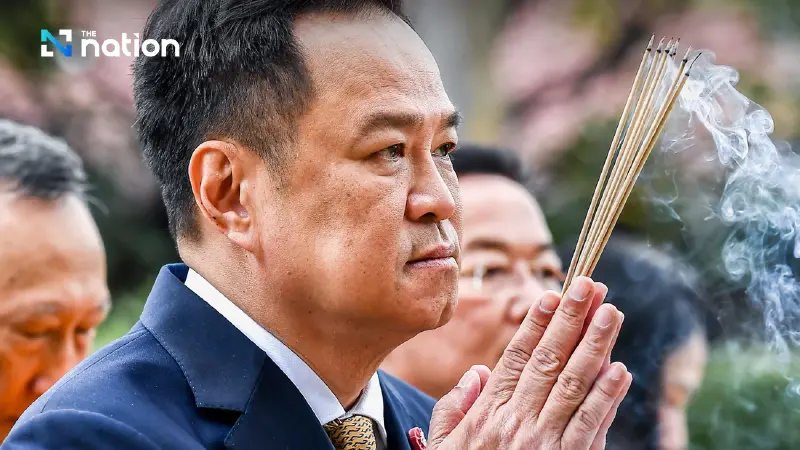


Anutin’s declaration that he is ready to dissolve the House of Representatives on December 12, if the opposition cannot wait has shaken the political landscape, signalling that from this point on he is the one setting the pace—and the opposition must follow his lead.
The moment Prime Minister Anutin Charnvirakul declared on November 20 that he was ready to dissolve the House of Representatives on December 12 if the opposition “could not wait any longer,” it became clear this was no empty threat. It was a calculated political manoeuvre, a move to seize back the initiative and restore Bhumjaithai Party’s strategic advantage in shaping the political landscape.
For weeks, Pheu Thai had been dominating the media narrative through party leader Julapan Amornvivat, who insisted the opposition would table a no-confidence motion against the government and was simply waiting for the most effective timing.
But Anutin, with sharp political instinct, neutralised the threat swiftly. His reasoning was straightforward: regardless of how strong or weak the debate might be, his minority government would inevitably lose the vote.
More critically, Anutin understood that once the no-confidence vote took place, the result would form part of the next election narrative. Pheu Thai would campaign relentlessly on the theme that Anutin’s government had been ousted by Parliament, a politically devastating storyline. Anutin had no intention of letting that happen.
Ripple effects for the People’s Party
Anutin’s move also placed the People’s Party in a difficult position. The MOA (Memorandum of Agreement) they signed with Bhumjaithai required constitutional amendments to pass their second and third readings before proceeding to a referendum around late March.
A December 12 dissolution would collapse that timeline entirely.

Even if Anutin ultimately chose not to dissolve Parliament and instead allowed the no-confidence debate to go ahead, something Bhumjaithai is determined to avoid, the People’s Party would still face a dilemma: Would they vote against the very prime minister they helped install under the MOA? If they voted no confidence, Bhumjaithai could accuse them of breaking the agreement instead.
Any scenario that resulted in the collapse of the Anutin government would reopen the field for Pheu Thai to push their final remaining prime ministerial candidate, Chaikasem Nitisiri, a move that could lead to another political deadlock.
Why Bhumjaithai holds every advantage
Bhumjaithai enters this moment with strong public momentum, despite being in power for only two months. Its policies have quickly gained traction:
• The “Let's Go Halves Plus” scheme, designed to drive public spending, has created anticipation for the next phase, a psychological hook just months before the new election cycle.
• The Thai–Cambodian border security overhaul, portrayed as a clear break from the previous Pheu Thai government’s approach, has strengthened Bhumjaithai’s image as decisive and competent.
• The political fallout from the leaked clip of Paetongtarn Shinawatra with Hun Sen, which ultimately led the Constitutional Court to remove her as prime minister, severely damaged Pheu Thai’s standing and redirected public sentiment in Bhumjaithai’s favour.


• The government’s technocratic image, bolstered by respected ministers such as Ekniti Nitithanprapas, Deputy PM and Finance Minister, and Suphajee Suthumpun, Commerce Minister, has reinforced confidence through visible economic and trade achievements.
Meanwhile, Anutin has employed a classic political tactic: “strike first to gain advantage.” His early float of second and third prime ministerial candidates, even if subject to change later, grabbed media attention and fed the narrative of Bhumjaithai as the dominant force.
This approach reportedly displeased Democrat leader Abhisit Vejjajiva, but the timing worked. The dissolution signal immediately strengthened Bhumjaithai’s public position.
A party ready for battle
Bhumjaithai’s readiness is evident. Its expanding alliances with influential regional political families, the “big houses”, are consolidating ahead of the next election.
This Sunday, November 23, the party’s extraordinary meeting is expected to unveil alliances with the powerful political clans of Suphan Buri and Chonburi, further fortifying the “Blue Camp” as a formidable force.
With more MPs preparing to defect and join the bloc, Bhumjaithai is positioning itself to challenge for the largest number of parliamentary seats.
Anutin sets the board, and everyone else must follow
It is now evident that Anutin, backed by a reinvigorated Blue Camp, is dictating the pace and direction of Thai politics. Whether through a December dissolution or a forced recalibration of opposition strategy, all political players are being compelled to respond to his timing and his moves.
In this round, the advantage belongs squarely to Bhumjaithai.
