
Unlicensed Pathum Thani meatball factory raided over nationwide sales
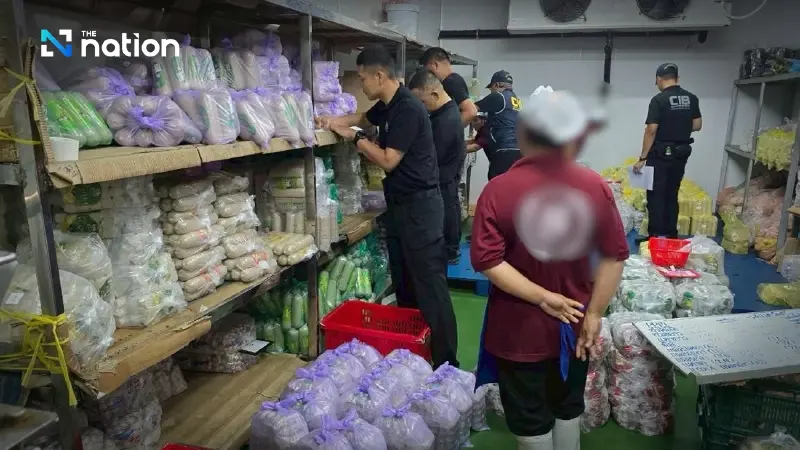


CIB, FDA and livestock officials seized illegal meat products and machinery worth over 7 million baht from an unlicensed Pathum Thani factory
- Authorities raided an unlicensed processed-meat factory in Pathum Thani for illegally producing meatballs and sausages in unhygienic conditions.
- Officials seized over 132,000 items, including processed products, raw materials, and machinery, valued at more than 7 million baht.
- The factory was found to be using fake or cancelled food serial numbers on its products, which were distributed nationwide.
- The owner faces multiple charges under the Food Act, including operating without a valid license, which could result in prison time and fines.
Authorities have raided an unlicensed processed-meat factory in Pathum Thani after finding pork sausage, meatballs and other products allegedly made without proper approval and distributed through agents nationwide.
The Central Investigation Bureau, the Department of Livestock Development, the Food and Drug Administration and Pathum Thani Provincial Public Health Office jointly inspected the factory in Lam Luk Ka district after receiving information about suspected illegal production of processed meat products.

Officials seized 18 categories of evidence, totalling 132,725 items, including processed meat products, production equipment and machinery. The seized items were valued at more than 7 million baht.
The operation followed information passed to the Consumer Protection Police Division by the Department of Livestock Development, which asked officers to inspect a factory suspected of producing processed meat products such as sausages, pork sausage and meatballs without permission.
Investigators found that the factory was allegedly producing large quantities of meatballs in unhygienic conditions before packaging and distributing them through agents across the country.
On May 29, officers from Sub-division 4 of the Consumer Protection Police Division, together with officials from the Department of Livestock Development, the FDA and the Pathum Thani Provincial Public Health Office, searched a factory in Bueng Thong Lang subdistrict, Lam Luk Ka district.
At the site, a man identified as Atthaphon, whose surname was withheld, presented himself as the business owner.
During the inspection, officials seized several groups of allegedly illegal products. These included six types of food products without food serial numbers, totalling 6,109 bags; 10 types of products bearing cancelled food serial numbers, totalling 2,507 bags; and four types of products allegedly using fake food serial numbers on their labels, totalling 1,800 bags.

Authorities also seized 800 kilogrammes of raw materials used in production, including chicken, pork, beef, chicken skin and beef tendon.
Production machinery and equipment were also confiscated, including meat grinders, mixers, meatball-forming machines, boiling pots and conveyor belts.
In total, officials seized processed meat products from 20 brands, amounting to 10,416 bags, along with machinery and raw materials worth more than 7 million baht. The items were handed over to investigators from Sub-division 4 of the Consumer Protection Police Division for legal action.
Officials later found that the factory had previously held a food-production licence, but the licence expired on December 31, 2025, and had not been renewed.
An inspection of the factory’s production standards found that it failed to meet cleanliness and hygiene requirements.

Atthaphon allegedly admitted that the factory had been operating for about 10 years and that the food-production premises licence had not been renewed. He said the factory produced Vietnamese-style pork sausage, chicken sausage, chicken rolls, pork balls, beef balls and chicken balls for customers nationwide.
The factory had a production and distribution capacity of about 30 tonnes a month, with finished products sent to agents for further distribution across the country. Its average monthly revenue was about 3 million baht.
Officials collected food samples for laboratory testing by the Department of Medical Sciences. The tests will check for contamination by prohibited substances, such as borax, as well as the type and amount of preservatives used and disease-causing microorganisms.
If further prohibited substances are found, the factory may face an additional offence under the Food Act B.E. 2522 for producing impure food. The offence carries a penalty of up to two years in prison, a fine of up to 20,000 baht, or both.
Initial alleged offences under the Food Act include setting up a food-production factory for sale without permission, which carries a penalty of up to three years in prison, a fine of up to 30,000 baht, or both.
Another alleged offence is producing food for sale with incorrect labelling, which carries a fine of up to 30,000 baht.
Authorities also cited the alleged offence of producing fake food for sale, which carries a penalty of six months to 10 years in prison and a fine of 5,000 to 100,000 baht.
The factory may also face a charge of producing food after its licence expired without submitting a renewal application. This carries a daily fine of between 500 and 1,000 baht for the entire period during which the licence remained expired.
If laboratory results show disease-causing microorganisms or prohibited ingredients, or substances used beyond legal limits, the operator could face an additional charge of producing impure food for sale, punishable by up to two years in prison, a fine of up to 20,000 baht, or both.


