
Thai-flagged vessel reportedly attacked near Hormuz
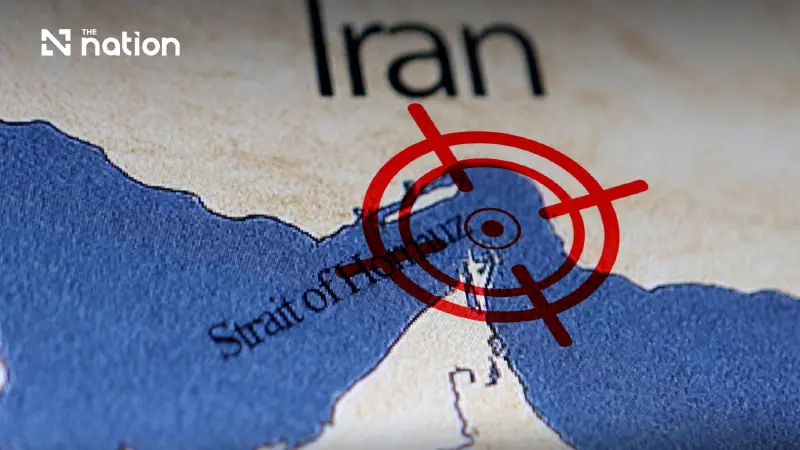


Iranian forces reportedly attack a Thai-flagged vessel in the Strait of Hormuz as US and Iranian strikes intensify across the Gulf
- A vessel sailing under the Thai flag was reportedly attacked by Iranian forces while passing through the Strait of Hormuz.
- The report originated from Iran's semi-official Tasnim news agency, but there has been no immediate confirmation from Thai authorities or independent maritime organizations.
- Details about the vessel, its cargo, potential damage, or crew injuries have not been disclosed.
- The alleged attack occurred amid escalating military exchanges between the United States and Iran, which have increased the risk to commercial shipping in the region.
A vessel sailing under the Thai flag was reportedly attacked by Iranian forces while attempting to pass through the Strait of Hormuz, as escalating exchanges between the United States and Iran placed commercial shipping in one of the world’s busiest energy corridors at growing risk.
Iran’s semi-official Tasnim news agency reported the attack but did not identify the vessel or disclose its ownership, cargo, destination or the nationality of those aboard.
There was no immediate confirmation from Thai authorities, independent maritime organisations or the vessel’s operator. It also remained unclear whether the ship was damaged or whether any crew members were injured.
The reported attack came amid intensified military activity in and around the Strait of Hormuz, where Iran has warned shipping companies to comply with notices issued by its armed forces.
Tasnim also reported that two oil tankers caught fire following explosions after attempting to pass through an area described by Iranian media as a minefield in the southern part of the strait.
The report cited the Islamic Revolutionary Guard Corps Navy as saying that the waterway had become “extremely unsafe” and was completely closed because of what it described as US aggression.
Iran claims four tankers intercepted
The Islamic Revolutionary Guard Corps, or IRGC, separately claimed that it had intercepted four oil tankers attempting to pass through the Strait of Hormuz with US military support.
The IRGC Navy said the vessels were ordered to remain in place during a joint missile-and-drone operation.
It warned shipowners to observe Iranian military notices rather than rely on protection offered by US forces.
The four vessels were not identified, and their locations, registration details and condition were not disclosed.
The reported incidents have raised concerns about the safety of commercial vessels using the Strait of Hormuz, a strategically important route for global oil and gas shipments.
Any prolonged disruption to shipping in the area could affect freight charges, insurance costs, energy supplies and global commodity prices.
US launches seventh consecutive night of strikes
The maritime tensions unfolded as the United States launched a seventh consecutive night of military strikes on Iran.
US Central Command, or CENTCOM, announced through its X account that the latest operation began at 7pm GMT on Friday, or 3pm on the US East Coast.
The US military said the new wave of air strikes was intended to “continue degrading Iran’s military capabilities”.
CENTCOM did not immediately provide a detailed list of targets or disclose the full extent of the damage.
Iranian authorities said previous US strikes had damaged civilian infrastructure in the country’s south, including bridges, airports, power facilities and railway stations.
Iranian Foreign Minister Abbas Araghchi said three people killed in an attack on a bridge in Bandar Khamir were among eight people who died in overnight US strikes.
Tasnim also cited a deputy governor of Bushehr province as saying that the United States had attacked an Iranian oil tanker docked at Kharg Island.
The reported casualties and damage were based on accounts from Iranian officials and state-linked media and had not been independently verified.
Iran retaliates against US-linked targets
Iran’s military said it retaliated by attacking US assets and military bases in Bahrain, Jordan, Kuwait and Qatar.
Qatari authorities said the country’s armed forces intercepted an incoming attack from Iran.
A child was injured by falling debris following the interception, according to Qatari officials.
Iran also claimed responsibility for attacks on other US-linked military sites across the region, although the extent of any damage remained unclear.
The exchanges have increased concern that the conflict could spread further across the Gulf, where several countries host US military personnel and facilities.
IRGC claims US drone shot down
The IRGC Navy also claimed that it shot down a US MQ-9 drone over the Iranian port city of Bushehr.
It said the aircraft was intercepted and destroyed by a newly developed air-defence system operating under Iran’s integrated air-defence network.
The United States did not immediately confirm the loss of an MQ-9 drone over Bushehr.
The reported attack on the Thai-flagged vessel, together with the tanker incidents and competing military claims, underscores the growing danger facing civilian and commercial shipping as the confrontation between Washington and Tehran intensifies.
