
Trump orders Hormuz blockade, drops 20% fee plan for Gulf investment deals
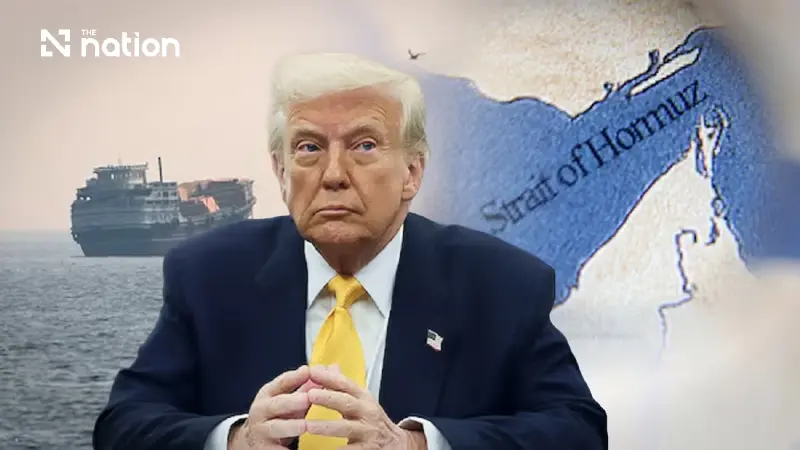


US President Donald Trump has escalated military pressure on Iran by ordering a full blockade of Iranian ports, while abruptly dropping a proposed 20% security fee on ships passing through the Strait of Hormuz in favour of major trade and investment deals with Arab states.
The Middle East has entered another highly fragile moment after US President Donald Trump escalated military measures by ordering a full-scale blockade of Iranian ports.
However, Trump surprised global markets by announcing the cancellation of his plan to impose a 20% security protection fee on commercial vessels passing through the Strait of Hormuz, barely 24 hours after first unveiling the proposal.
Instead, he said the United States would pursue “massive” trade and investment negotiations with Arab states, amid criticism that the reversal was an attempt to retreat from a policy that had drawn strong opposition both at home and abroad.
Trump’s decision to step back from the 20% fee came after he claimed to have spoken with several “kings and rulers” in the Arab region, who offered what he described as a more attractive alternative.
Writing on Truth Social, Trump said he would replace the proposed fee with large-scale trade and investment deals that Gulf countries would bring to the United States.
Although no clear details have been released on the value of these deals, Trump insisted the amounts would be “massive” and fair to the United States, which he said was bearing the burden as the “guardian of Hormuz” to protect the interests of other countries, including China.
Some analysts described the move as another example of what markets have dubbed “TACO Trump” — threatening a tough measure before backing down when faced with pressure.
While easing the economic burden on Arab allies, the United States has intensified military pressure on Iran.
The US Central Command, or Centcom, confirmed the start of a naval blockade targeting all major Iranian ports, aimed at cutting off oil-export routes that are a key source of revenue for Tehran.
The operation involves at least 19 warships, including two aircraft carriers, and more than 1,000 Marines.
The US has also launched air strikes for a fourth consecutive day, targeting Iran’s coastal defence systems and drone-launch bases in an effort to reduce Tehran’s ability to attack commercial vessels.
The escalation effectively brings an end to the memorandum of understanding, or temporary ceasefire agreement, reached in June.
Iran has not remained idle. It has retaliated by launching drones and missiles at targets in neighbouring US-allied countries, including Bahrain, Kuwait and Jordan.
Iran has also attacked US and United Arab Emirates oil tankers, causing fires. Reports said at least two civilian crew members, most of them Indian nationals, had been killed and dozens more injured in attacks over the past week.
The fighting has sharply reduced traffic through the Strait of Hormuz, with only 19 vessels passing through the waterway in 48 hours, compared with the normal level of around 140 vessels per day.
The situation has caused heavy volatility in the oil market. Brent crude surged to US$87 per barrel before easing after news emerged that Trump had scrapped the 20% fee plan.
Tensions could intensify further after Trump issued his latest warning that, if Iran does not return to the negotiating table next week, the United States will expand its attacks to include civilian infrastructure, including power plants and bridges across Iran.
The warning has alarmed international law experts, as deliberate attacks on infrastructure essential to civilian life may violate international humanitarian law and could constitute a war crime.
Iran, meanwhile, continues to insist that it will not give up its right to control the Strait of Hormuz, which remains its most powerful bargaining tool.
All eyes are now on Washington’s next move, as the world waits to see whether the conflict will escalate into a full-scale war.
Source: Reuters
