
Global bond rout deepens as Japan’s 10-year yield reaches 3%
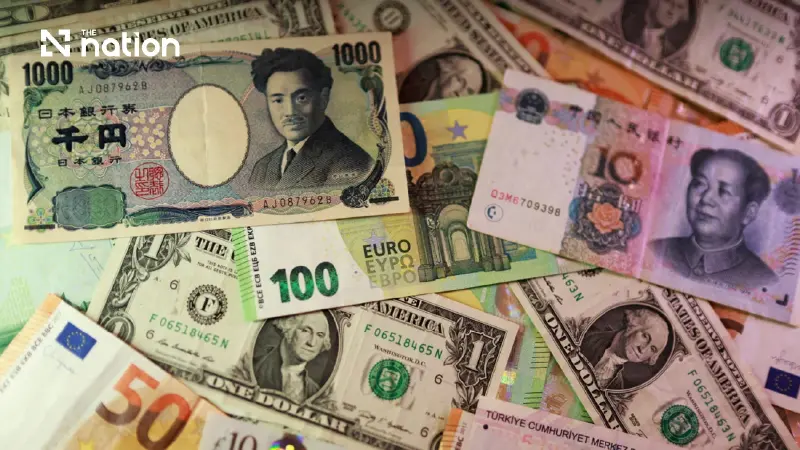


Brent above US$91 a barrel is stoking inflation fears, while growing public and corporate borrowing and rate-rise expectations push bond yields higher worldwide.
- Japan's benchmark 10-year government bond yield reached 3% for the first time since 1996, a fresh three-decade peak.
- The spike is part of a global bond sell-off driven by oil-led inflation risks, expectations of central bank rate hikes, and concerns over heavy government borrowing.
- Yields are also rising sharply in other major economies, including the United States, Germany, and Australia, reflecting interconnected market pressures.
- The higher yield increases the cost of servicing Japan's massive public debt and could lead Japanese investors to sell foreign bonds, putting further upward pressure on global rates.
Japan’s bond market crossed a psychologically important boundary on Tuesday (September 1), when the benchmark 10-year government bond yield reached 3% for the first time since September 1996.
The fresh three-decade high raised the prospect that investors would reassess Japanese government bonds (JGBs), long regarded as a stable anchor for global fixed-income markets.
Market specialists offered different interpretations.
Prashant Newnaha, senior rates strategist at TD Securities in Singapore, said, “It’s a genuine regime change. JGBs were the anchor for global fixed income for a long time. Now it has flipped.”
Masahiko Loo, senior fixed income strategist at State Street Investment Management in Tokyo, said, “A 10-year JGB yield at 3% is undoubtedly a milestone, but I would view it more as a normalisation story than a crisis story.”
Pressure spread along Japan’s yield curve.
The five-year rate rose to a record 2.26%, while the two-year yield reached 1.795%, its highest level in 31 years.
These moves reflected falling bond prices, which move in the opposite direction to yields.
The adjustment was no longer confined to Japan, with selling extending from Tokyo and Sydney to New York and London.
During Tokyo trading, the US 10-year Treasury yield advanced to 4.786%, its highest since January last year.
Germany’s 10-year yield, the eurozone benchmark, reached 3.34% in early European trade, its highest since 2011.
Australian 10-year yields registered their steepest rise in five months, with traders linking part of the move to the prospect that higher returns in Japan would leave fewer Japanese buyers for Australian debt.
The latest acceleration followed renewed military attacks in the six-month US-Israeli conflict with Iran.
Brent crude futures moved above US$91 a barrel, reviving concern that more expensive energy would lift inflation and leading investors to anticipate that central banks might need to raise interest rates.
Tai Hui, APAC chief market strategist at J.P. Morgan Asset Management in Hong Kong, warned, “The stalemate in the Middle East risks pushing energy prices higher as we approach Q4.”
Declining inventories and seasonal fuel demand during the northern hemisphere winter meant the direct risk to headline inflation worldwide was on the upside, Hui assessed.
US sanctions against Iran’s trading partners and renewed tariff threats were additional potential triggers for rapid price increases.
The rise in funding costs is also crossing borders through feedback between major markets.
Shigeto Nagai, head of Japan economics at Oxford Economics in Tokyo, linked stronger expectations of rate rises, fuelled by global inflation concerns, with worries about fiscal sustainability in advanced economies.
Treating each country separately would therefore be misleading.
“Concerns about long-term interest rates in major economies are fueling each other across borders, leading to a global rise in interest rates,” Nagai said.
Oil is not the only source of pressure.
Hyperscalers are raising money aggressively to finance the artificial intelligence boom, adding corporate issuance to already heavy sovereign funding needs, while the US debt load has passed US$40 trillion.
At the same time, markets have become highly sensitive to perceived fiscal profligacy, leaving policymakers with a difficult problem as yields rise.
Japan faces a particularly difficult version of that problem.
Higher yields increase the cost of servicing the largest debt pile among developed economies just as Prime Minister Sanae Takaichi plans aggressive investment.
Fred Neumann, chief Asia economist at HSBC in Hong Kong, identified both domestic and international forces.
Japanese yields reflected investor anxiety over the country’s fiscal outlook and ambitious spending plans, while expanding public- and private-sector borrowing needs were lifting long-term funding costs across developed markets.
“From this perspective, the rise in JGB yields is not an outlier, though with greater public debt outstanding, Japan faces potentially greater pressure due to climbing debt servicing costs,” Neumann said.
Vasu Menon, managing director of investment strategy at OCBC in Singapore, warned, “This is not particularly positive news for Japan’s public finances.”
Higher borrowing costs would raise the cost of servicing the country’s sizeable national debt and could direct a larger share of government revenue towards interest payments, restricting other spending.
Behind Loo’s normalisation assessment was a market repricing for a higher-inflation regime, a higher neutral interest rate and growing confidence that the Bank of Japan (BOJ) had further to go.
Investors were also weighing inflation risk, heavy supply and term-premium repricing.
Loo said, “The Middle East escalation matters less for geopolitics itself and more because oil back at $80 (range) raises the risk of stickier inflation heading into winter.”
He also said, “Investors are increasingly demanding greater compensation to own duration as sovereign issuance and corporate funding needs compete for the same pool of capital.”
Summarising the shift, Loo said, “Bond investors are less worried about growth and increasingly focused on inflation and supply.”
Monetary-policy expectations are reinforcing the move.
Traders have cemented bets on a BOJ rate increase at its meeting this month after policymakers adopted an increasingly hawkish tone in recent weeks.
US Treasury Secretary Scott Bessent has also stepped up pressure on the Japanese central bank by urging it to tighten policy.
Eiji Doke, chief bond strategist at SBI Securities in Tokyo, cautioned against treating 3% as an endpoint.
“Long-term interest rates have reached 3%, but that is probably just a waypoint,” Doke said.
BOJ rate-rise expectations were likely to push up short- and medium-term yields, while fiscal concerns were expected to weigh most heavily on the super-long sector, leaving the intervening long-term sector under pressure from both directions.
A similar reassessment is under way in the United States after Federal Reserve Chair Kevin Warsh took a decidedly hawkish position at the annual Jackson Hole symposium.
Andrew Lilley, chief rates strategist at Barrenjoey in Sydney, said the global rise in yields partly reflected moves in the closely watched US and Japanese markets.
“I think really most of this selloff has been a re-assessment of Fed policy. I think the Fed hikes in September and I think it’s the beginning of the three-rate hike cycle at minimum,” Lilley said.
Lilley argued that term premia would need to rise if the Fed did not tighten, a sign that policymakers might have allowed risks to run ahead of them amid market concern that central banks might already be behind the curve.
“You don’t want to be in a state where if you don’t deliver a tightening, the market delivers half of one for you, because they think that you’re running a big risk,” he added.
Ryutaro Kimura, senior fixed income strategist at BNP Asset Management in Tokyo, judged that the bond market had, to some extent, been warning against fiscal expansion.
Kimura said the US government had, in effect, called for a shift away from Abenomics and, to some degree, a change in Japan’s expansionary fiscal stance.
Despite that, Japanese ministries are expected to seek a significantly enlarged, record total in their initial budget requests for next fiscal year.
“From the bond market’s perspective, I think there is now something of a sense of resignation, tinged with helplessness, about rising interest rates,” Kimura said.
Kimura nevertheless believed the psychological importance of 3% could attract some demand, pointing to the high level of bids at the 10-year JGB auction.
That could keep yields moving sideways around the threshold for a time, although upward pressure could intensify once that demand had been filled to some extent.
Capital flows provide another route for the pressure to spread.
Loo said the main story was not large-scale repatriation, but Japan gradually ceasing to be the marginal buyer of foreign bonds.
Reduced incremental demand from one of the world’s largest pools of savings was helping to push term premia higher globally, making the sell-off feel “more like a buyers’ strike than a sellers’ panic”.
Menon, meanwhile, warned that higher domestic yields could encourage Japanese investors to sell foreign assets and repatriate funds, weighing on overseas markets.
Reduced Japanese demand for US and European government debt could lift yields there and affect both fiscal and monetary policy.
Newnaha said a further JGB sell-off could prompt repricing across global fixed-income markets.
The move to 3% could also redirect attention from the path of BOJ rate rises towards Japan’s fiscal position.
Any further increase would make carry trades less attractive and could encourage a gradual reallocation into Japanese assets.
Source: Reuters
