
Thai-Cambodian border villagers sell cattle ahead of JBC talks, fearing renewed conflict
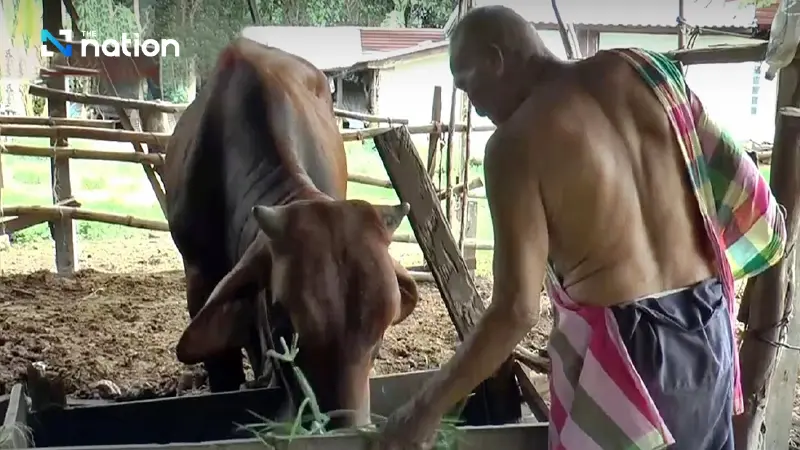


Border villagers in Buri Ram begin selling cattle, fearing evacuation if the JBC meeting fails to ease tensions and prevent renewed conflict.
The Nation news team visited Ban Sai Tho 11 Tai village in Baan Kruat district of Buri Ram province, located just 3 to 4 kilometres from the Thai-Cambodian border on Saturday, June 14, 2025.
The village, which endured heavy shelling during the 2011 border clashes between Thai and Cambodian troops, once again finds itself on edge.
Residents were seen gathering in small groups, discussing the recent border skirmish near Chong Bok in Nam Yuen district, Ubon Ratchathani, which occurred late last month.

Many expressed concern and are now anxiously waiting for the outcome of today’s meeting of the Joint Boundary Commission (JBC) in Phnom Penh, Cambodia.
Locals say they hope the JBC meeting will result in a peaceful resolution, as renewed conflict would severely impact the livelihoods and safety of people on both sides of the border.
Although the clash at Chong Bok on May 28 did not escalate into full-scale fighting, the lack of clear information about how it ended has left residents worried.
Their anxiety is heightened by memories of 2011, when more than 120 shells landed in this very area, forcing villagers to evacuate to shelters.
In anticipation of potential conflict, some families have begun selling off their livestock, including cattle and buffalo, at prices well below market value, averaging THB6,000–8,000 per animal, compared to a typical market price of THB10,000–20,000, depending on size and age.
Many say they would rather take the financial loss than risk losing the animals during a hasty evacuation.

In a more sobering sign of preparedness, some elderly villagers whose children work in other provinces have started building makeshift bunkers in their yards, using concrete pipes and soil, as a temporary shelter in the event of renewed hostilities.
The uncertainty has left the border community in a state of quiet alert — watching, waiting, and hoping for peace.
