
Boonsin vows to maintain razor wire around Prasat Ta Muen Thom, require visa for visits
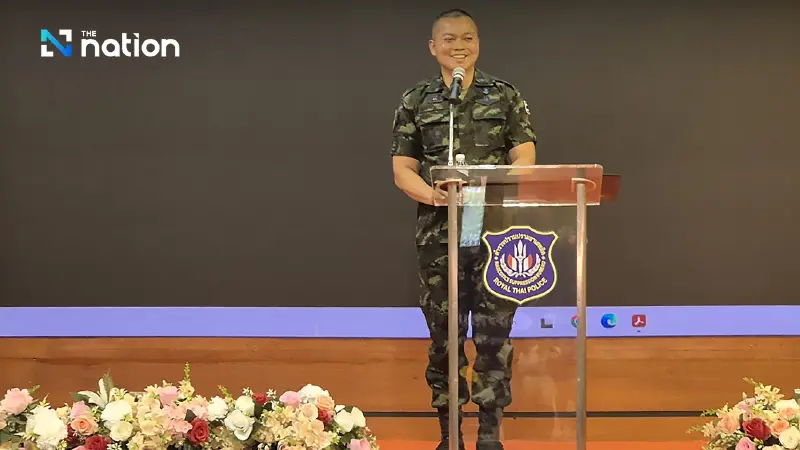


Lt Gen Boonsin vows to keep razor wire around Prasat Ta Muen Thom, requiring passports and visas for Cambodian visitors to the temple.
Razor wire to protect Thailand’s sovereignty
Second Army Area commander Lt Gen Boonsin Padklang vowed on Tuesday to continue guarding Prasat Ta Muen Thom in Surin with razor wire and to require Cambodians to present passports and visa stamps before visiting the ancient temple.
Boonsin emphasised that the Second Army Area would no longer be lenient towards Cambodians, unlike in the past when the fence at Prasat Ta Muen Thom was dismantled and Cambodians were allowed to cross the border easily to visit the temple.
Strict border defence measures in place
The Second Army Area is responsible for border defence at Chon An Ma in Ubon Ratchathani’s Nam Yuen district, as well as Prasat Ta Muen Thom and Prasat Ta Kwai in Surin.
Boonsin stated that the Second Army Area has secured these borders with razor wire and would not allow anyone to dismantle the wires.
“If they touch the wires, they’ll be regarded as touching Thailand’s sovereignty,” Boonsin warned. “If they want to know my reaction, they may try touching the wires.”
Boonsin made it clear that the razor wire laid by Second Army Area soldiers would remain in place indefinitely.
“The razor wire at Prasat Ta Muen Thom will not be removed. If they want to visit the temple, they must present passports with visa stamps,” he said.
Border tensions with Cambodia
Boonsin expressed distrust towards Cambodia, accusing it of consistently breaking promises made during negotiations. He described the fighting in late July as much fiercer than the 2011 border clashes, noting that many Cambodian troops were killed.
Several countries had urged Thailand to cease fire, but Boonsin clarified that the ceasefire would only be temporary.
Boonsin also reiterated that Phu Ma Kua, seized by Thai soldiers during the clashes, is located within Thai territory, and Thai troops had not encroached on Cambodian soil. After the fighting, Boonsin said Thai troops laid razor wire to protect Thai territory, based on the 1:50,000 ratio map.
Thailand’s claim over Ban Nong Chan
Boonsin reaffirmed that Ban Nong Chan in Sa Kaeo, where Cambodians had established communities, lies within Thai territory.
“We allowed them to stay since the era of the Khmer Rouge and didn’t claim our land back. Now, they are on our land,” Boonsin said.
He added that the First Army Area had laid razor wire to guard the border at Ban Nong Chan, but Cambodians dismantled the barrier, violating Thailand’s sovereignty.
