
Vietnam’s fruit and vegetable exports hit record high as durian drives growth
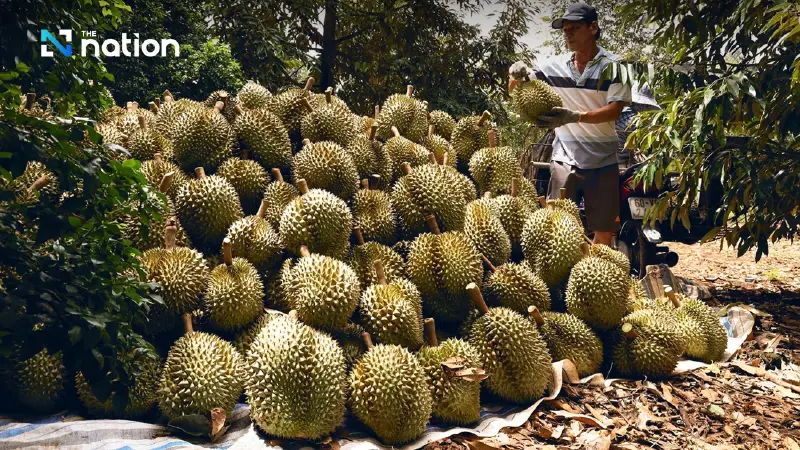


Vietnam’s fruit and vegetable exports hit a record US$1.4 billion in September 2025, driven by soaring durian sales, with China accounting for 60% of total revenue.
The Thai Trade Centre in Ho Chi Minh City, under Thailand’s Department of International Trade Promotion (DITP), has reported that Vietnam’s fruit and vegetable exports reached an all-time high in September 2025, with a total value of US$1.4 billion, up 47.2% month-on-month and 52.7% year-on-year, according to data from the Vietnam Customs Department.
During the first nine months of 2025 (January–September), total exports of fruits and vegetables amounted to US$6.2 billion, an increase of 10.3% from the previous year. The Vietnam Ministry of Industry and Trade attributed this surge primarily to durian, which remains the main growth driver. The Vietnam Fruit and Vegetable Association estimates that durian exports alone reached nearly US$900 million in September.
China remains key market, accounting for 60% of total exports
China continues to play a decisive role in Vietnam’s export recovery, accounting for about 60% of total fruit and vegetable revenues. In September alone, shipments to China were valued at nearly US$800 million, with strong momentum expected to continue into October as competing countries’ durian harvests end.

Beyond durian, other fruits have seen remarkable growth, lychee exports rose 58-fold after entering major US retail chains such as Costco, while strawberry exports jumped 11 times. Exports of avocado, pineapple and pistachio have more than doubled. Meanwhile, processed fruit and vegetable products grew two- to threefold, reflecting Vietnam’s efforts to add value and meet stricter import standards.
Processed products set for rapid expansion
The Vietnam Fruit and Vegetable Association projects that exports of processed fruit and vegetable products will grow rapidly over the next five years, supported by rising demand from China, the United States and Europe. With effective use of trade protocols, deeper investment in processing technology, and certified cultivation areas, the sector could achieve double-digit annual growth.
The association forecasts that Vietnam’s total fruit and vegetable exports could reach US$8 billion this year and potentially hit US$10 billion by 2030, one to two years ahead of schedule.
New markets and quality upgrades strengthen competitiveness
Vietnam’s Ministry of Agriculture and Environment is currently in talks with China to open new export markets for pomelo and avocado, with the first shipments expected by 2026.
Vietnam’s fruit and vegetable exports soared to a record US$1.4 billion in September 2025, up 52.7% year-on-year, according to data from the Vietnam Customs Department. Over the first nine months of the year, total exports reached US$6.2 billion, a 10.3% increase from the same period in 2024, reflecting a global rebound in demand and the country’s improved agricultural competitiveness within international value chains.
The key driver of this surge has been the resurgence of durian exports, Vietnam’s flagship fruit. Although shipments were disrupted early in the year by China’s strict plant-quarantine measures, which led to several rejected consignments, exports have rebounded sharply since mid-year.
In September alone, durian exports were valued at US$800 million to US$900 million, the highest level on record. For the first nine months of 2025, exports totalled about US$2.5–2.6 billion, with China remaining the dominant buyer, accounting for nearly 60% of Vietnam’s total fruit-export earnings.
The record-breaking figures demonstrate Vietnam’s success in enhancing production standards, quality control, and leveraging free trade agreements. These efforts have not only strengthened its foothold in China but also expanded its reach into the US, Japan and Europe, reinforcing its position as an emerging global hub for fruit exports.
Implications for Thai exporters
For Thai agribusinesses, Vietnam’s rise presents both a challenge and a strategic opportunity. Thailand could capitalise on its strengths in tropical fruit cultivation and international quality standards by partnering with Vietnam as a logistics and processing hub.
Joint ventures in cold-chain logistics, advanced food processing, high-quality packaging, and traceability technology could enhance supply chain efficiency and open access to high-demand, regulation-intensive markets worldwide.
