
Thai police propose international taskforce to suppress cyber scam gangs
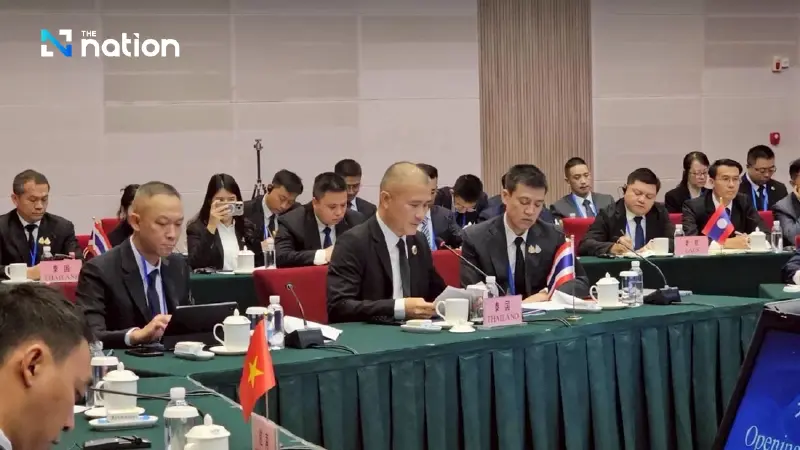


Thailand proposes a six-nation taskforce to combat regional cyber scams, urging real-time data sharing and coordinated crackdowns across neighbouring countries.
A senior Thai police officer has insisted during an international meeting on online scams in China that Thailand is not a hub for cyber-criminal networks and has proposed the creation of an international taskforce to crack down on scam gangs operating across the region.
The proposal was made by Pol Lt Gen Jirapop Phuridej, assistant national police chief and head of the Anti-Cyber Scam Centre (ACSC), during a ministerial-level meeting in Kunming on Friday. The meeting was attended by representatives from China, Myanmar, Laos, Thailand, Cambodia and Vietnam.
Thailand proposes special six-nation taskforce
During the meeting, Jirapop proposed the establishment of a special force comprising representatives from all six nations, with the authority to conduct on-site suppression operations against call-centre scam gangs. He said the taskforce should adopt real-time intelligence-sharing mechanisms similar to those already used by the ACSC among Thai agencies.

Jirapop added that the taskforce must be capable of responding to critical intelligence within 24 hours, operate under transparent procedures, and take joint responsibility for outcomes. All operations should be reported regularly to the countries concerned.
He also urged the formation of a joint committee among the six nations to monitor the taskforce's work and ensure full cooperation from every country involved.
Three key measures to strengthen joint suppression
Jirapop presented three core measures for joint enforcement against online scam networks:
Measure 1: Establish a real-time data-exchange system and create a shared central database of mule accounts, phone numbers, and IP addresses linked to criminal activity. Automated alerts would allow all countries to block, freeze, and investigate simultaneously.
Measure 2: Appoint Cyber Liaison Officers. Each country would deploy law-enforcement personnel to key operational hubs abroad to act as a direct line for immediate cooperation, enabling information requests and joint actions to be completed within the same day.
Measure 3: Implement joint telecommunications control measures, including stricter SIM-card registration through identity-verification systems (such as facial recognition), limits on SIM ownership per individual, and monitoring of suspicious SIM usage. If widespread scam-related signals are detected, nations would consider temporarily cutting the signal until investigations conclude.

Jirapop noted that these measures form the joint operational plan signed by Thailand and Cambodia at the General Border Committee meeting in Malaysia on October 23.
Thailand denies being regional scam hub
During the meeting, Jirapop stressed that Thailand is not the main base of operations for call-centre gangs. He said mule-account transactions were often traced to bank accounts in neighbouring countries, while IP addresses linked to scam websites were also found outside Thailand.
He emphasised that all six nations must work together and must not allow scam networks to operate freely within their borders. If Thai police were alerted to a scam network operating inside Thailand, authorities would immediately take action and report the results to the alerting nation.
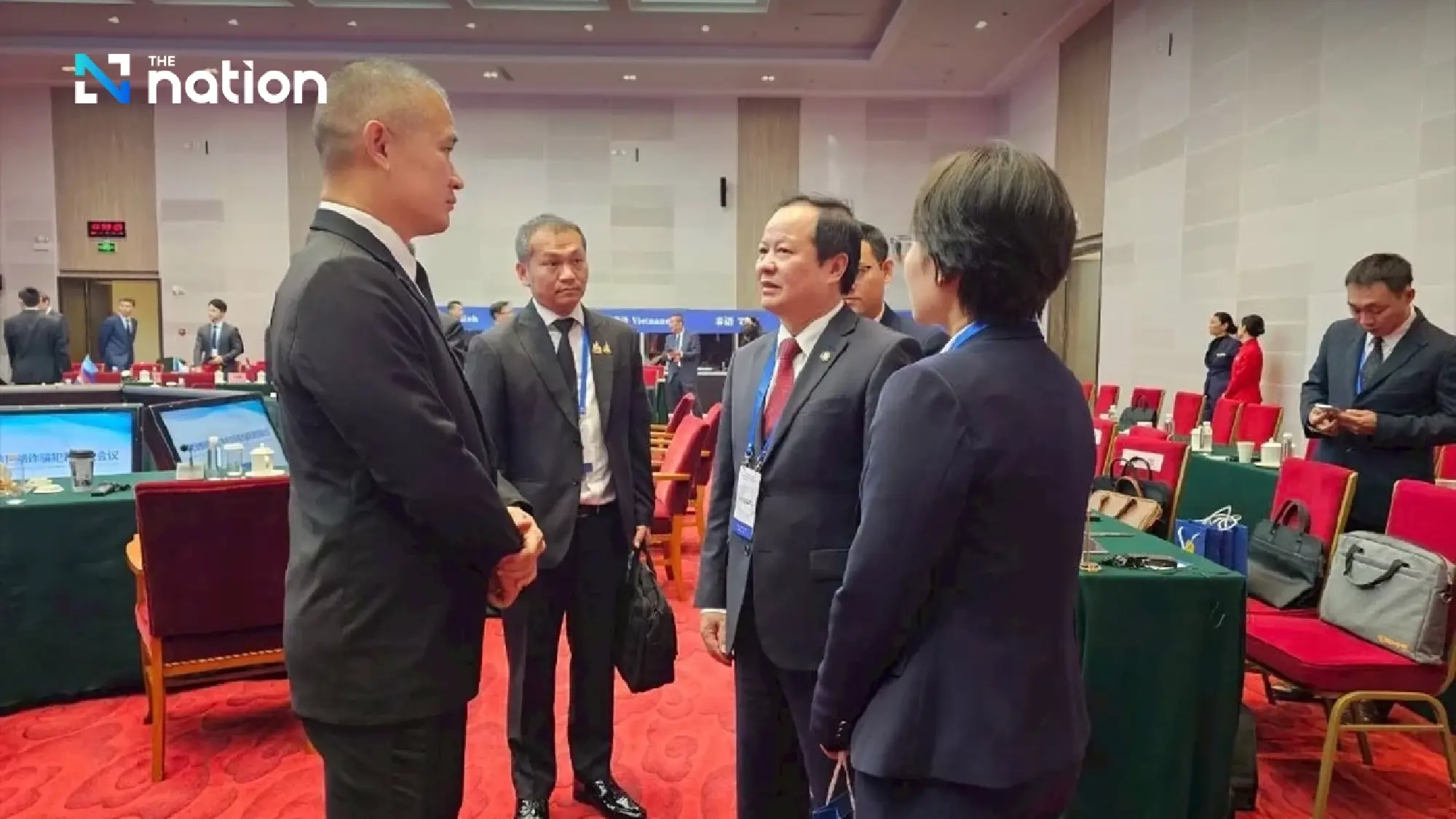

Six nations agree on comprehensive joint initiative
The meeting ultimately agreed on a comprehensive 21-point initiative to govern and combat telecom and online fraud, including:
- Joint operations to eliminate scam compounds, gambling zones and fraud networks.
- Coordinated actions to dismantle online gambling hubs and scam centres.
- Joint arrests, coordinated investigations and systematic evidence exchange.
- Returning suspects to requesting countries to prevent cross-border impunity.
- Freezing, seizing and tracing assets linked to crimes for return to victims or states.
- Establishing an official six-party mechanism at ministerial and departmental levels.
- Creating a Six-Party Ministerial Mechanism on Combating Telecommunication and Online Fraud.
- Holding annual rotating meetings to track progress and set future plans.
- Regular agency-level meetings to implement policy decisions.
- Developing a joint cross-border case-coordination and intelligence system.
- Updating intelligence-sharing channels on platforms, apps, mule accounts and crypto flows.
- Setting shared digital-investigation standards.
- Linking cross-border financial and data trails into single coordinated cases.
- Expanding cooperation with international organisations, civil society and tech firms.
- Supporting ongoing regional joint operations.
- Exchanging case studies and regulatory standards for telecom, payments and crypto.
- Partnering with NGOs and tech firms on alerts, shutdowns, research, training and multilingual victim-prevention campaigns.
- Upholding the Mekong–Lancang Cooperation (MLC) framework and rule of law.
- Ensuring all countries fully enforce domestic laws and prevent the region becoming a safe haven.
- Adopting shared security frameworks under the Global Security Initiative and MLC.
- Promoting transparency, rule of law and mutual benefit in all cooperation projects.

