
Second Army warns of kamikaze drone tactics
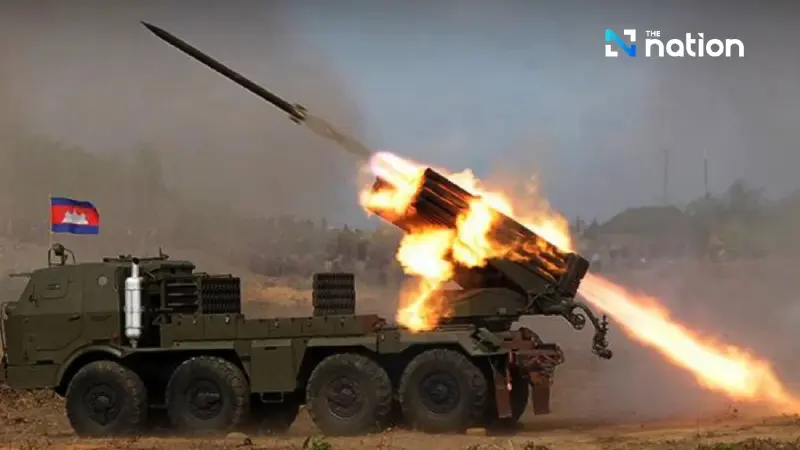


Second army area warns of Cambodian kamikaze drones and rocket strikes on Thai positions, urging troops to avoid drone traps.
The Second Army Area has distributed an illustration to warn its personnel about Cambodian troops’ alleged use of kamikaze drones to deploy GPS devices at Thai military locations, enabling precise attacks on targets.
In the illustration, the Second Army Area warns its personnel not to gather around a fallen drone, as it may contain a hidden bomb or be transmitting a signal back to Cambodian forces to direct fire on that exact location.
The illustration highlights what the Second Army Area describes as a new threat: the use of first-person-view (FPV) unmanned aerial vehicles, or drones.
According to the illustration, Cambodian troops may send “lead” drones across the Thai border as decoys to help identify targets. These drones may carry GPS devices and 82mm mortars.
In some cases, the illustration notes, Cambodian troops may first bombard Thai positions with BM-21 rockets before sending in fleets of drones. The drones are intended to lure Thai troops into moving in to retrieve downed devices.
The illustration warns that if fallen drones begin emitting beeping sounds, they should be treated as definite traps and Thai soldiers must not gather around them.
If drones are assessed as safe, troops are instructed to immediately locate and destroy any attached GPS units. If an 82mm mortar is found attached, bomb disposal experts must be called in to dispose of it, as it may be rigged to detonate.

Meanwhile, a source from the Second Army Area said Cambodia shelled several locations inside Thailand with BM-21 rockets, artillery shells and bombs dropped from drones on Tuesday morning.
The areas reportedly targeted included Prasat Ta Kwai, Prasat Ta Muen, Chong Plod Tang Pass, Khao Phra Wiharn, Chong Rayi Pass, Phu Makua, Hill 600, Ban Phumisrol village, Moo 12 village, Chong An Ma Pass, Chong Bok Pass and Play Yao.
The source added that areas allegedly attacked by kamikaze drones included Phraya Sattaban, Chong An Ma Pass and Hill 561.
Army outlines self-defence stance on border
The source said the Second Army Area has also circulated its position on the border situation to the public as follows:
- Thailand is acting in self-defence and is not the aggressor. Every operation by the Thai armed forces is aimed solely at protecting national security and the safety of the people, not at initiating conflict.
- There is a real threat to the lives of Thai people. There have been incidents of landmines being secretly planted and of Thai soldiers coming under fire, leaving them injured and disabled, which endangers both soldiers and civilians.
- Intelligence has confirmed that heavy weapons have been trained on Thailand. Movements of multiple rocket launchers with a range of more than 100 kilometres have been detected, with targets set on areas near Buriram Airport, posing a direct threat to civilians.
- The Thai armed forces are obliged to respond in accordance with international law. All actions are being carried out under the rules of engagement and the right of a sovereign state to self-defence.
- The military will not wait for civilians to become victims. It will act immediately to proactively neutralise threats so that Thai people do not have to suffer losses.
- The Cambodian side has repeatedly displayed hostile behaviour, both through actual hostile acts and continuous demonstrations of hostile intent.
- Operations will continue until the threat has ended. The Thai armed forces will carry out these missions until the country and its people are truly safe.
