
Authoritarian fears loom in Indonesia as new criminal code takes effect
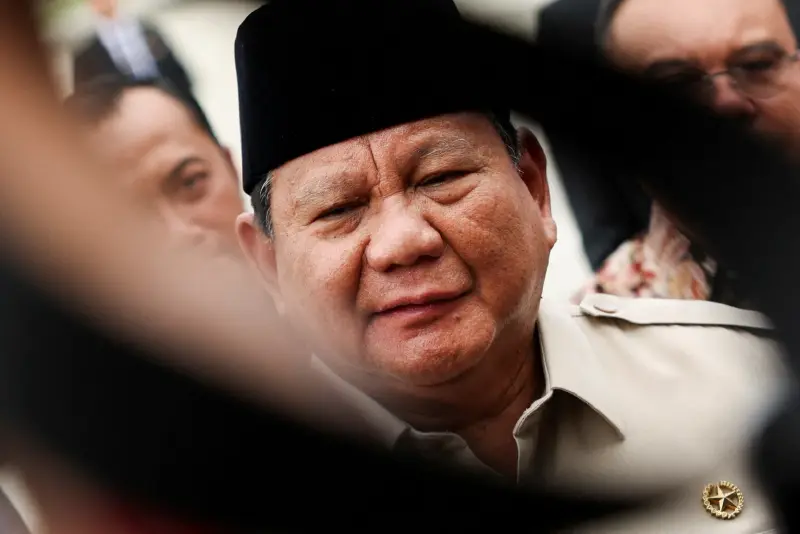


Several articles of the new Criminal Code (KUHP) and Criminal Law Procedures Code (KUHAP) may erode civil liberties and freedom of expression, particularly the right to criticise government policies, according to pro-democracy activists and scholars.
Civil groups have warned that the newly effective Criminal Code (KUHP) and Criminal Law Procedures Code (KUHAP) can undermine civil liberties and risk pushing the country toward an authoritarian state amid growing reports of intimidation targeting government critics.
The new laws officially came into force on Friday (๋January 2) to replace the previous decades-old KUHP, and KUHAP inherited from Dutch colonial rule, which the government said no longer aligned with Indonesia’s current legal and cultural norms.
Coordinating Law, Human Rights, Immigration and Correctional Services Minister Yusril Ihza Mahendra described the laws’ implementation as a “historic moment”, which marks the beginning of a more “humane, modern and just” era of law enforcement.
“The new KUHP balances freedom of expression with public interest, and ensures that punishment is proportional,” Yusril said in a statement on Friday, adding sensitive matters are treated as complaint-based offences to limit state interference in private life.
He added that the implementation of the new laws would just be the beginning of a continuous review.
“The government,” Yusril added, “welcomes feedback from civil society to ensure a criminal justice system that is fair, humane and sovereign.”
Efforts to overhaul the laws have been ongoing for decades, culminating in the House of Representatives passing the revisions during the last two presidencies.
The new KUHP was passed in 2022 in the middle of former president Joko “Jokowi” Widodo’s final term. Meanwhile, the new KUHAP, which serves as the procedural framework on how law enforcement bodies may exercise their powers to enforce the Criminal Code, was approved into law in November 2025, more than a year after President Prabowo Subianto took office.
Power consolidation
Ahead of the laws’ implementation, a coalition of pro-democracy advocates and scholars warned that rather than strengthening the country’s justice system, the new KUHP and KUHAP risk eroding civil liberties and allowing widespread human rights violations, while accelerating a drift towards authoritarian governance.
“The Indonesian criminal justice system is at risk of falling into serious disorder and increasingly endangering the protection of human rights,” said Muhammad Isnur of the Indonesian Legal Aid Foundation (YLBHI), a member of the coalition, during a press conference on Thursday.
Among highlighted KUHP provisions is one about “attacking the honour and dignity” of the president and vice president, which may result in prison terms of up to four years, if such a message was spread online and triggers public disorder.
Similar provisions apply to insults against the government or state institutions, with violators facing a maximum punishment of four years in prison.
These offences are classified complaint-based, which can only proceed if the offended party lodges a legal motion. But critics warned they remain open to being misused by sitting presidents or government officials to criminalise legitimate criticism of government policies.
“The law only gives special protection to government officials,” said Jakarta Legal Aid Institute (LBH Jakarta) activist Daniel Winarta, another coalition member, while noting it conflicts with the 1945 Constitution that guarantees equality before the law.
A man holds up a poster that reads “Lawan pembungkaman suara rakyat“ (Fight against the silencing of the people’s voice) ahead of the indictment hearing on Dec. 16, 2025, against Delpedro Marhein, executive director of rights group Lokataru Foundation, at the Central Jakarta District Court. Prosecutors indicted Delpedro for allegedly inciting hostility toward the government and encouraging students, including minors, to take part in riots. (Antara/Hafidz Mubarak A)
The new KUHAP may exacerbate the situation as it grants the police more powers without sufficient supervision. It allows the police to arrest, search and detain an individual even during preliminary investigations, which may “easily be used to target political dissenters arbitrarily, Daniel added.
Former attorney general Marzuki Darusman called the new laws part of the current government’s political strategy to consolidate power by arming law enforcement with near-limitless authority, potentially leading to an increasingly restrictive and centralised political system.
“We’re facing an emergency, perhaps even entering a phase of catastrophe, as there is no longer any legal protection left for the public to prevent what happened in August,” Marzuki said, referring to arbitrary arrests made by the police against protesters during and after the nationwide protests in late August.
Climate of fear
The new KUHP and KUHAP came into force as rights activists have accused the police of committing procedural violations in recent arrests made around the August protests. Some people were charged with incitement, hate speech and spreading misinformation during the nationwide demonstrations against economic inequality and police brutality.
Concerns over the persisting decline of freedom of expression have intensified over the past week, following a series of intimidations targeting activists and social media influencers who criticised the government’s response to the floods and landslides hitting northern Sumatra regions in November.
Among them was Greenpeace Indonesia activist Iqbal Damanik, who received an unwrapped chicken carcass left on his house’s terrace on Dec. 30 early morning. The package was accompanied by a handwritten note that read: “Watch your words if you want to protect your family.
A similar incident occurred against influencer Ramond Dony Adam, also known as DJ Donny, when two masked individuals hurled a Molotov cocktail towards his house in Jakarta on Dec. 31. No damage was done as the fire from the bomb was extinguished before it exploded.
Yerica Lai
The Jakarta Post
