
Cambodia shuts 91 casinos in online scam crackdown
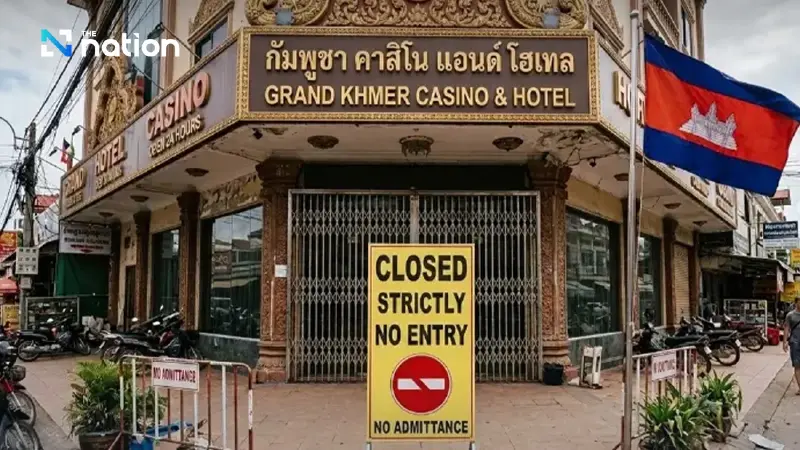


Cambodia says it has raided more than 250 scam centres and closed 91 casinos, days after China urged tougher action on cybercrime.
Cambodia has shut down 91 casinos accused of operating online scam activities, as Phnom Penh intensifies a nationwide crackdown on cybercrime networks amid growing pressure from China and other countries.
The Cambodian government said authorities had raided more than 250 online scam centres across the country over the past nine months. It also said 13,039 foreign nationals from 33 nationalities had been deported over links to online scam operations, while 241,888 people had voluntarily left Cambodia between mid-January and April 19 as enforcement tightened.
Crackdown follows Wang Yi’s Cambodia visit
The announcement came shortly after Chinese Foreign Minister Wang Yi visited Phnom Penh and met Cambodian Prime Minister Hun Manet on April 22.

During the meeting, Wang urged Cambodia to take stronger action against cross-border gambling and online fraud, saying such networks posed a serious threat to public safety and should be completely eradicated.
The issue has become a major point in Cambodia-China relations, as Beijing continues to push for tougher regional cooperation against transnational cybercrime.
Casinos identified as scam hubs
According to the Cambodian government statement reported by Xinhua, the 91 casinos were ordered to close after being identified as operating or enabling online scam activities.

The shutdowns form part of a wider campaign targeting scam compounds, illegal online operations and foreign criminal networks accused of using Cambodia as a base for digital fraud.
Cambodia said the campaign is a long-term effort requiring cooperation from domestic agencies, foreign governments and the wider public. The government also said the crackdown is intended to restore the kingdom’s international reputation and maintain public order.
More than 13,000 foreign nationals deported
Cambodian authorities said they had completed deportation procedures for 13,039 foreign nationals involved in online scam networks.
The government also reported a large outflow of people from the country as enforcement intensified, with more than 241,000 individuals leaving voluntarily between mid-January and April 19.
The figures underline the scale of Cambodia’s campaign against scam centres, which have drawn international concern over fraud, trafficking and forced labour.
Tougher law targets scam bosses
Cambodia also strengthened its legal framework earlier this month, with a new law on combating online scams promulgated on April 6, 2026.
Under the law, scam bosses whose operations lead to deaths can face 15 to 30 years in prison or life imprisonment. Ringleaders face five to 10 years in prison, or 10 to 20 years if their operations involve violence, torture, illegal detention, human trafficking or forced labour. General online scammers face two to five years in prison.
The law took effect immediately after being promulgated by royal decree signed by Acting Head of State Samdech Techo Hun Sen, following final approval by Cambodia’s Senate on April 3.


Regional pressure grows over scam networks
Cambodia’s crackdown comes as online scam operations across Southeast Asia face heavier international scrutiny.
The Associated Press reported that cybercrime has expanded sharply in the region, especially in Cambodia and Myanmar, with illegal networks linked to online fraud and human trafficking. US officials have also announced action against Southeast Asian cyber scam operations, including sanctions and criminal charges targeting alleged networks in Cambodia and Myanmar.
After Cambodia, Wang continued his regional tour to Thailand, where Chinese and Thai officials also discussed stronger cooperation against transnational crime and cyberscams.
The latest casino closures suggest Phnom Penh is attempting to show faster and more visible action as pressure builds from China, the United States and regional partners over the country’s role in the wider cyber-scam industry.
