
Sihasak rejects Cambodian media claim Thailand agreed to UNCLOS compulsory conciliation
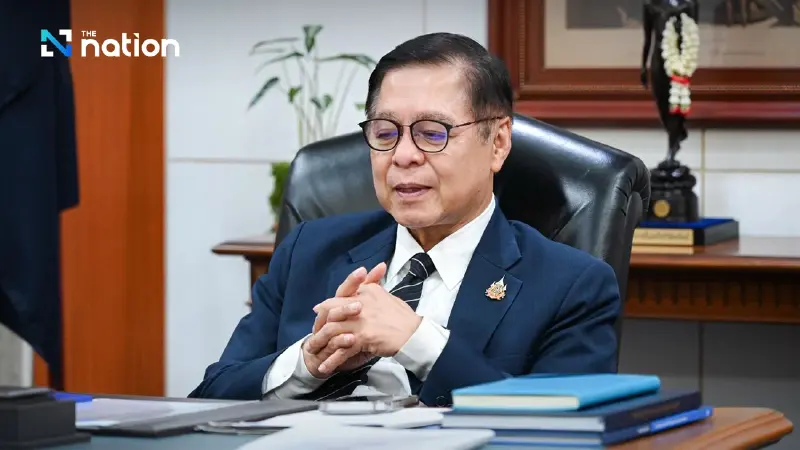


Foreign Minister Sihasak Phuangketkeow says Thailand has made no commitment to enter UNCLOS compulsory conciliation with Cambodia, insisting any process must begin with sincere bilateral talks.
Deputy Prime Minister and Foreign Minister Sihasak Phuangketkeow has dismissed Cambodian media reports claiming Thailand had agreed to enter a compulsory conciliation process under the United Nations Convention on the Law of the Sea, saying no commitment had been made and any process must begin with sincere bilateral talks.
Sihasak was responding on Monday to reports by Cambodian media that Thailand had agreed to take part in compulsory conciliation under UNCLOS.
Thailand says bilateral talks must come first
Sihasak said any negotiations under the framework of UNCLOS following the cancellation of MOU44 would have to proceed step by step.
He said the most appropriate starting point was for Thailand and Cambodia to negotiate directly and exhaust bilateral talks before considering other mechanisms under the convention.
Only if the two sides fail to reach an agreement should other options under UNCLOS be considered, he said.
Conciliation requires consent from both sides
The Foreign Minister said compulsory conciliation was one possible mechanism under UNCLOS, but stressed that it could not proceed unless both Thailand and Cambodia agreed to it.
He also sought to ease public concern, saying the outcome of such a mechanism would not be immediately binding. Instead, it would serve as a recommendation on possible ways to resolve the dispute.
“There is therefore no cause for concern,” he said.
Sihasak criticises unilateral Cambodian statements
Sihasak said Cambodia appeared to want certain outcomes and often drew conclusions before talks had even begun. He suggested this could be part of Cambodia’s negotiating style to gain an advantage.
“Such unilateral statements should not happen. Any new process under the framework of the law of the sea convention should begin with openness and sincerity towards each other,” he said.
Anutin-Hun Manet meeting made no commitments
Asked about the meeting between Thai Prime Minister Anutin Charnvirakul and Cambodian Prime Minister Hun Manet, Sihasak said it was merely a discussion and that no commitments had been made.
He added that Thailand had made clear that before talks on land border issues or boundary demarcation could take place, both sides would first need to build mutual trust.
At present, he said, the situation had not yet reached that stage.
Thailand insists talks will not put country at a disadvantage
Sihasak urged the public to be confident that any negotiations would not put Thailand at a disadvantage.
He said Thailand’s main goal was to restore relations with Cambodia, not to engage in talks that could be used by the other side to claim a political victory.
“Thailand has always been open and sincere, but sincerity from Cambodia remains unclear. Cambodia should engage in talks as a neighbour and should not seek to gain an advantage or distort the outcome of discussions for its own benefit. Instead, both sides should adjust their approach to working together in order to find the best possible solution,” Sihasak said.
