
Suckermouth catfish invasion threatens rivers across ASEAN
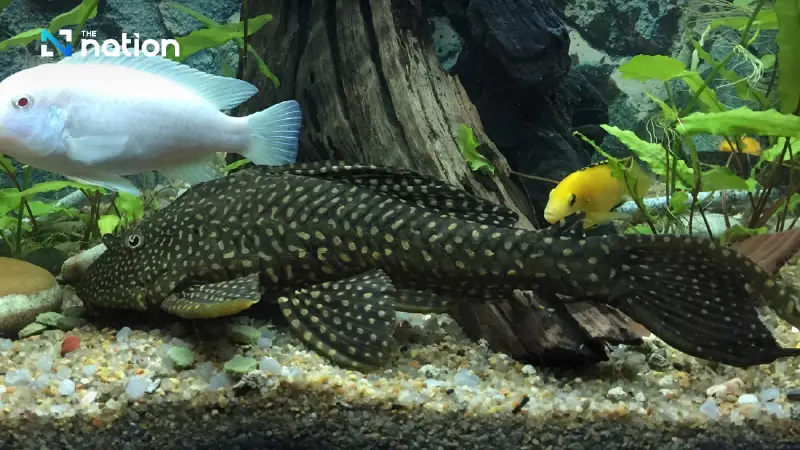


Authorities in Indonesia, Malaysia and the Philippines are trying to curb an invasive fish blamed for damaging ecosystems and riverbanks.
- Suckermouth catfish, an invasive species from South America released from aquariums, are overrunning rivers in ASEAN countries due to their adaptability, rapid breeding, and lack of natural predators.
- The invasion devastates local ecosystems by outcompeting and eliminating native fish populations, drastically reducing biodiversity and disrupting the wider food chain, affecting animals like water birds.
- The catfish cause physical damage by burrowing into riverbanks, which leads to erosion and increases flood risks, while also accumulating high levels of heavy metals and bacteria, signalling severe water pollution.
- In response, governments and volunteer groups are organising mass captures and public education campaigns, though experts state that long-term solutions require controlling pollution and restoring river habitats.
Suckermouth catfish, also known as “janitor fish”, have spread through rivers across ASEAN, including Indonesia, Malaysia and the Philippines, causing serious damage to ecosystems.
As invasive alien species that threaten native aquatic animals, they have prompted several governments to look for urgent ways to remove them.
Suckermouth catfish originate in South America.
Because the species feeds on almost anything it encounters, it has been kept as an ornamental fish to help clean aquariums.
But when the fish outgrow tanks, some irresponsible owners release them into natural waterways, while others escape during floods.

Spreading widely
Once these fish enter natural waterways, they adapt extremely well.
They also have a special ability to absorb oxygen directly from the air, allowing them to survive in highly polluted, low-oxygen waters where native fish cannot live.
In addition, suckermouth catfish have hard armoured bodies that local natural predators can barely harm.
Malaysia’s Department of Fisheries estimates that in the Klang River basin, suckermouth catfish account for as much as 80-90% of the total fish population.
Likewise, in the Ciliwung River in Jakarta, native fish such as Asian redtail catfish and spotted barb have almost disappeared; only suckermouth catfish remain.
Local fishermen report that nine in 10 fish they catch are usually suckermouth catfish, which fetch little value.
The catfish’s domination of river habitats has left biodiversity in waterways at worryingly low levels.
Their indiscriminate feeding and competition for habitat disrupt aquatic food chains, with knock-on impacts on other animals, including water birds that are beginning to disappear because of a lack of food.
Beyond their impact on aquatic animals, suckermouth catfish damage infrastructure by digging burrows up to 1 metre deep along riverbanks to lay eggs, weakening banks and making them vulnerable to erosion.
This increases the risk of severe urban flooding during heavy rain.
Because the fish are scavengers that live in wastewater, they also accumulate very high levels of heavy metals such as lead and arsenic.
Experts say the spread of suckermouth catfish is a warning sign of deteriorating aquatic environments.
Their ability to take over waterways shows that those water bodies are too polluted for natural organisms to cope with.
Muhammad Anwar, mayor of East Jakarta, warned people to avoid consuming products made from suckermouth catfish, such as fish balls or fish cakes, after scientific testing found traces of mercury and E. coli bacteria above safety standards.
The fish’s rapid breeding rate is also a major obstacle.
One female can lay thousands of eggs a year, even as authorities continue efforts to remove them.
Prof Mahawan Karuniasa of the University of Indonesia said mass capture was only a temporary solution.
Prevention measures
Indonesia has enforced legal measures to control the problem, such as Ministerial Regulation No. 41 of 2014, which bans the import of dangerous aquatic animals.
But most suckermouth catfish had already been imported and spread in the wild before the law was enforced, making control difficult.
Local governments are also trying proactive measures.
Pramono Anung, the governor of Jakarta, ordered a citywide hunt for suckermouth catfish, and officials removed more than 5.3 tonnes from rivers in South Jakarta within just two weeks.
In Selangor state, Malaysia, a policy has encouraged people to catch suckermouth catfish from local waterways for 1 ringgit (about THB8) per kilogramme.
The measure has helped build community participation and reduce fish populations in specific areas.
Civil society has also played an important role.
Malaysia’s Foreign Fish Hunting Squad volunteer group (SPIA) has caught up to 75 tonnes of suckermouth catfish over the past two years.
Its work has helped fill gaps in areas beyond the reach of state operations.
Veryl Hasan, an assistant professor of aquaculture at Airlangga University, said that alongside catching the fish, rivers must be restored so native fish can breed again and maintain ecological balance, while pollution from factories and household waste must be controlled seriously.
Public education is also needed.
Arief Kamarudin, an Indonesian campaigner, uses TikTok to teach the proper way to catch and remove the fish.
Education for ornamental fish owners is also essential to prevent fish from being released into natural waterways again, while public understanding must be built that this species does not clean rivers; it merely lives well with pollution.
“Many people do not know that suckermouth catfish are an alien species, and do not know that they are threatening native fish and need to be removed from lakes and rivers in Jakarta,” Kamarudin said.
At the same time, processing caught fish into fertiliser or animal feed is one option for managing carcasses, but there must be thorough testing for toxic residues to prevent hazardous substances from re-entering the food chain.
