
Ebola crisis deepens as deaths hit 131 and virus reaches Goma
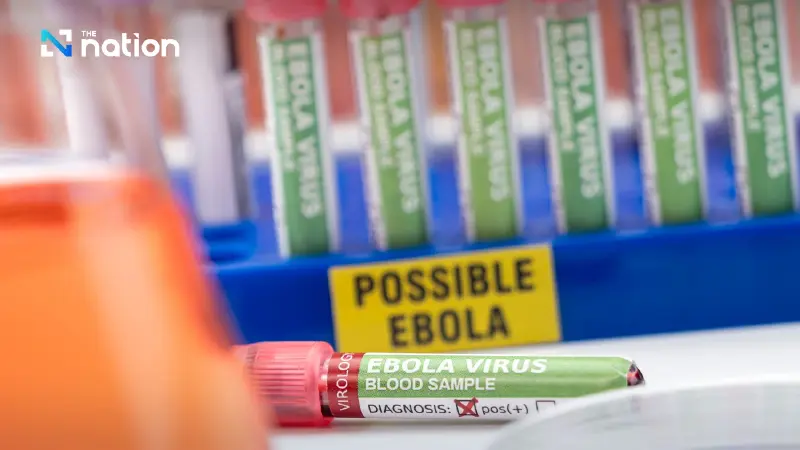


A Bundibugyo Ebola outbreak in DR Congo has killed at least 131 people, with cases spreading to key urban areas and border controls tightening.
The Ebola virus disease crisis caused by the Bundibugyo virus strain in Central Africa has entered a new and alarming phase as of May 20, 2026, after the latest statement from the government spokesperson of the Democratic Republic of Congo (DRC) acknowledged that current containment measures were under severe strain.
The number of deaths associated with the outbreak has risen rapidly to at least 131, while more than 500 suspected cases have been recorded in the system. Reuters reported that Congolese health authorities had recorded 543 suspected cases and 33 confirmed cases in the DRC, while neighbouring Uganda had confirmed two cases.
The most worrying epidemiological development is that the virus is no longer confined to rural areas of Ituri province. It has spread into key economic and urban areas, including Nyakunde, Butembo in North Kivu province, and most dangerously Goma, a strategic gateway city and important aviation and transport hub on the border with Rwanda.

US imposes travel restrictions as infected American doctor is evacuated to Germany
In response, the US Centers for Disease Control and Prevention (CDC) has moved to strengthen border health measures, implementing enhanced travel screening, entry restrictions and public-health controls to prevent Ebola from entering the United States. The CDC said the measures were introduced on May 18 amid ongoing Ebola outbreaks in East and Central Africa.
The United States has suspended entry for travellers who had been in the DRC, Uganda or South Sudan in the previous 21 days, with certain exceptions, for 30 days. It has also urged Americans not to travel to those countries for any reason.
The medical missionary group Serge confirmed that Dr Peter Stafford, an American doctor working in Congo, had tested positive for the Bundibugyo ebolavirus while serving in the DRC. He was safely evacuated and transferred for specialised medical treatment.
Reuters reported that the American patient was being taken to Germany for treatment at Berlin’s Charité University Hospital, which has a specialised isolation ward. Six other high-risk contacts were also finalising travel to Europe for quarantine and monitoring, with most going to Germany and one to the Czech Republic.
Serge said two other physicians, including Dr Rebekah Stafford, had potentially been exposed but remained asymptomatic and were following quarantine and monitoring protocols. The wider group of Americans considered at risk of exposure is being monitored under strict procedures.
Warning signs of a major outbreak: A ‘no-vaccine battle’ revives painful history
Jean Kaseya, director-general of the Africa Centres for Disease Control and Prevention, has expressed concern over the outbreak, which is proving more difficult to control than previous outbreaks because the Bundibugyo strain has no approved strain-specific vaccine or treatment available on the global market. WHO has also stated that, unlike Ebola Zaire strains, there are currently no approved Bundibugyo virus-specific therapeutics or vaccines.
The only effective way to stop this silent threat is disciplined community-level public-health management, particularly around community funerals, where relatives may wash or touch the body of the deceased.
Past Ebola outbreaks have shown that local funeral practices can become a major driver of transmission. During the 2014-2016 West Africa Ebola outbreak, more than 28,600 people were infected and 11,325 died, with unsafe burial practices widely recognised as one of the key factors behind community spread.

Rwanda tightens border screening as Nigeria monitors the risk
The emergence of Ebola in Goma, close to the Rwandan border, has prompted Rwanda to step up cross-border screening as a precautionary measure. Reuters reported that people attempting to cross from Goma and Bukavu into Rwanda were being stopped at the border, while Uganda had also begun restricting movement at a border crossing, although WHO has cautioned countries against formal border closures because they could drive people towards unmonitored crossings.
Nigeria, West Africa’s major power, is also monitoring the situation closely to prevent any repeat of past outbreaks.
The World Health Organisation has warned neighbouring countries to activate emergency operations centres and distribute laboratory testing kits to border areas immediately. WHO said there are significant uncertainties around the true number of infections and the geographic spread, while insecurity, humanitarian pressures, high population mobility and informal healthcare networks have increased the risk of wider spread.
The Bundibugyo Ebola outbreak in the first half of 2026 is therefore entering an increasingly dangerous phase, placing growing pressure on global public-health systems. The spread into a major city such as Goma, combined with the lack of an approved vaccine for this strain, raises fears that health systems in Central Africa could face severe strain.
The key signal is that the United States has moved to restrict travel from three high-risk countries, showing that Western governments are increasingly alarmed and are acting quickly to cut potential transport routes for the virus before it can cross borders and trigger wider economic disruption.
