
Ebola watch — Thailand stays on high guard against imported cases
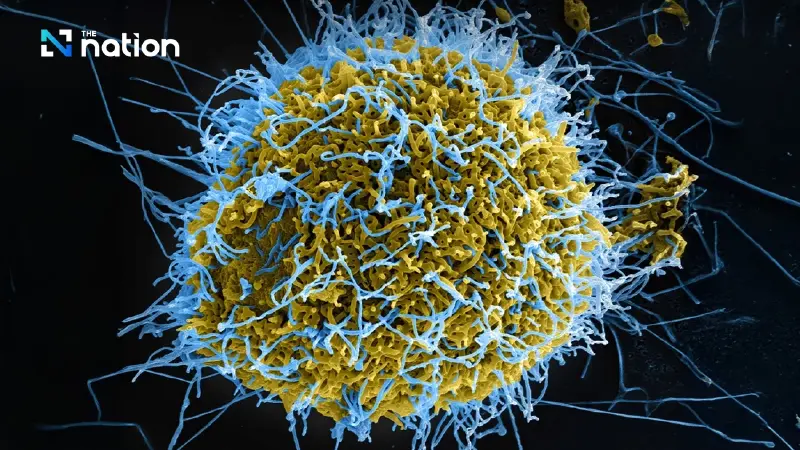


Thailand maintains Ebola surveillance as DDC tracks travellers from DRC and Uganda after WHO declares Bundibugyo outbreak an emergency
Thailand is maintaining close surveillance for Ebola virus disease as health authorities seek to prevent imported infections from countries where the outbreak risk remains high, particularly the Democratic Republic of the Congo and Uganda.
Dr Montien Kanasawadse, director-general of the Department of Disease Control under the Ministry of Public Health, said on May 18 that Ebola remains a dangerous communicable disease caused by viruses in the Orthoebolavirus group. It can spread through direct contact with an infected person’s blood, bodily fluids or organs, as well as contaminated surfaces or objects. Infection can also occur through contact with infected wild animals, including bats and primates, which act as natural reservoirs of the virus. The disease is not airborne.
Early symptoms often include high fever, fatigue, headache, muscle pain and sore throat. These may later be followed by diarrhoea, vomiting, rash, kidney and liver problems and, in some severe cases, bleeding. The incubation period is generally two to 21 days, and the disease is considered to have a high case-fatality rate.
Dr Direk Khampaen, deputy director-general of the Department of Disease Control, said Thailand has not detected any Ebola cases, but surveillance has been stepped up as a precaution. Health officials are closely following travellers arriving from the Democratic Republic of the Congo, Uganda and other high-risk areas for 21 days, while hospitals at all levels have been instructed to screen suspected patients and carry out rapid disease investigations when abnormalities are found.
The country’s public health system has also been put on standby, including isolation rooms, personal protective equipment and laboratory systems for confirming infections. The department said it is working with relevant agencies in Thailand and overseas to ensure a fast and effective response if a suspected case is detected.
Previous coverage of the outbreak has highlighted concern over the Bundibugyo strain because, unlike the better-known Zaire strain, there is currently no approved strain-specific vaccine or treatment. Disease control therefore depends heavily on surveillance, contact tracing, isolation, laboratory testing, infection-control measures and rapid supportive care.
The Department of Disease Control has urged the public to maintain personal hygiene by washing hands frequently with soap or alcohol gel, avoiding contact with bodily fluids from infected patients or people who have died from the disease, eating only cooked food and avoiding direct contact with wild animals or animal carcasses.
The advice is especially important for people travelling to risk areas, including the Democratic Republic of the Congo and Uganda. Anyone returning from these countries who develops fever or unusual symptoms within 21 days should seek medical care immediately and inform doctors of their travel history so they can receive proper diagnosis and treatment.
Health authorities said Thailand’s surveillance, prevention and disease-control systems remain strong and are able to work with relevant agencies to protect public health.
WHO raises alert but stops short of pandemic warning
The WHO declaration has added weight to Thailand’s surveillance measures, after the agency classified the Ebola Bundibugyo outbreak in the Democratic Republic of the Congo and Uganda as a Public Health Emergency of International Concern.
The decision signals that the outbreak requires closer international coordination, particularly on surveillance, laboratory testing, isolation, contact tracing and cross-border monitoring. However, the WHO stressed that the situation does not meet the criteria for a pandemic.
According to Reuters, the DRC had recorded 80 suspected deaths, eight laboratory-confirmed cases and 246 suspected cases in Ituri province as of Saturday. Uganda had also confirmed two cases in Kampala involving people who had travelled from the DRC.
The WHO advised countries to strengthen screening and monitoring systems, especially in border areas and among travellers from affected zones. It also warned against closing borders or imposing trade restrictions, saying such measures could drive movement into informal routes and make outbreak control more difficult.
