
Thai army outlines position on Cambodian border displacement figures


Army spokesman Winthai Suvaree challenges figures involving 650,000 displaced people and 900,000 Cambodian workers returning from Thailand.
- The Thai army rejects the figure of 650,000 displaced Cambodians as a distortion, stating this number represents temporary relocations and that nearly 500,000 Thais were similarly affected.
- The army spokesman claims the actual number of Cambodians unable to return to their homes is much lower, at approximately 4,690.
- It alleges that these 4,690 individuals were Cambodian citizens who had illegally encroached on and established communities within Thai sovereign territory.
- The spokesman asserts that Thailand did not initiate the conflict but was compelled to respond in self-defense to Cambodian aggression, which caused the displacement.
Media reports concerning an End of Mission Statement by Tom Andrews, the United Nations Special Rapporteur on the situation of human rights in Cambodia, emerged on July 4.
The statement followed his visit to Cambodia from July 20 to 31 and referred to Thailand in the context of the Thailand–Cambodia border situation.

Maj Gen Winthai Suvaree, spokesman for the Royal Thai Army, subsequently issued a clarification and emphasised what he described as the facts.
He maintained that Thailand had not started the conflict and accused Cambodia of continually causing conflict in various forms, particularly by using weapons and military force to violate Thai sovereignty, with wide-ranging effects on the lives and property of Thai people.
He said Thailand had therefore been compelled to respond in self-defence in accordance with international principles.
To avoid dangers arising from fighting along the border, people in both countries had to leave their homes for evacuation centres or temporary shelters.
On the figure of 650,000 displaced people, Winthai rejected what he described as Cambodia’s attempt to distort the facts.
He said the figure represented Cambodian residents who had moved to temporary accommodation to avoid possible dangers in combat areas. Nearly 500,000 people in Thailand had likewise had to relocate to evacuation centres, he added.
Those affected have since returned to their usual places of residence following the ceasefire on December 27, 2025.
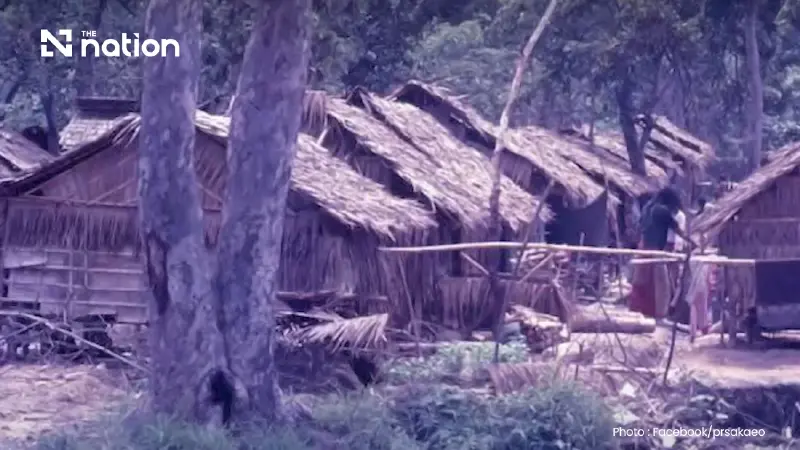
As for Cambodian residents who would be unable to return to their previous homes, Winthai put the number at only about 4,690. Before the fighting, they had lived in three areas:
- Ban Nong Chan: 500 households and 1,040 people
- Ban Nong Ya Kaeo: 60 households and 150 people
- Ban Khlong Phaeng: 389 households and 3,500 people
Some of them were Cambodian citizens who had illegally encroached on Thai sovereign territory and established homes and communities there for more than 40 years, he alleged.
According to Winthai, the Cambodian government had supported these communities.

He said Thailand had attempted to resolve the issue through MOU 43 mechanisms and laws available to administrative authorities, but had received no cooperation from Cambodia.
Turning to Cambodian migrant workers returning home, Winthai addressed the special rapporteur’s reference to 900,000 such workers.
According to Winthai, they returned voluntarily after the Cambodian government itself encouraged them to do so.
The Thai government, he added, had consistently prioritised caring for Cambodian workers in Thailand.
Winthai said it was time for Cambodia to acknowledge the problem and seriously address the needs of its own people, rather than communicating with the international community in a manner he described as distorted and intended to affect Thailand’s image, while using people’s hardship as a tool.
The Royal Thai Army also expressed hope that UN special mechanisms would present impartial information that had been comprehensively verified with both sides, rather than information originating from one party alone.
