
Bangkok among coastal cities facing rising flood risks from land subsidence
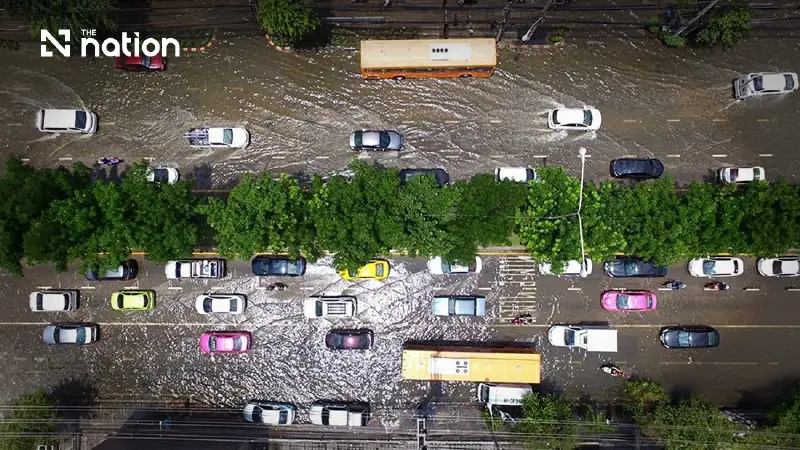


A new study finds coastal cities worldwide, including areas in Thailand, face worsening flood risks as land subsidence accelerates the impact of rising sea levels.
Bangkok and other coastal areas around the world are facing growing flood risks as new research shows that land subsidence is accelerating faster than sea-level rise in many densely populated coastal regions.
A study by researchers from the Technical University of Munich (TUM) in Germany and Tulane University in the United States, published in Nature Communications, found that sinking land is intensifying the impact of rising sea levels and increasing exposure for millions of people living in coastal cities.
Coastal communities face faster relative sea-level rise
More than 500 million people live in low-lying coastal areas, making them among the populations most vulnerable to climate change.
Researchers found that residents in densely populated coastal zones are experiencing relative sea-level rise at an average rate of around 6 millimetres per year.
This is nearly three times the global average of 2.1 millimetres per year, and almost twice the rate of absolute sea-level rise caused by climate change, which is estimated at around 3.15 millimetres per year.
The researchers said the difference is largely driven by land subsidence, where the ground beneath cities and coastal communities gradually sinks.

Why are coastal areas sinking?
Land subsidence is caused by several factors, including excessive groundwater extraction, oil and gas drilling, compression of sediment in river deltas, the weight of buildings and urban expansion.
Natural factors can also contribute, including tectonic movement and the adjustment of the Earth’s crust following the last ice age.
Dr Julius Oelsmann, lead author of the study, said understanding rising sea levels and developing effective responses requires monitoring both ocean changes and land movement.
He said this is especially important in densely populated coastal areas, where human activities — particularly excessive use of groundwater and underground resources — are major drivers accelerating land subsidence.
Such activities significantly increase the impact of climate-driven sea-level rise, he added.
Not all coastal areas are sinking
Researchers noted that not all coastal regions are experiencing land loss.
In countries such as Sweden and Finland, geological uplift is causing relative sea levels to decline in some areas.
The land in these regions continues to rise due to postglacial rebound, a process in which the Earth’s crust recovers after the pressure of ancient ice sheets. In these locations, land uplift is occurring faster than sea-level rise.
Groundwater management can slow subsidence
Although some causes of land movement are natural, groundwater management is one area where governments can take direct action to reduce the rate of sinking.
Measures include limiting groundwater extraction, developing alternative water sources and replenishing underground aquifers.
Tokyo, Japan, is a major example of how policy intervention can reduce land subsidence.
The city once experienced land sinking at more than 10 centimetres per year, with the worst-affected areas declining by around 24 centimetres annually.
However, government measures and the development of alternative water supplies significantly reduced the rate of subsidence.
A similar success story has been seen in the Harris-Galveston area of Texas, southern United States.
Heavy groundwater extraction was identified as a major cause of land subsidence, prompting local authorities to establish a groundwater management agency in 1975.
The agency introduced controls on groundwater pumping, promoted alternative water sources and encouraged water conservation, helping slow the rate of land sinking.
The research highlights that while climate-driven sea-level rise remains a global challenge, managing human activities that accelerate land subsidence can play an important role in reducing future flood risks for vulnerable coastal cities.
Source: SpringNews
