
Beyond the AI Hype: How ASEAN Can Ensure Artificial Intelligence Serves Everyday Workers
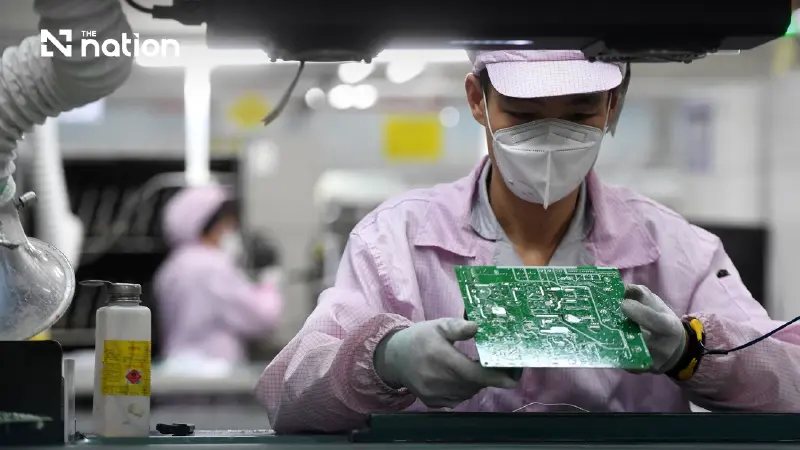


AI’s value lies at the point of use: panel members in Singapore outline how ASEAN businesses can redesign workflows and upskill local workers
- To benefit workers, ASEAN businesses should focus on practical AI application by redesigning business processes and re-engineering workflows, rather than simply pursuing the most advanced technology.
- Employers, not just individuals, have a responsibility to upskill the workforce during paid hours, emphasizing a change in mindset and foundational skills over narrow technical abilities.
- Governments are encouraged to adopt a balanced "middle path" to regulation, using practical guidelines and sandboxes to manage risks and build public trust without stifling innovation.
- A key challenge is bridging the "AI divide" to ensure the technology's benefits are accessible to all, addressing basic issues like affordability of smartphones and data plans.
AI’s value lies at the point of use: panel members in Singapore outline how ASEAN businesses can redesign workflows and upskill local workers.
As Thailand and its ASEAN neighbours weigh how to adopt artificial intelligence at scale, a panel of technology and workforce leaders at the FutureChina Global Forum offered a clear counterpoint to the usual talk of an "AI race": winning at the frontier of AI capability, they argued, means little if the technology fails to improve daily life for ordinary workers.
"A top model can excel on every leaderboard and still leave no one better off," said the panel's moderator, Professor Zhu Feida, opening the session titled "Beyond the Technology: Making It Count for People".
The real test of AI's value, panellists agreed, lies not in benchmark scores but at the "point of use" — a classroom, a factory floor, or a career change at 45.
A practical framework: the Three Rs
Sng Ren Yeong, chief executive of Temasek-owned AI deployment firm Temus, offered companies a concrete way to think about adoption: reimagine the intended outcome with AI in mind, redesign the business around it, and re-engineer the underlying workflows.
He illustrated the approach with an AI agent his team built for a global apparel company's Philippines-based procurement team, which has since automated 350,000 workflows and cut the working capital the company needs to hold during peak ordering periods from weeks to just days.
For Thai businesses considering their own AI investments, the message was that technology alone rarely produces results — it is the redesign of processes around it that unlocks value.

Priscilla Chong, managing director of AWS Singapore, made the same point from a different angle: "The organisations that benefit from AI are not the ones with the best technology — it's really the ones who harness a good operating model."
She cited Synapxe, Singapore's national health tech agency, where 80,000 healthcare professionals built more than 12,000 custom AI agents within two months of a new platform's launch, including one that halved a cardiologist's patient-record preparation time and freed up more direct time with patients.
Brent Irvin, general counsel at Tencent, described a similar logic inside his own company, where a coding assistant called Code Buddy is now used by 95 percent of developers, alongside a custom tool built to review video games for cultural and religious sensitivities before global release — freeing up staff time previously spent on manual review.
Preparing the workforce, not just the technology
For workers themselves, several panellists stressed that the shift AI demands is one of mindset rather than narrow technical skill.
Ren Yeong described Temus's own hiring practice: new developers are barred from using AI coding tools for their first three to six months, required instead to write code by hand and explain their logic to supervisors so that foundational skills are in place before AI assistance is introduced.
"It's not your skillset — it's really about the mindset," he said, describing how his own team includes a former chef and a former orchestra conductor who have successfully retrained into technology roles.
Curtis S. Chin of the Milken Institute offered a more cautionary perspective on the pace of this shift.

Unlike earlier waves of automation, which primarily displaced factory labour, he noted that AI is now disrupting white-collar professionals, actors and musicians — workers who previously had little reason to expect technological displacement.
He cited a recent OECD study surveying 60,000 students across 30 countries, which found that heavier reliance on AI tools correlated with declining reading skills and a weakened ability to distinguish fact from opinion.
He argued that responsibility for retraining should not fall solely on individuals in their own time but on employers during paid working hours — a point with direct relevance for Thai firms and training bodies designing their own upskilling programmes.
Governance without alarm or complacency
On regulation, Ng Cher Pong, chief executive of Singapore's Infocomm Media Development Authority, described the city-state's approach as a "middle path" — avoiding both alarmist restriction and uncritical enthusiasm.
Singapore's Agentic AI Model Governance Framework, launched in January and updated by May with real-world case studies, pairs formal guidelines with practical sandboxes where companies can test AI applications before wider rollout, an approach Lew said helps build public trust without stifling innovation.
That governance question carries particular weight for the wider region.
Chin raised a concern with direct relevance to Southeast Asia: online scam operations, including scam centres based in Cambodia, represent precisely the kind of cross-border harm that outpaces existing safeguards and regulatory coordination.
He also flagged a broader worry about a widening "AI divide" — noting that in some countries, ordinary access to AI's benefits remains limited less by data centre capacity than by something far more basic: whether people can afford a smartphone and a data plan in the first place.
Taken together, the panel delivered a clear, practical message for the region. For Thai businesses, meaningful AI adoption will not come from acquiring the most advanced models. Instead, value lies in applying frameworks like the "Three Rs" to redesign everyday workflows.
Case studies range from Singapore’s national health agency to a small local events firm. By using a government sandbox to automate customer service and inventory management, the events company successfully retrained an existing staff member into an AI project lead.
For policymakers, the lesson is to pair enterprise support with workforce transformation. Training must happen on employer time, supported by balanced regulation that manages risk without stalling innovation.
For the wider region, Infocomm Media Development Authority chief Ng Cher Pong offered the panel’s most compelling takeaway. AI’s frontier may be a race, he noted, but its benefits spread only through a relay: "handing each other things in good shape" across research, business, and government.
