
Will Thailand’s Uyghur repatriation to China spark another attack?
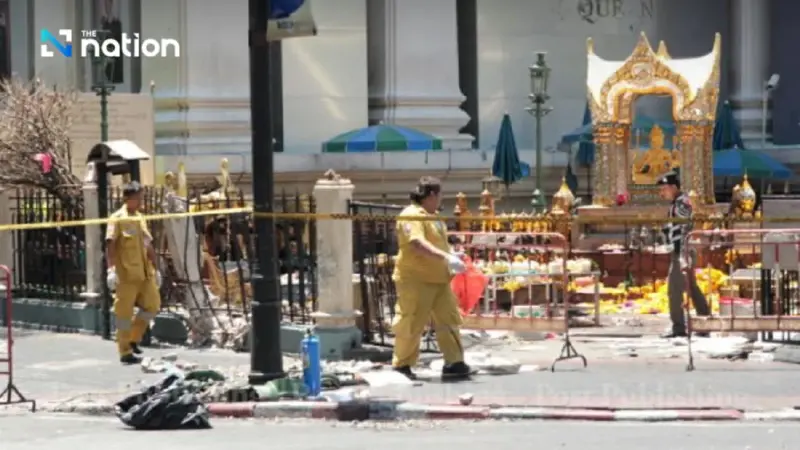


The repatriation of 40 men has reignited security fears, recalling the 2015 Erawan Shrine bombing, which was linked to a previous mass deportation
The devastating explosion that struck Bangkok’s Erawan Shrine nearly a decade ago continues to cast a shadow over Thailand’s security landscape, particularly related to concerns over Uyghur-linked militants.
On August 17, 2015, downtown Bangkok was thrown into chaos when a powerful bomb detonated at about 6.55pm at the popular shrine near the bustling Ratchaprasong intersection. The blast killed 20 people and injured 163, sending tourists and locals fleeing in panic from one of the capital’s busiest landmarks.
Thai authorities, led by then-National Police chief General Somyot Poompanmuang, learned that the explosive device contained 3 kilos of TNT packed inside a pipe with a destruction radius of 100 metres. The following day, a second explosive was flung from Taksin Bridge near the Sathorn Pier, causing minor damages but no casualties.
CCTV footage played a crucial role in the investigation, capturing images of a suspect in a yellow shirt arriving at the shrine by tuk-tuk, placing a backpack containing the explosive and departing swiftly. Despite offering a substantial award of 12 million baht, investigators initially struggled to find the perpetrators.

A breakthrough came on August 29, when the authorities detained Adem Karadag aka Bilal Muhammed, in a flat in Bangkok’s Nong Chok district. In September, a second suspect, identified as Mieraili Yusufu, was apprehended while trying to cross over to Cambodia in Sa Kaew province. A third arrest took place in November 2017, when Thai woman Wanna Suansan was detained at Suvarnabhumi Airport. She was suspected of providing accommodation to perpetrators along with her Turkish husband.
Karadag, who like Yusufu, was found to be a Chinese national of Uyghur ethnicity, initially denied involvement but later confessed after being presented with new forensic evidence.
The suspect claimed that a man called Ishan was behind the attack and had promised to help reunite him with his family in Turkey once the job was done.
Yusufu corroborated the claim, confirming Ishan’s role. Investigators determined that the network comprised six members who had communicated primarily through WhatsApp. They also learned that Ishan had escaped to Istanbul via Bangladesh, India and the United Arab Emirates.

Thai authorities concluded that the attack was likely in retaliation for Thailand’s deportation of 109 Uyghurs to China in July 2015 – a move that dismantled a human trafficking network operating between Thailand and Turkey. The deportation had already sparked protests at the Thai consulate in Istanbul before the bombing.
The men are still in detention and facing legal proceedings in Thailand.
The case underscores the complex geopolitical tensions surrounding the Uyghur minority, who are being detained in China’s Xinjiang region. Many Uyghurs have fled persecution in China, with some passing through Southeast Asian countries like Thailand to make their way to Turkey, which shares cultural and ethnic ties with them.
Thailand’s handling of Uyghur refugees remains a sensitive issue, with the recent repatriation of 40 men reigniting concerns over potential retaliatory attacks. As the anniversary of the 2015 bombing approaches, Thai security agencies continue to maintain heavy vigilance at key tourist sites and transportation hubs across Bangkok.
