
South Africa: A Nation of Resilience, Diversity, and Global Influence
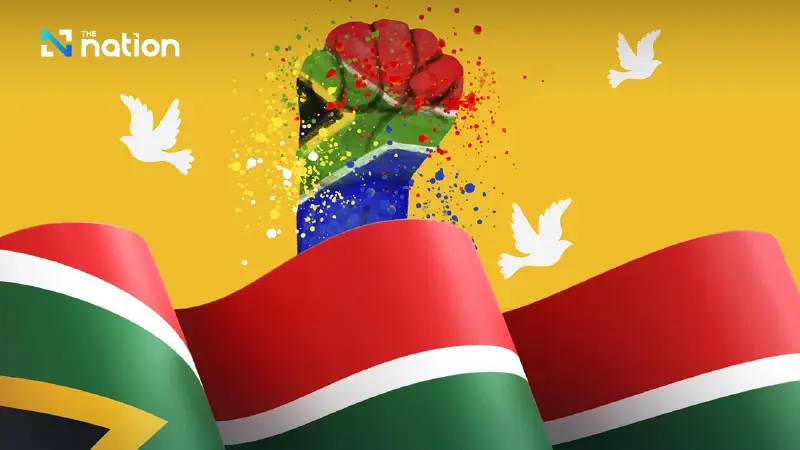


As the rainbow nation commemorates Freedom Day on April 27th, new economic partnerships and political reforms signal cautious optimism despite ongoing challenges
April 27th marks South Africa's National Day, a date that prompts global recognition of this nation's profound transformation.
From the depths of its historical struggles to the heights of its contemporary achievements, South Africa stands as an inspiring symbol of resilience, vibrant cultural heritage, and significant economic promise.
This day, observed as Freedom Day, commemorates the landmark first democratic elections of April 27, 1994. These elections were a watershed moment, dismantling apartheid and heralding an era defined by equality and national cohesion.
This day honours the nation's journey toward democracy while celebrating its vibrant culture, economy and international partnerships.
South Africa is navigating a pivotal moment in its political development. Following the formation of a Government of National Unity (GNU) in June 2024, led by President Cyril Ramaphosa, the country has seen a governance shift aimed at fostering stability.
While political challenges persist, the GNU has been welcomed by financial markets, signalling cautious optimism for economic reforms.
South Africa remains the continent's largest economy, with the International Monetary Fund projecting GDP growth at 1.5% in 2025, a slight improvement from the previous year.
Key industries such as financial services continue to drive economic activity, though structural challenges—including infrastructure bottlenecks and electricity supply constraints—have hindered progress. Inflation averaged 4.4% in 2024, whilst unemployment remains a pressing issue at 31.9% in the fourth quarter of 2024.
Despite challenges such as a 77.4% debt-to-GDP ratio and significant income inequality, South Africa maintains its position as a key player in Africa's economic development.
Situated at the southern tip of Africa, South Africa is renowned for its diverse landscapes and rich history. With a population exceeding 60 million, it is Africa's most industrialised and technologically advanced economy.
The country boasts 12 UNESCO World Heritage Sites, including Robben Island and the Cradle of Humankind, highlighting its profound historical and cultural significance.
Among its most iconic landmarks are Table Mountain, offering panoramic views of Cape Town; Kruger National Park, one of Africa's largest game reserves; and Blyde River Canyon, one of the largest canyons in the world.
South Africa's cultural tapestry is one of its defining characteristics. With 11 official languages, the country embraces a rich variety of traditions.
The influence of indigenous African cultures, European settlers and Indian communities has shaped a unique national identity.
South Africans are passionate about sports, particularly football, rugby and cricket, which unite the nation across cultural divides.
In early 2025, Thailand and South Africa strengthened their economic ties with a significant agreement: Thailand is set to export 300,000 metric tonnes of rice to South Africa for approximately $156 million.
This deal underscores the growing trade relations between the two nations. Thailand exports automobiles, electronics and agricultural products to South Africa, whilst South Africa supplies minerals, wine and fresh produce to Thailand.
Both nations collaborate in tourism, education and cultural exchanges, further strengthening their bilateral ties.
As South Africa marks its National Day, the country stands at a crossroads of challenges and opportunities.
With its resilient spirit, dynamic economy and rich cultural heritage, South Africa continues to shape its future while fostering global partnerships.
The world watches with anticipation as this remarkable nation moves forward on its journey of transformation and growth.
