
DSI offers B2m reward for French witness in 2007 Japanese murder case
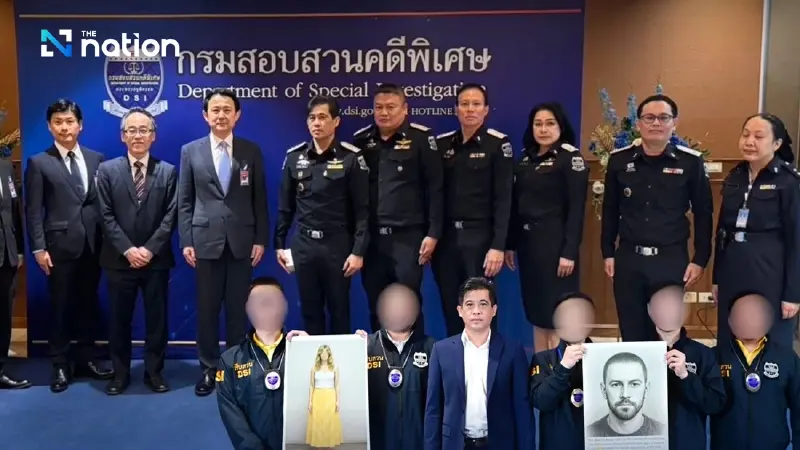


DSI offers 2-million-baht reward for Frenchman believed to hold key info in 2007 murder of Japanese tourist in Sukhothai.
Fresh lead sought in unsolved Sukhothai murder
In a renewed push to solve the cold case of a Japanese tourist murdered in Sukhothai 18 years ago, Thailand’s Department of Special Investigation (DSI) is offering a 2-million-baht reward for information from an unidentified Frenchman who may hold vital clues.
On Tuesday, the DSI released a facial sketch of the man, believed to be a tourist in Sukhothai at the time of the murder. Investigators believe he may possess critical information that could lead to the arrest of the killer of Tomoko Kawashita, 27, whose body was found near Wat Saphan Hin in the Sukhothai Historical Park on November 25, 2007.
Years of investigation yield no breakthrough
Despite efforts by both Thai police and the DSI, the case has remained unsolved. While DNA samples were collected from numerous individuals, none matched the DNA found on the victim’s clothing.
“This sketch is based solely on the memory of a witness recalling an event that occurred 18 years ago. It may not accurately reflect the individual’s appearance at the time,” the DSI cautioned in its announcement.
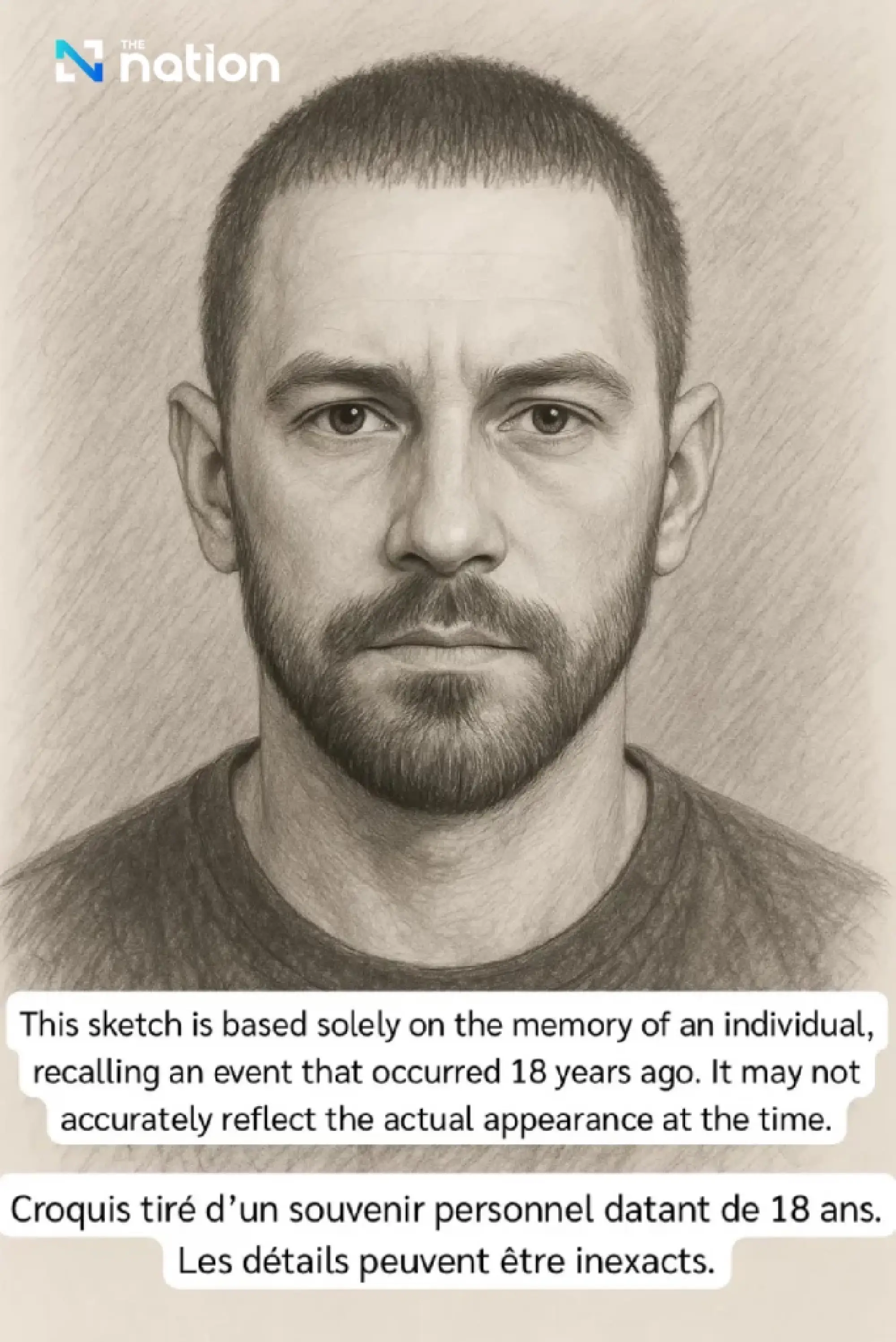

Description of the French tourist
The DSI provided the following details about the man believed to be a key witness:
- He was likely between 35 and 40 years old in 2007, meaning he is now around 53–58 years old.
- He was lean, tall (approximately 170–180 cm), with fair skin and an oval face.
- He had a shaved head with black or brown hair, dark brown or black eyes, and prominent cheekbones.
- Notable facial features included a sharp nose, black eyebrows, and a one-inch-long curved black beard.
- He had no tattoos, did not wear earrings, and spoke English with a French accent.
- At the time, he was wearing a black t-shirt and black nylon outdoor shorts.
The man reportedly rented a Honda Click motorcycle from Coffee Club in Sukhothai’s Mueang district between 7am and 8am, leaving his passport as collateral.
He was seen possibly travelling with a European woman believed to be his girlfriend. She had blonde hair down to her mid-back, and wore a white tank top and a long ankle-length skirt.
The DSI suspects the Frenchman may have stayed at the Old City Guesthouse or Witoon Guesthouse on Jarod Withi Thong Road in Tambon Muang Kao, and left for Chiang Mai by bus on November 25 or 26, 2007.
Public urged to assist as deadline looms
If the man comes forward and provides information leading to an arrest, he will be entitled to the 2-million-baht reward. The DSI has urged anyone with information about him to contact the agency directly.
T
he case was transferred to the DSI in 2013 and designated a special case, akin to those handled by the FBI. In 2020, Thai authorities announced a breakthrough using advanced DNA testing. They found that DNA recovered from Tomoko’s clothing did not match any Thai males but instead matched East Asian males through an international genetic database.
Statute of limitations ends in 2027
Under Thai law, the statute of limitations for murder is 20 years, meaning Tomoko’s case will expire in November 2027. Her family has petitioned for an extension, arguing that in Japan, murder cases carry no time limit.
Tomoko’s father, Yasuaki Kawashita, has travelled to Thailand almost annually to press for justice. He has met with justice ministers and senior officials, persistently urging authorities to make progress before the legal deadline closes the case for good.
