
South Korean man arrested in Bangkok for allegedly sending false SMS messages
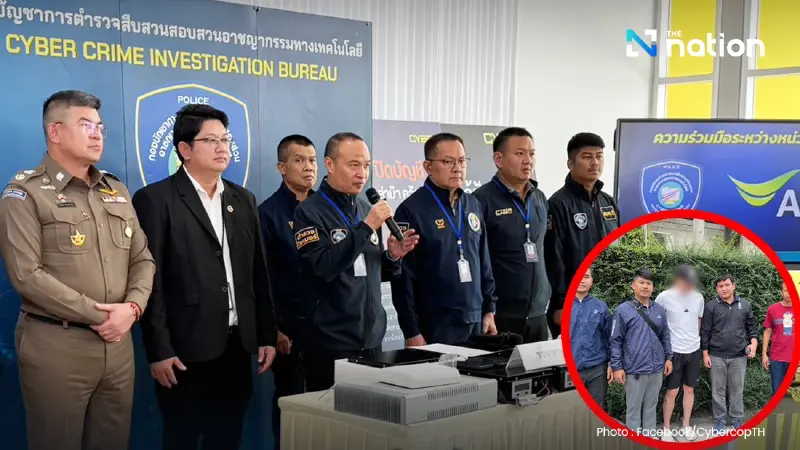


Cyber police arrest South Korean man in Bangkok for using false base station device to send spoof SMS scams; probe links case to Chinese-run gang.
- A 35-year-old South Korean man was arrested in Bangkok for using a vehicle-mounted false base station (FBS) to send deceptive SMS messages.
- He was tracked down by telecom engineers and cyber police who detected the rogue signals from his device while he was driving through the city.
- The suspect confessed to being hired by a Chinese national for a daily wage to drive around crowded business areas and operate the equipment.
- Police believe the man is part of a larger criminal gang, linking him to two previous arrests for similar offenses in Bangkok.
Cyber police track down suspect using false base station
Cyber police and AIS engineers jointly tracked down and arrested a South Korean man for allegedly using a false base station (FBS) device inside a car to send deceptive SMS messages to mobile phone users at prime locations in Bangkok on Tuesday.
The Cyber Crime Investigation Bureau (CCIB) announced on Thursday that Kim Do-yeong, 35, was arrested at Pracha Songkroah Intersection in Din Daeng district while driving a Toyota sedan towards Victory Monument at about 11 am on Tuesday.
AIS engineers detect rogue cell tower signals
The arrest followed a detection by telecom engineers at Advanced Info Service (AIS), who spotted unusual signals from a rogue cell tower operating on Bangkok roads.

AIS engineers traced the false signals from Ekkamai Intersection through New Phetchaburi Road and Asoke-Din Daeng Road before locating the source at Pracha Songkroah Intersection.
While CCIB officers pursued the vehicle, their own mobile phones also received spoofed SMS messages with links to deceptive websites generated by the FBS device in Kim’s car.
Devices found inside suspect’s car
Upon stopping the vehicle, police discovered the FBS device actively sending signals. It was connected to a mobile power station and a signal amplifier.

A false base station, also known as an IMSI catcher or Stingray, is a rogue device that mimics a legitimate cellular tower to trick mobile devices into connecting. It allows attackers to send SMS messages that appear to come from trusted sources such as banks or government agencies.
Telegram chats reveal Chinese mastermind
CCIB officers examined Kim’s mobile phone and found Telegram chat records showing instructions from his employer to drive around Bangkok and target crowded business areas with false SMS messages.
Kim confessed that he was hired by a Chinese man, whose identity he claimed not to know. He said he was paid 100,000 won per day and had to report his routes every 30 minutes via Telegram. He admitted to conducting the scheme three times between Sunday and Tuesday before being arrested.
Linked to earlier arrests in Bangkok
Police believe Kim is linked to the same gang as two Thai suspects arrested on August 10 and 16 for operating FBS devices in Bangkok.
One suspect was caught at a petrol station on Sirindhorn Road in Bang Phlat district, while the other was arrested on Khao San Road. Both admitted they had also been hired by a Chinese man.
Charges filed against suspect
Police said Kim faces six charges, including:
- Using a telecom device without permission
- Operating a telecom broadcasting station without permission
- Using telecom bandwidth without authorisation
- Attempting to deceive the public by uploading false information in violation of the Computer Crime Act
- Collaborating to intercept and use radio signals to cause public harm
- Joining an unlawful association under Article 209 of the Criminal Code
The CCIB added that efforts are underway to identify and arrest the Chinese mastermind behind the gang.
