
ONWR warns major dams near capacity, steps up water release ahead of new rains
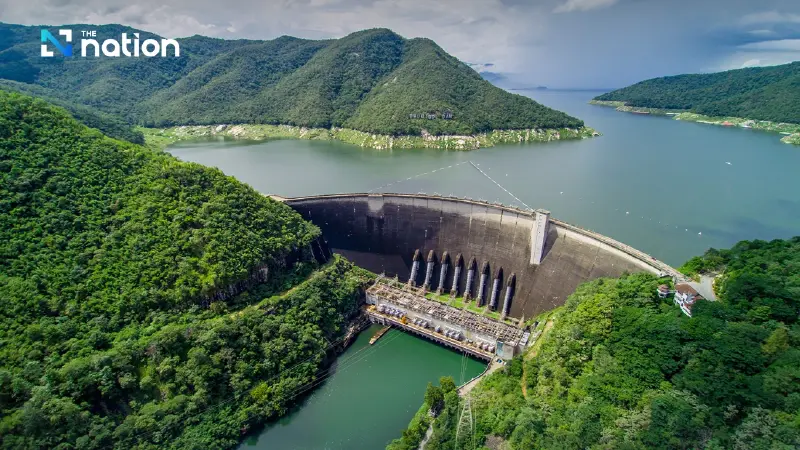


The ONWR reported that two major dams are nearing full capacity after heavy rainfall from Storm Bualoi, prompting an urgent plan to increase discharge at the Chao Phraya Dam and prepare for new storms.
Paitoon Kengkarnchang, Deputy Secretary-General of the Office of the National Water Resources (ONWR), chaired an emergency meeting on Tuesday (September 30, 2025) with experts and representatives from relevant agencies to address the impact of Storm Bualoi, which has continued to bring heavy rainfall and flash floods to several river basins.
Following the meeting, the deputy secretary-general said that in the past 24 hours, rainfall in the Nan River Basin at Nam Pat and Thong Saen Khan districts of Uttaradit reached more than 300 millimetres, while Pong district in Phayao, within the Yom River Basin, recorded over 170 millimetres. The downpours caused flash floods and run-off in the affected areas.
The Meteorological Department and the Hydro-Informatics Institute (HII) further forecast that a low-pressure system near the Philippines may bring additional rain to the North and Northeast around October 5.
Meeting resolves to maintain main dam discharges, increase release from Chao Phraya Dam
To reduce the impact on communities and ensure effective flood management, while also reserving sufficient water for the upcoming dry season, the meeting adopted urgent resolutions for the Chao Phraya River Basin as follows:


1. Maintain discharge from Sirikit and Bhumibol dams
Both dams will continue releasing water at a rate of 15 million cubic metres per day over the next two to three days, in order to ease pressure on downstream areas of the Nan River Basin in Uttaradit, which has seen rapidly rising water levels. However, with continuous inflows pushing reservoirs close to capacity and raising the risk of overflow, agencies have been instructed to closely monitor the situation and prepare to adjust discharge rates accordingly.
2. Increase discharge from Chao Phraya Dam
Water inflow into the Chao Phraya River at Nakhon Sawan is forecast at around 2,800 cubic metres per second. If the dam continues discharging at its current rate of 2,300 cubic metres per second, upstream water levels would rise above 17.5 metres above mean sea level, posing risks to dam safety. To mitigate this, the discharge rate will be raised to 2,400 cubic metres per second, with continuous assessment of actual rainfall compared with forecasts, to minimise the impact on downstream communities.
3. Divert water into low-lying fields and accelerate drainage from Bang Rakam fields
Water will be diverted into harvested lowland areas of the Chao Phraya Basin, where communities have been consulted, while drainage from retention fields will be expedited, particularly in Bang Rakam, where water levels remain high. The aim is to enable residents to return to normal life as quickly as possible.

Paitoon said that Prime Minister Anutin Charnvirakul and Deputy Prime Minister Sophon Sarum, who oversees the ONWR, had instructed government agencies to provide full assistance to affected communities nationwide.
Although Thailand has been indirectly affected by as many as five storms this rainy season, a situation comparable to that of 2011, the ONWR has assured that a repeat of the devastating floods of that year will not occur.
Officials expect conditions to gradually improve once heavy rains from the current low-pressure system subside.
The ONWR, together with relevant agencies, will also accelerate the drainage of floodwaters to ease the situation as quickly as possible.
