
Chadchart expands pollution control zone across Bangkok to tackle PM2.5
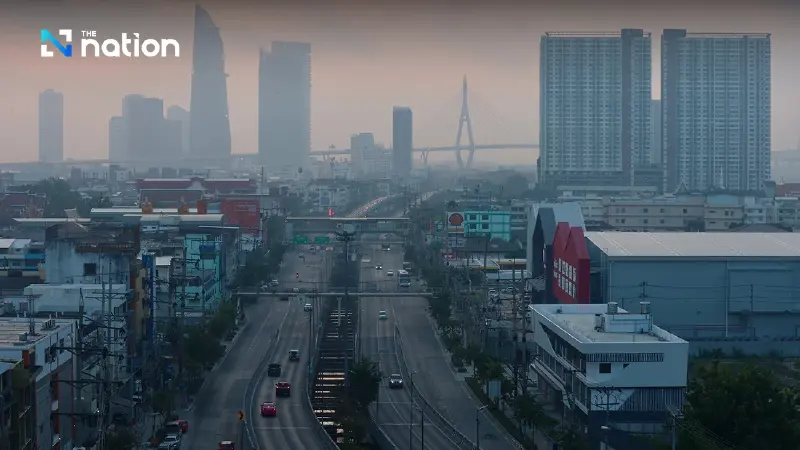


Bangkok intensifies dust control measures, expanding pollution zones, collaborating with neighbouring provinces to reduce burning, and launching dust-free classrooms for cleaner air for children."
Bangkok Governor Chadchart Sittipunt on Wednesday (October 8, 2025) provided an update on preparations to tackle the ongoing PM2.5 air pollution crisis, announcing the city's plan to strengthen pollution control measures throughout the year.
He highlighted Bangkok’s status as a "Pollution Control Zone" as a key tool for implementing stringent, year-round regulations.
Governor Chadchart revealed that Bangkok plans to expand its Low Emission Zone (LEZ) beyond just vehicle emissions, with a focus on limiting the use of cars emitting black smoke during pollution spikes. Only vehicles listed in the "green account" will be allowed in these areas. Violations of the LEZ will result in fines of up to 2,000 baht or imprisonment for up to one month, or both.

In addition to tightening vehicle controls, the city is addressing pollution from other sources, especially agricultural burning in neighbouring provinces.
Analysis has shown that Nakhon Nayok province has the highest levels of agricultural fires, with two districts heavily affected. The city plans to collaborate with relevant provinces to implement measures to reduce burning and prevent fires, which contribute significantly to cross-border pollution.
To improve the accuracy of pollution data and public health protection, Bangkok has partnered with international air quality experts to enhance monitoring and assessments. The "Dust-Free Classroom" initiative will also be expanded to protect students' health.
Moreover, the city continues to encourage the "Work from Home" policy, with over 200,000 people already working remotely. This initiative has helped reduce traffic congestion and toxic emissions, with plans to expand it further.
Governor Chadchart also discussed the "Car Free Everyday" campaign, which focuses on infrastructure development to encourage more people to use public transport. This includes the creation of bike lanes, safer pedestrian pathways, and support for the addition of 1,500 electric buses in the near future to offer an alternative to private car use.
"The solution to the dust problem requires a multi-faceted approach: controlling pollution at the source, reducing private car usage, and creating transportation alternatives. This will enable Bangkok to effectively manage the air quality crisis and provide cleaner air for everyone in a sustainable way," Governor Chadchart emphasised.
