
ONWR: Bhumibol Dam almost full, but situation under control as planned



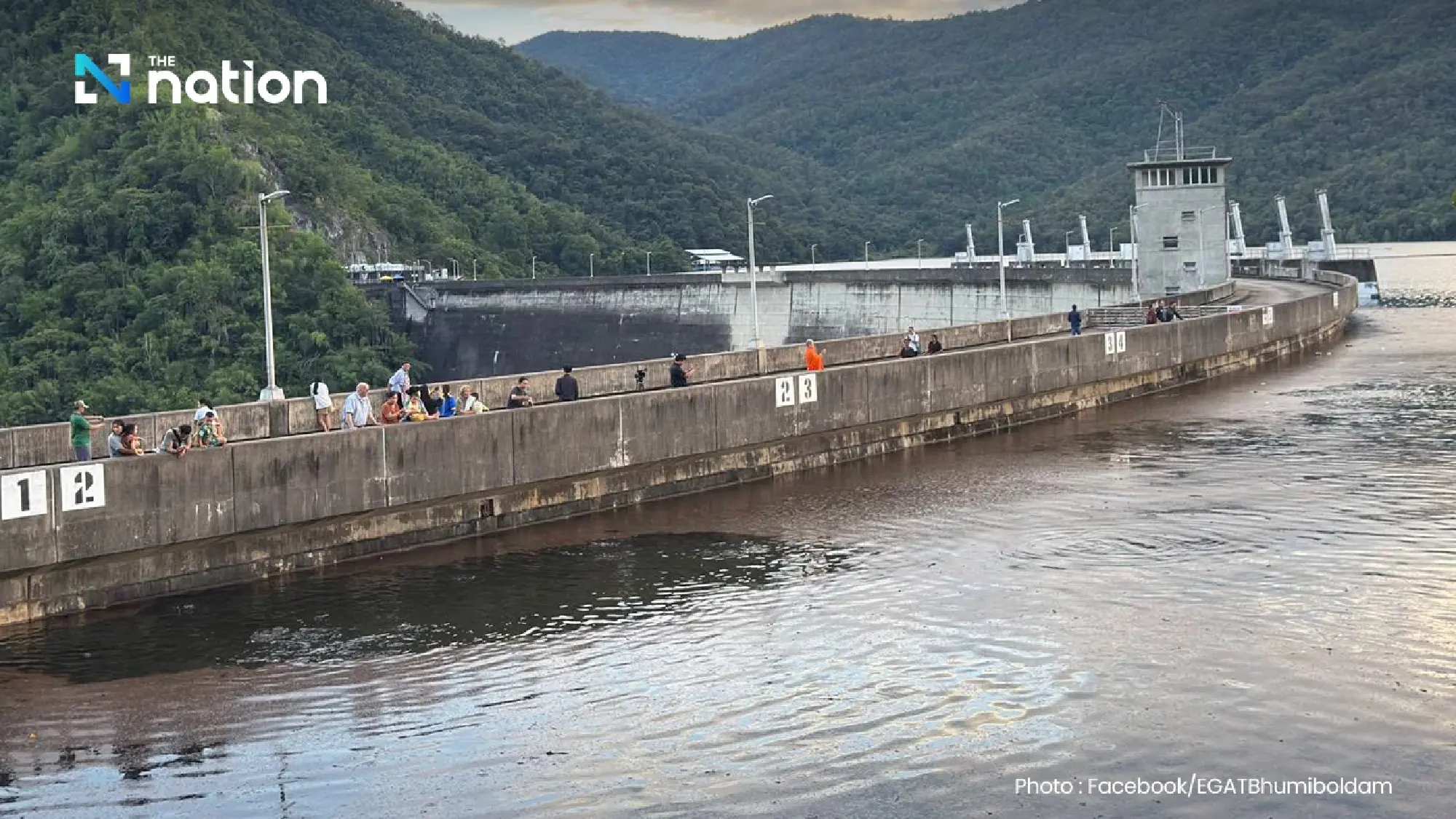
The Bhumibol Dam in Tak has reached 99.59% of its capacity, but water management is under control without the need to open the spillway, as in 2011. The ONWR has implemented measures to reduce impact on downstream areas and plans to gradually decrease the discharge rate.
The Bhumibol Dam in Tak has reached 99.59% of its capacity, but the situation is under control as planned, and the management does not need to open the spillway, as occurred in 2011, the Office of National Water Resources (ONWR) announced on Thursday.
Water Management at Bhumibol Dam
ONWR Deputy Secretary-General Paithoon Kengkarnchang said the water management at the dam has been carried out with optimal efficiency, and the spillway did not need to be opened, contrary to speculations on social media.
According to Paithoon, as of Thursday, the dam held 13,406 million cubic metres of water, or 99.59% of its capacity, marking the highest water level this year. On Wednesday, the dam received 65 million cubic metres of water inflow. The current discharge rate is 55 million cubic metres per day.


Coordinated Effort Among Agencies
Paithoon added that water management at the Bhumibol Dam has been conducted in close cooperation with the ONWR, the Electricity Generating Authority of Thailand, the Royal Irrigation Department, and other relevant government agencies.
“The public can rest assured that the dam’s water management is proceeding according to the plan, and the situation is under control without the need to open the spillway, as we did in 2011,” Paithoon stated.

Proactive Water Discharge and Future Plans
Earlier this year, the Bhumibol Dam discharged 5.3 billion cubic metres of water to create space for incoming rainwater. Paithoon noted that the amount of water inflows to the dam has been steadily decreasing, allowing the management team to gradually reduce the discharge rate to minimise the impact on downstream areas.
The planned discharge rates are as follows:
- 55 million cubic metres per day on November 13
- 30 million cubic metres per day by November 22
After November 22, the water level in the Bhumibol Dam will continue to drop, Paithoon confirmed.
Managing Other Dams in the Chao Phraya Basin
In addition to the Bhumibol Dam, the ONWR has been managing water at other dams in the Chao Phraya basin to reduce the impact on downstream areas. The measures include:
- Reducing water discharge at Sirikit Dam
- Managing water levels in Nan River and Sakae Krung River
- Reducing the discharge rate at Pa Sak Jolasid Dam to 136 cubic metres per second
- Increasing the amount of water diverted into irrigation canals on the west and east sides to 10 cubic metres per second
These measures ensure that the water flow into the Chao Phraya Dam in Chainat does not rise, allowing the dam to maintain a discharge rate of 2,900 cubic metres per second, as directed by Prime Minister Anutin Charnvirakul, to avoid further impact on downstream areas.
