
Universities Must Lead Social Change, Academic Leaders Urge
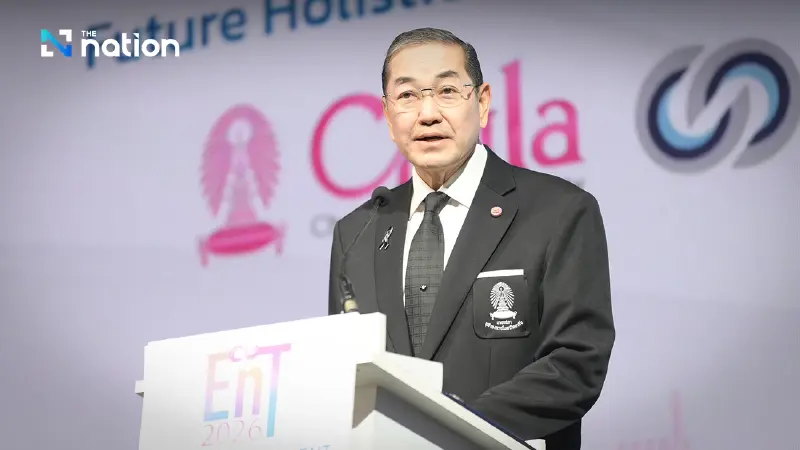


Leading academics call for universities to address AI disruption, ageing societies, and climate challenges through community partnerships
- Academic leaders urge universities to evolve beyond traditional teaching and become proactive agents of social change by engaging directly with communities to solve societal issues.
- Key areas identified for university leadership include addressing AI disruption, managing the impacts of an ageing society, tackling inequality through financial and AI literacy, and leading environmental initiatives.
- The strategy for this transformation involves shifting from lectures to "action learning," where students engage with real-world problems, and positioning universities as hubs that connect social enterprises with experts.
Leading academics call for universities to address AI disruption, ageing societies, and climate challenges through community partnerships.
Universities must evolve beyond traditional teaching institutions to become proactive agents of social transformation, addressing everything from artificial intelligence disruption to climate change, senior academic leaders have urged.
Speaking at the opening of the 10th National Engagement Thailand Conference in Bangkok on Wednesday, Prof Dr Surakiart Sathirathai, chairman of Chulalongkorn University Council, emphasised that the value of universities lies in how closely they engage with and serve communities, help solve social issues, and work intricately with people.
"Why are universities the most suitable organisations for social missions?" Prof Dr Surakiart posed, identifying six key reasons: their multidisciplinary nature, multigenerational communities, ability to cooperate across sectors, deep knowledge capabilities, maintenance of public trust, and capacity to cultivate volunteerism amongst youth.

The chairman outlined five major global disruptions where universities must lead.
In technology, he warned that "people who use AI will replace those who do not," whilst stressing universities must preserve humanist qualities that AI cannot replicate—dreams, determination, and critical thinking.

Addressing Thailand's ageing society, he introduced the concept of a "Longevity Economy," focusing on health equity and care, asserting that whilst many countries compete in health technology, Thailand ranks first in the quality of care.
On inequality, Prof Dr Surakiart called for universities to build AI literacy and financial literacy to help citizens manage household debt and improve local business management.
For environmental challenges, he detailed the Friends in Need Volunteer Foundation's initiative to install over 510 rain gauges across Thailand, Laos, and Myanmar to provide better flood warnings.
The chairman also emphasised transparency and governance, noting that to attract foreign investment, Thailand must address corruption through universities serving as models of ethics and good governance.

Prof Dr Wilert Puriwat, president of Chulalongkorn University, noted that universities are now central to building social missions and creating global citizens committed to sustainable development.
"Sustainability is not just 'green'; it must also encompass cultural sustainability and governance," he said.

To achieve real impact, Prof Dr Surakiart suggested several strategies: moving from lectures to "action learning" where students engage with real-world problems, using simulators to train people for disasters, fostering cross-university collaboration, creating agile units within large institutions, and acting as hubs connecting social enterprises and experts.
He concluded by reminding the audience that communities are the "teacher of teachers"—whilst people learn from books and AI, the most profound knowledge comes from the field.

The four-day conference, held from 13–16 January at Sam Yan Mitr Town Community Mall and Chulalongkorn University, brought together over 400 participants from 74 agencies under the theme "Future Holistic Engagement: From Local Power to Global Impact."

The event featured workshops led by the American Council on Education and the National University of Singapore, presentations on community engagement through teaching, research, and student activities, and a Community and Sustainable Marketplace showcasing 17 units demonstrating how university research can be transformed into community products and national brands.

The conference concluded with excursions highlighting Chulalongkorn's sustainable urban learning spaces and community engagement initiatives, including its Zero Waste mission and Block 28 Creative & Startup Village.
Mahasarakham University will host the 11th National Engagement Thailand Conference, continuing the momentum towards strengthening university-society partnerships.
