
Ill-fated AT-6TH Wolverine that crashed in Chiang Mai commissioned in September last year
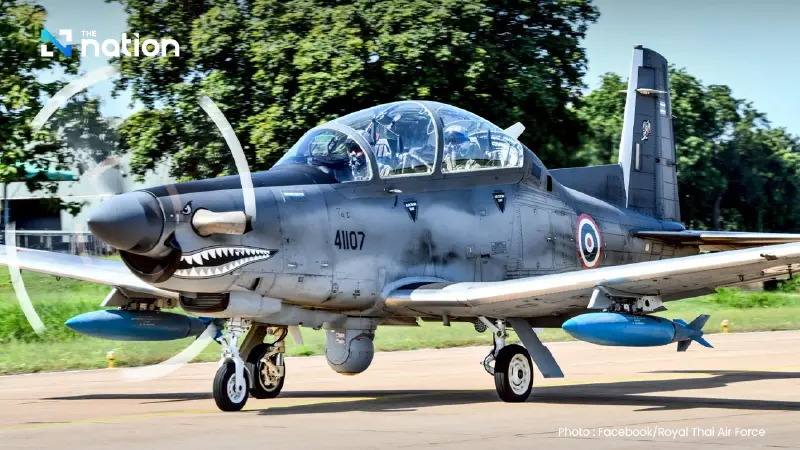


The Royal Thai Air Force says a two-seat AT-6 training aircraft crashed during a flight in Chiang Mai’s Jom Thong district, killing both pilots. Public procurement records show the RTAF commissioned eight AT-6TH Wolverine light attack aircraft with 411 Squadron, Wing 41, at Chiang Mai Air Base in September last year, as part of a 12-aircraft purchase to replace ageing L-39ZA/ART Albatros jets.
The Royal Thai Air Force (RTAF) commissioned eight AT-6TH Wolverine light attack aircraft at Chiang Mai Air Base in September last year, before one of them crashed in Chiang Mai’s Jom Thong district during training on Thursday.
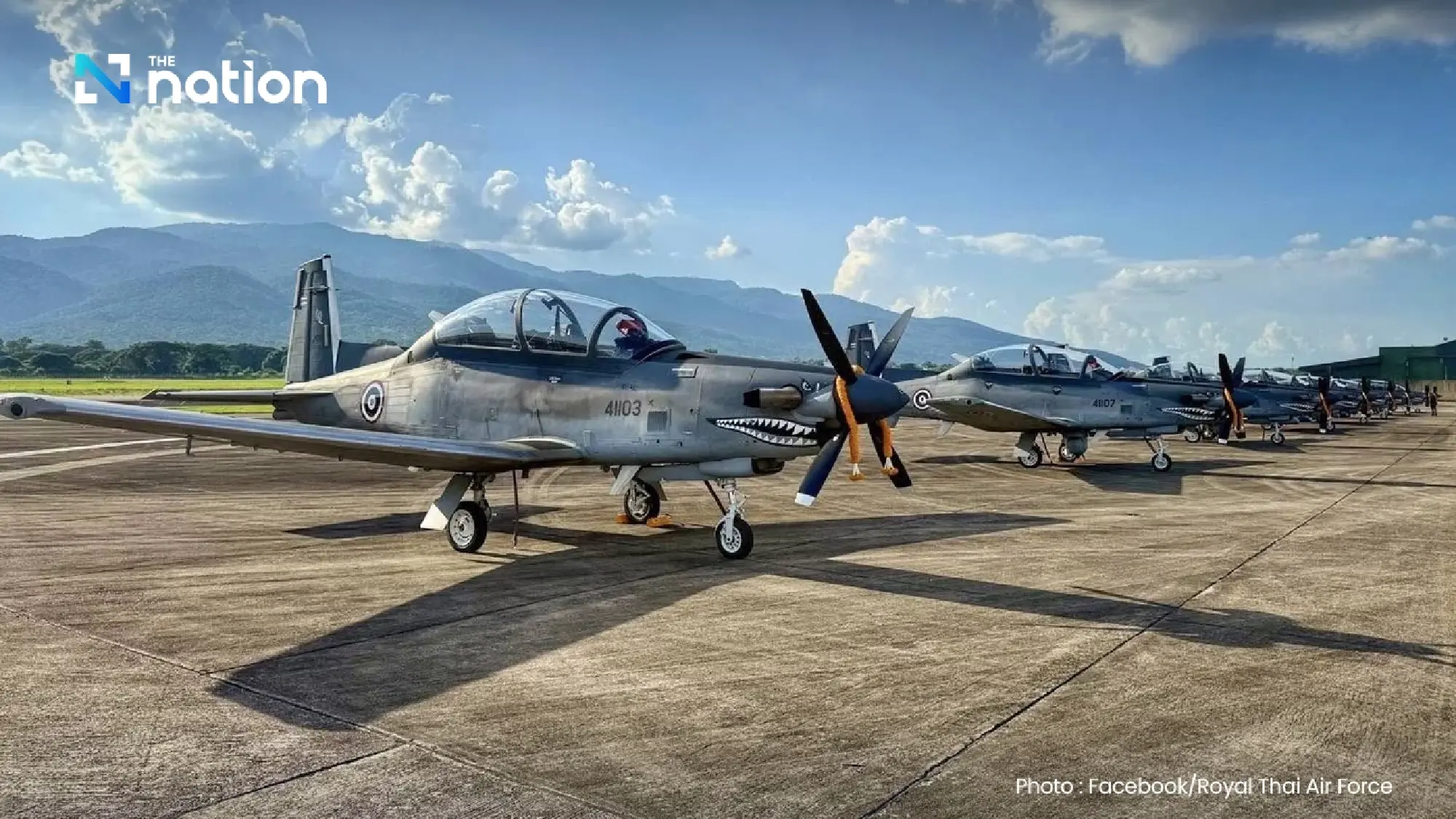
According to public procurement information available on the RTAF website, eight AT-6 Wolverines were commissioned with 411 Squadron, Wing 41, based in Chiang Mai last September.
Then RTAF commander-in-chief Air Chief Marshal Phanpakdee Phatanakul presided over the commissioning of the light attack aircraft.
Overall, the RTAF purchased 12 AT-6TH Wolverines — eight in 2021 and four more in 2022.

Eight RTAF pilots have been trained to fly the AT-6 Wolverine in the United States and have received certification to serve as pilot trainers for the model.
The aircraft were purchased to replace the ageing L-39ZA/ART Albatros jet trainers that had been in service for decades. The “TH” stands for Thailand, indicating a specific configuration tailored for the RTAF.
The “Wolverine” edge
Unlike a standard trainer, these aircraft are combat-ready. They feature mission computers from the A-10C Warthog and flight controls (HOTAS) from the F-16, making it easier for Thai fighter pilots to transition between them.

Sensors
They use the WESCAM MX-15Di sensor pod under the fuselage, which provides high-definition infrared imaging and laser targeting for day or night missions.
Power
It uses a 1,600-horsepower Pratt & Whitney turboprop engine, significantly more powerful than the standard T-6 trainer.

The RTAF uses the AT-6TH for specialised roles where deploying a high-end fighter such as a Gripen or F-16 would be too expensive or unnecessary:
- Border patrol: Constant surveillance along the Thai–Myanmar and Thai–Cambodian borders.
- Counter-narcotics: Tracking illicit trafficking in the “Golden Triangle” region.
- Counter-insurgency (COIN): Supporting internal security operations.
- Disaster relief: Using its high-resolution cameras to provide real-time imagery of flood zones or forest fires.

