
ACSC, OAG to press “Ang-Yee” and “Song-Chon” charges against cash mules



Thailand’s Anti Cyber Scam Centre says it will pursue tougher “criminal association” charges against mule handlers and cash-withdrawal mules linked to call-centre gangs, alongside fraud and money-laundering offences, after investigators found evidence of organised collusion.
ACSC moves to upgrade charges
The Anti Cyber Scam Centre (ACSC) has held talks with the Office of the Attorney General and agreed to add serious “criminal association” charges against groups known as mule handlers and cash-withdrawal mules who roam around withdrawing cash for call-centre gangs, after investigators found evidence of collusion and planning from the outset.
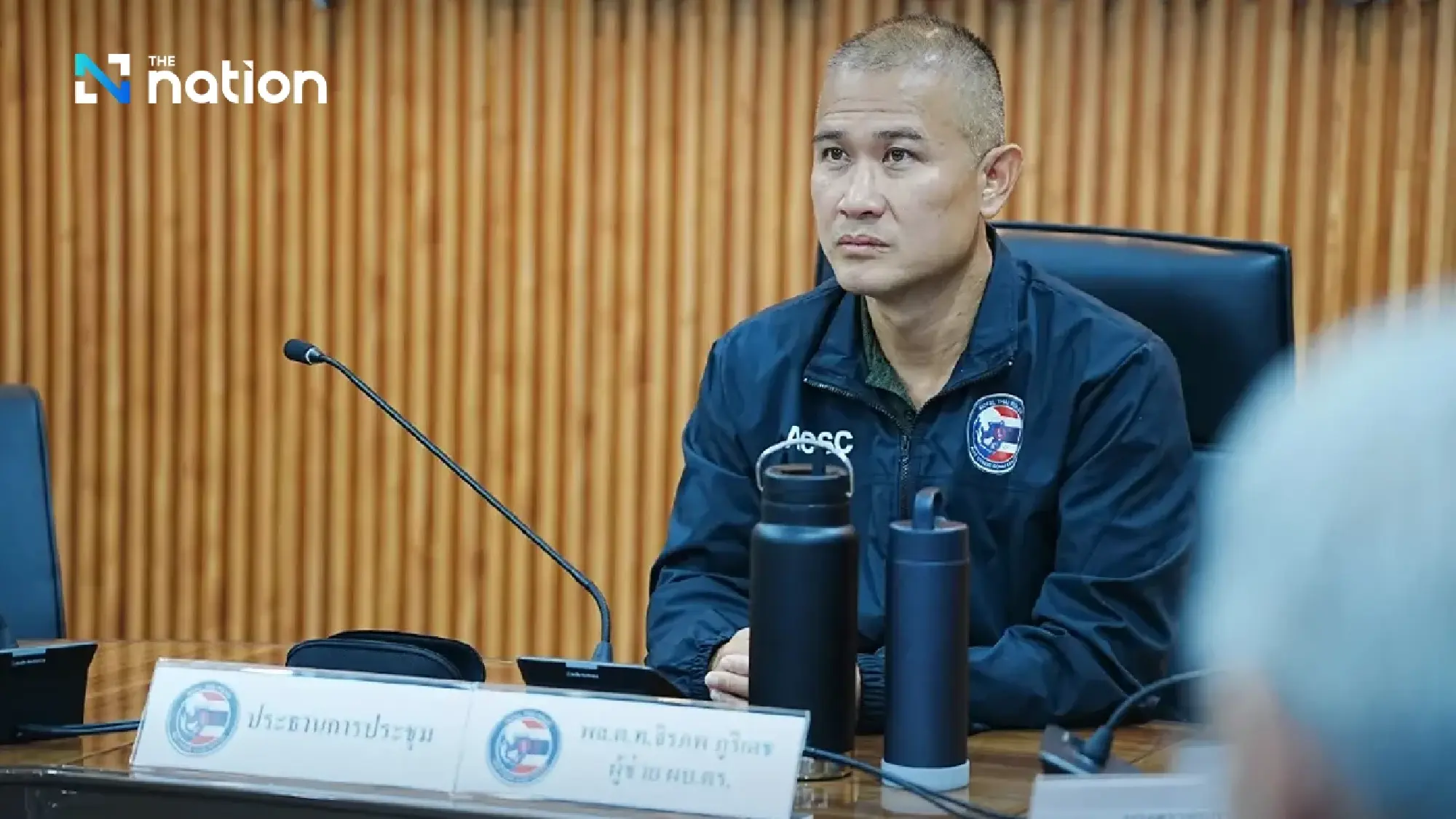
The ACSC, under the supervision of Pol Gen Thana Chuwong (Deputy National Police Chief/Director of the Police Online Anti-Scam Operations Centre) and Pol Lt Gen Jiraphop Phuridej (Assistant National Police Chief/Deputy Director), said it would pursue cases by adding charges of “Ang-Yee” and “Song-Chon”, alongside offences of jointly committing or aiding public fraud and money laundering.

Why the mule networks have shifted tactics
The ACSC said cooperation between the Royal Thai Police, the Bank of Thailand and commercial banks to quickly verify, track and freeze mule accounts — combined with border conditions — has made it harder for call-centre gangs to take mule accounts across the border to complete facial scans for transactions in neighbouring countries.
As a result, mule-account recruiters, or “stables”, have adapted by sending people to withdraw cash inside Thailand via bank counters and ATMs.
How the operation works
Investigators found the network typically uses a mule handler to control those hired to open accounts — in some cases foreigners, particularly Chinese nationals — and then directs multiple mule account-holders to take turns withdrawing cash before handing it to the call-centre network, to evade tracing victims’ money flows.
Police, coordinated by the ACSC, have intercepted and arrested many suspects. However, suspects often claim they did not know the money came from fraud and believed the offence was only allowing others to use their bank accounts.

Agencies align on tougher legal approach
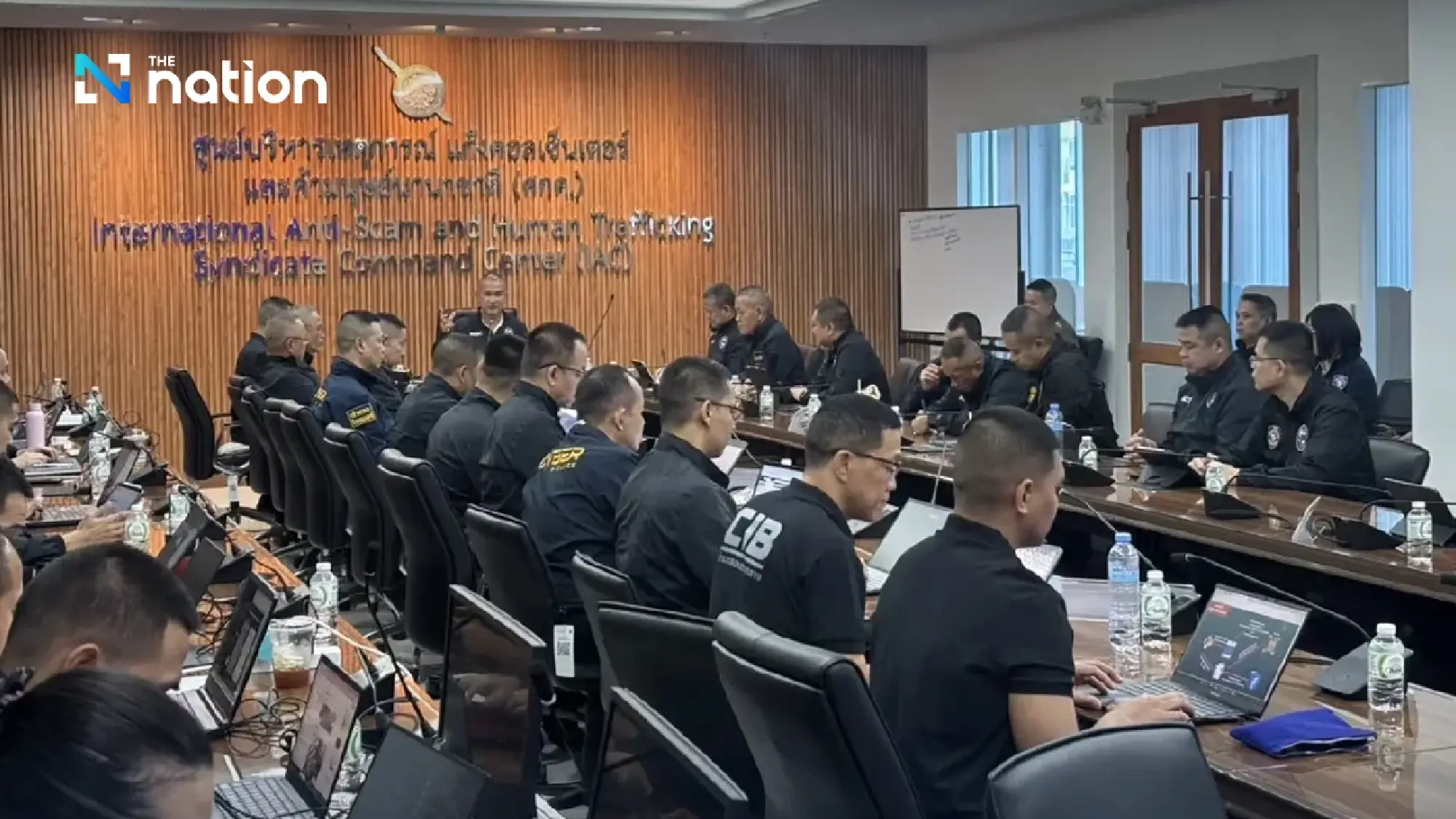
The ACSC said it recently held a practical seminar with the Office of the Attorney General, the Anti-Money Laundering Office (AMLO) and the Bank of Thailand on 19–20 January 2026 at the Immigration Bureau’s Personnel Development and Welfare Training Centre.
Following discussions, the agencies agreed that mule handlers and cash-withdrawal mules who withdraw money for call-centre gangs are acting in concert as an organised group, warranting tougher charges, including:
- “Ang-Yee” (secret society) — two or more persons: up to 7 years’ imprisonment and a fine of up to 140,000 baht.
- Leader/manager or office-holder in “Ang-Yee”: up to 10 years’ imprisonment and a fine of up to 200,000 baht.
- “Song-Chon” (criminal association) — five or more persons: up to 5 years’ imprisonment, or a fine of up to 100,000 baht, or both.
Officials said liability can arise from the point of collusion and planning, even if no victim funds have yet been transferred into the account. They added that these charges are separate from the main offences committed by call-centre gangs and are treated as distinct acts.
Warning: sentences can stack across victims and transactions
In addition to “Ang-Yee” and “Song-Chon”, suspects also face other charges, including jointly committing or aiding public fraud and money laundering. Officials said claims of ignorance may not succeed, and where money is received from multiple victims, courts may convict on a count-by-count basis, based on the number of transactions and victims — potentially resulting in extremely lengthy prison terms.
As an example, the ACSC cited a Chachoengsao Provincial Court ruling (black case no. A.319/2568, red case no. A.1230/2568) in which defendants linked to mule-account procurement were sentenced on separate counts to a maximum of 119 years in prison, and ordered to return assets to 39 victims, after police traced victims to testify in court.
