
Bangkok fast-tracks 4th city plan revision to replace outdated 2013 master plan
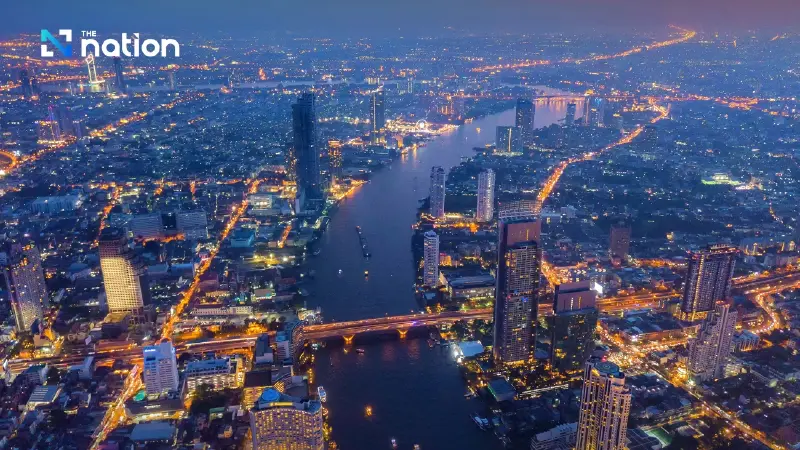


Bangkok is fast-tracking the 4th revision of its comprehensive city plan to replace the outdated 2013 master plan, with a 90-day public review scheduled for March 2026 ahead of expected promulgation around mid-2027.
Bangkok is fast-tracking a new city master plan — the 4th revision of the Bangkok Comprehensive Plan — after a long delay, aiming to replace the outdated 2013 plan that is widely seen as no longer keeping pace with the capital’s rapid urban changes.
The Bangkok Metropolitan Administration (BMA) expects the revised plan to be promulgated around mid-2027, replacing the Bangkok Comprehensive Plan B.E. 2556 (2013).
Latest step clears committee review
The latest draft has passed review by the Town Planning Committee under the Department of Public Works and Town & Country Planning. The BMA will now revise the draft in line with the committee’s recommendations.
City officials said revisions will focus particularly on issues raised by the public, including calls to cancel some planned road-network projects that could significantly affect residents.

Next public step: 90-day posting in March 2026
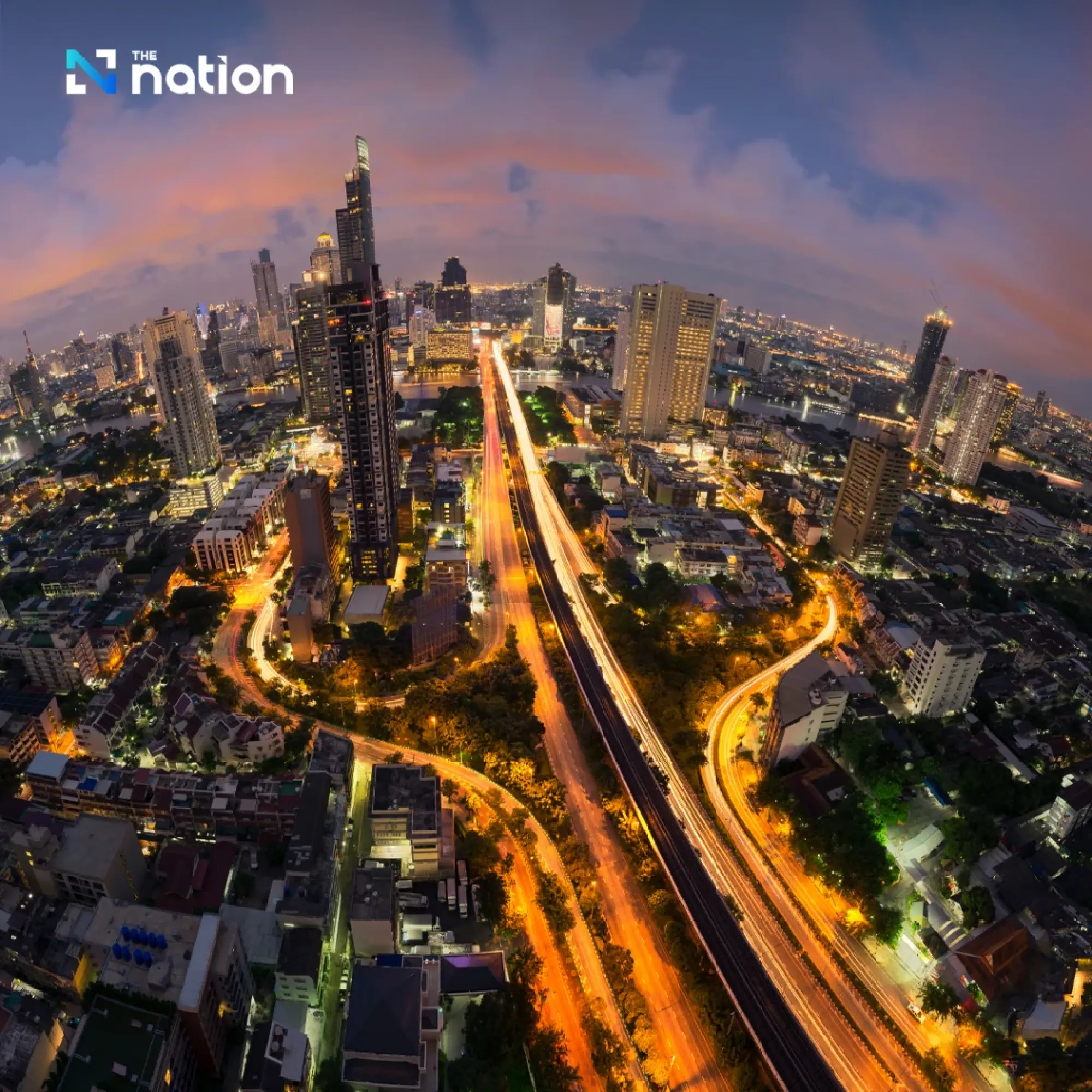
As the next major step, the BMA said it will post the draft plan for 90 days in March 2026 to allow stakeholders to examine the details and submit further feedback.
Despite revisions, the BMA signalled that the plan’s overall direction will remain largely intact, with about 90% of land-use zoning classifications unchanged.
Biggest zoning shift: “orange” residential area expands sharply
The most eye-catching change in the draft is the expansion of orange zoning — medium-density residential land (Yo.6 to Yo.10) — which would cover 349.95 square kilometres, up 23.49%, representing 41.06% of Bangkok’s total area of 1,568.73 square kilometres.
Under the 2013 plan, orange zoning covered 248.08 square kilometres.
Developers are expected to benefit from the shift, as it could increase the amount of land suitable for larger projects — including buildings higher than 23 metres and extra-large buildings exceeding 10,000 square metres.
Rail-oriented development around stations and interchanges
The revised plan places strong emphasis on guiding growth along mass-transit corridors.
In particular, areas around rail stations — including both standalone stations and interchange nodes — would see greater development potential. Around interchange stations, within an 800-metre radius, the draft allows extra-large developments and high-rise buildings, in some locations with no height limit, according to the plan’s provisions.

Select brown-zone upgrades and mixed-use investment pockets
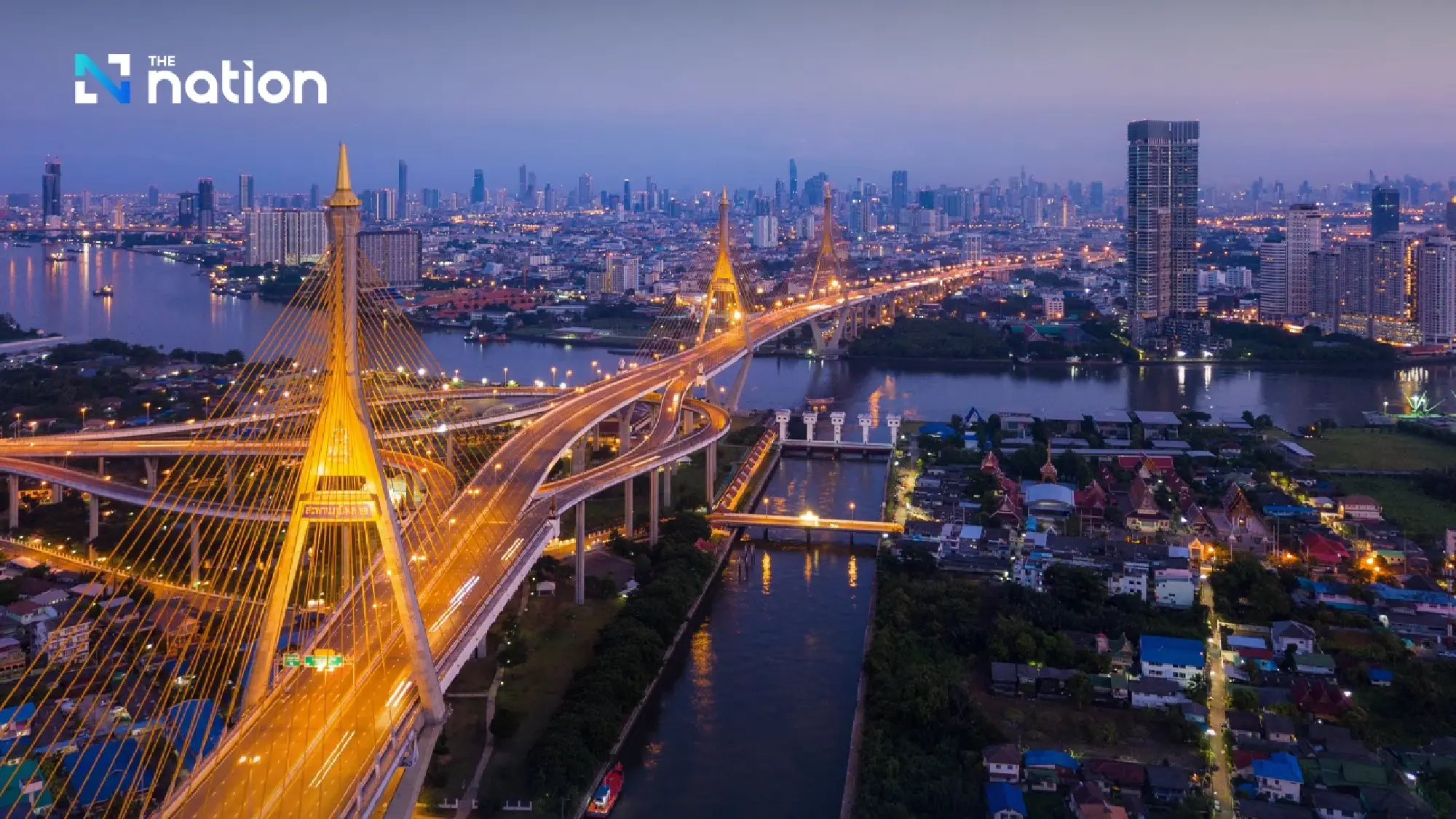
While brown zoning (very high-density residential) would not expand dramatically across the city, the draft adjusts zoning in selected high-value locations to support investment, including mixed-use development in scarce, premium areas.
Examples highlighted include the corridor from Phahonyothin through Ha Yaek Lat Phrao to Ratchayothin intersection, a key transport and commercial hub in northern Bangkok.
Rama 9–Ratchadaphisek set as secondary CBD with higher intensity
The draft also positions the Rama 9–Ratchadaphisek corridor (Rama 9 intersection to Thailand Cultural Centre) as a secondary business district, supported by rail connectivity, major offices, retail, and high-rise housing.
The area is designated red commercial zoning (Por.7), allowing development intensity of eight times the plot area — and up to 9.6 times when bonus incentives are applied.
The bonus mechanism is tied to providing public benefits such as parks, pavements and cycle lanes, while also enabling additional commercial floor area for sale.
Nine priority zones flagged to steer growth and support tourism
The draft plan identifies nine priority zones to accommodate rail-led urban growth and support conservation areas linked to tourism:
- Rattanakosin
- Ratchayothin
- Don Mueang–Lak Si
- Lat Phrao–Ram Inthra
- Srinakarin
- Min Buri
- Eastern floodwater corridors
- Taling Chan–Thawi Watthana
- Wongwian Yai–Suksawat
In the inner-city Rattanakosin zone, the draft adjusts land-use categories while keeping longstanding limits on high-rise construction, aiming instead to reflect commercial potential and strengthen the area’s tourism appeal through tighter overlay controls and compliance with environmental and building regulations.
Promulgation targeted around mid-2027
Officials expect the 4th revision to move forward after the March 2026 public posting, with the aim of promulgation around mid-2027 — marking a long-awaited overhaul of Bangkok’s master planning framework.
