
Dust chokes the city as PM2.5 levels soar, eastern Bangkok sees highest pollution levels
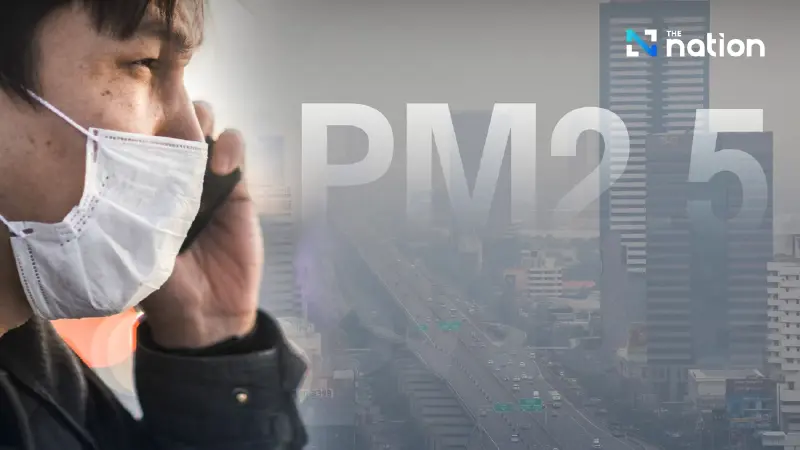


Air quality in Bangkok deteriorates as PM2.5 levels exceed standards, impacting respiratory health. Eastern Bangkok sees the highest levels of pollution.
“Dust chokes the city” — Air quality in Bangkok has worsened, with PM2.5 levels exceeding safe standards, causing respiratory issues. Eastern Bangkok records the highest levels.
The Bangkok Metropolitan Administration’s Air Quality Information Centre reported on the particulate matter (PM2.5) situation in the city as of 7am on Friday, February 6. The average level for Bangkok is 41.1 micrograms per cubic metre (µg/m³), surpassing the standard of 37.5 µg/m³.
Top 12 areas with the highest PM2.5 levels in Bangkok:
- Lat Krabang district – 61.6 µg/m³
- Bang Rak district – 53.4 µg/m³
- Prawet district – 49.4 µg/m³
- Nong Chok district – 47.8 µg/m³
- Pathum Wan district – 47.6 µg/m³
- Bang Na district – 47.5 µg/m³
- Wang Thonglang district – 46.8 µg/m³
- Khlong Sam Wa district – 46.2 µg/m³
- Ratchathewi district – 46.2 µg/m³
- Khlong Toei district – 45.8 µg/m³
- Bang Sue district – 44.7 µg/m³
- Phra Nakhon district – 43.6 µg/m³

Air quality ranges by area:
- Northern Bangkok: 37.9 - 44.7 µg/m³ – Impact on health likely.
- Eastern Bangkok: 33 - 61.6 µg/m³ – Impact on health likely.
- Central Bangkok: 33.8 - 46.8 µg/m³ – Impact on health likely.
- Southern Bangkok: 34 - 53.4 µg/m³ – Impact on health likely.
- North Thonburi: 36.3 - 43.3 µg/m³ – Impact on health likely.
- South Thonburi: 30.6 - 43.1 µg/m³ – Impact on health likely.

Air quality at orange level: This level indicates a beginning impact on health. It is advised for the general public to use protective equipment, such as PM2.5 masks, when leaving buildings.
Outdoor activities, especially strenuous exercise, should be limited. Pay attention to symptoms such as coughing, difficulty breathing, or eye irritation.
At-risk groups: High-risk individuals should wear protective gear like PM2.5 masks every time they go outside. Avoid strenuous outdoor activities and follow medical advice. If any symptoms arise, seek medical attention immediately.
