
DNP rejects rumours over ‘Sido Hoo-pub’ death, orders probe
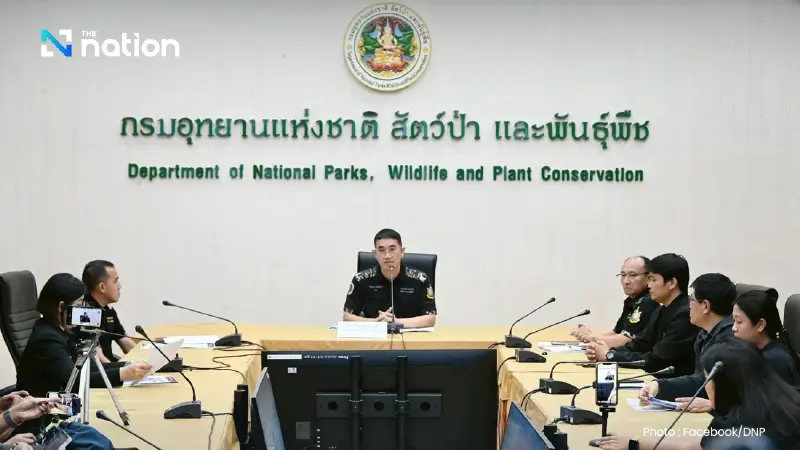


DNP director-general Atthapol Charoenchansa dismissed misinformation and conspiracy claims over the death of wild elephant “Sido Hoo-pub” during relocation, saying an inquiry is under way and future relocations may be paused pending clearer findings.
The Department of National Parks, Wildlife and Plant Conservation (DNP) on Thursday issued a detailed clarification on the relocation operation involving the wild elephant “Sido Hoo-pub”, after an animal-welfare group, Jit-Arsa Rak Sat Thai, and a network of more than 200 people filed a complaint and staged a protest a day earlier calling for accountability from the department’s leadership.
The protest followed public anger after “Sido Hoo-pub” died during a forced relocation operation around midnight on February 3. The incident triggered a wave of social-media criticism, including calls to boycott resorts in Phu Wiang district, Khon Kaen, and online speculation alleging the elephant was deliberately killed—claims the DNP rejected.
DNP: reports and rumours do not match the facts
DNP director-general Atthapol Charoenchansa said information circulating publicly did not align with the facts and warned that misunderstandings could further confuse the situation.

He said the DNP—both headquarters and regional units—felt deep regret and was ready to take responsibility if any errors were found. He added that the department has already established a fact-finding committee and ordered an expedited investigation from the time the incident occurred.
“At every level, all officials involved feel no less grief than the public,” Atthapol said, adding that staff and veterinarians acted with good intentions and had no intention of harming the elephant.
Why relocation was ordered: court ruling and community impacts
Natthawat Nui Sriram, director of the Protected Area Regional Office 8 (Khon Kaen), said the elephant group involved had caused problems in Khon Kaen since 2023, with two people injured and two killed.
He said the Khon Kaen Administrative Court ruled on October 31, 2025 that the DNP must relocate four elephants out of the area within 30 days, citing urgent impacts on local residents. Officials therefore proceeded with an operation, starting with “Sido Hoo-pub”.

Operation details: DNP cites ‘highest standards’ and prior experience
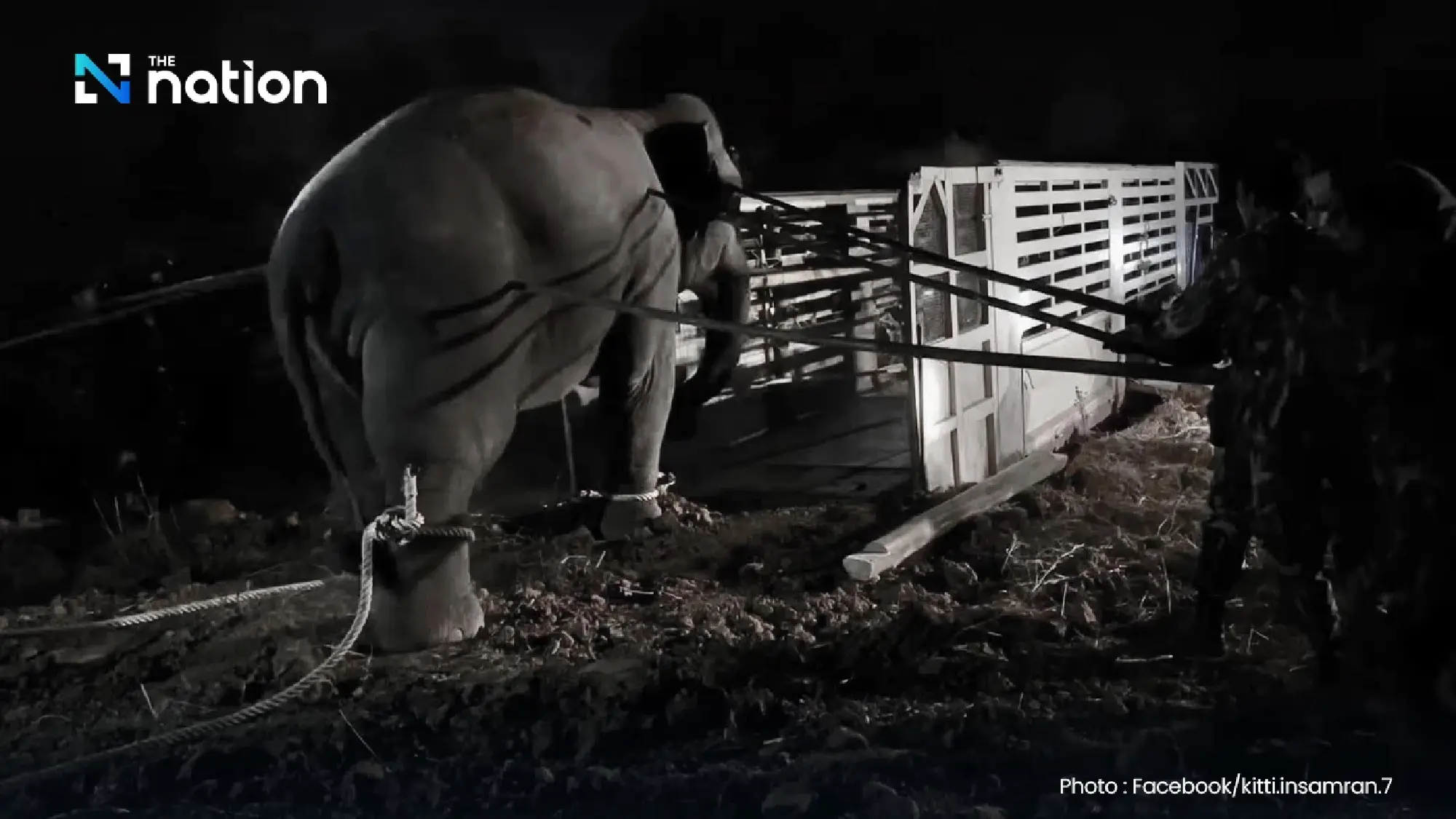
The head of DNP’s Capture and Relocation Team 1 said preparations began in January 2026, and that field procedures—securing the area, restraining the elephant and loading it onto a transport truck—were carried out to the highest standards under close veterinary supervision.
He said the DNP had conducted 32 relocations using the same approach.
Age and musth assessment
The team estimated the elephant’s age at 15–20 years, based on external characteristics including ear pigmentation patterns and wrinkles.
Officials also said reports and images indicated the elephant was in musth, noting that male elephants in musth are typically 15 years or older. They also cited a footprint-based estimate suggesting a height of around 2.40 metres, consistent with an age range of 15–20 years.


Sedation and preliminary post-mortem findings
DNP veterinarian Kittiyaporn Iamsa-ard said sedative dosage was calculated from an estimated weight of 2–2.5 tonnes and height of 2.44 metres. She said four sedative darts were administered, but during relocation the elephant became abnormally alert and deteriorated rapidly.
She said the veterinary team gave one reversal dose (a total of five injections) and attempted resuscitation (CPR), but the elephant died.
Preliminary post-mortem findings indicated respiratory failure caused by aspiration, with food obstructing the airway—an unforeseen event linked to accumulated stress, she said.
Kittiyaporn added that withholding food from a wild elephant for 10–15 hours before sedation is not feasible in practice. She said the DNP is proposing a revised approach—studying elephants’ “body clock” and targeting the period when they rest and begin digesting food (03.00–05.00) as a potential “golden window” for future operations, alongside more transparent checks on drug use.
Relocations may be paused while DNP reviews procedures
Atthapol said the DNP’s teams have relocated elephants 32 times in total—22 in the eastern region, five in the South, and three under court orders, including Phlai Khainui, Phlai Tank, and Sido Hoo-pub.
However, he said the department must now reassess relocation measures. While relocation remains necessary, he said operations may need to be paused until lessons are drawn and clearer findings are obtained. He also raised concerns about how officials would treat and care for elephants—and how they would assist affected communities—if relocations cannot proceed.


‘Helping elephants is like helping people,’ Atthapol says
Atthapol said officials are under heavy pressure from residents who have suffered losses of life and property and want elephants moved quickly, while impacts from wild elephants have continued to intensify.
He said the DNP is working with provincial authorities, a House committee on wild-elephant issues, and the National Elephant Management Committee to support both people and wildlife.
“Helping elephants is like helping people, and helping people is like helping elephants,” he said, adding that the DNP does not value people over elephants. He said that more than 90% of elephant attacks occur outside protected forests, and that there have been 276 human deaths from 2012 to the present.
Atthapol added that while the department tries to keep elephants in forests by maintaining food and water sources, it is not possible to prevent elephants from leaving forest areas all the time—particularly in the East, where he said about 75% of elephants venture outside forest zones, sometimes travelling tens of kilometres and causing damage.
He said officials generally attempt to drive elephants back first, but resort to relocation when that fails. The “Sido Hoo-pub” case, he said, was the first serious incident after 32 relocations, and must be studied closely so the department can understand what went wrong and prevent a repeat.
“We are all deeply saddened—every one of us,” he said, adding that the department has sought central-budget support to compensate affected residents fairly and does not want the public to blame communities entirely or see people and elephants pushed into further conflict.
