
GISTDA: Thailand hotspots hit 839, with forests accounting for over half
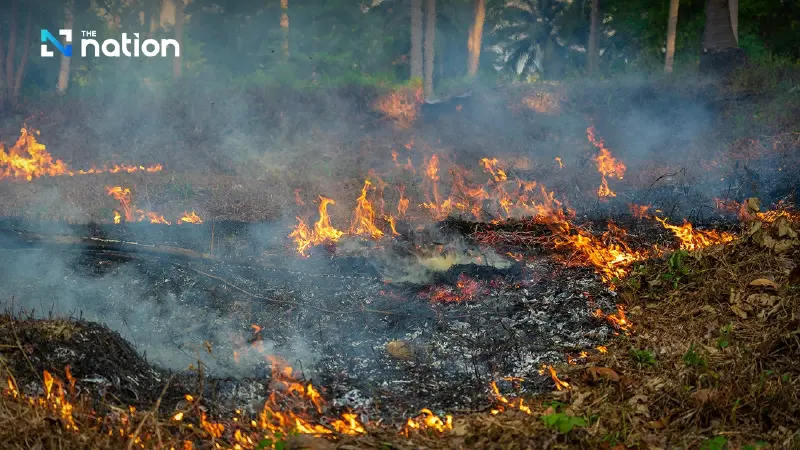


GISTDA satellite data shows Thailand recorded 839 hotspots on February 21, with more than 50% in forest areas, while Cambodia and Myanmar remained in the thousands—raising cross-border haze concerns.
Thailand’s forest-fire situation remains worrying after the Geo-Informatics and Space Technology Development Agency (GISTDA) reported 839 hotspots, with forest areas making up more than half of the national total—an indicator closely linked to haze and PM2.5 pollution.
Forest hotspots dominate Thailand’s tally
GISTDA said hotspot detection from the Suomi NPP satellite using the VIIRS system on February 21, 2026 showed hotspots across multiple land-use categories, led by forest zones.
The breakdown was: national forest reserves (253), conservation forests (172), agricultural land reform areas (171), agricultural areas (154), communities and other areas (83), and roadside/highway areas (6).

Combined, national forest reserves and conservation forests totalled 425 hotspots, or over 50% of Thailand’s hotspots, which GISTDA-linked reporting described as a major driver of the current haze and PM2.5 problem.
Neighbouring countries remain in the thousands
The regional picture also remains severe, with hotspot counts that could affect Thailand’s air quality depending on wind direction: Cambodia (2,315), Myanmar (1,093), Laos (775), Vietnam (435) and Malaysia (5).

Where the public can follow updates
GISTDA urged close monitoring of hotspots—especially in forest areas in the North and Northeast—and said the public can track real-time hotspot data and wildfire-risk maps via its online disaster platform.
