
Stargazers urged to catch rare Venus-Saturn conjunction on Sunday night
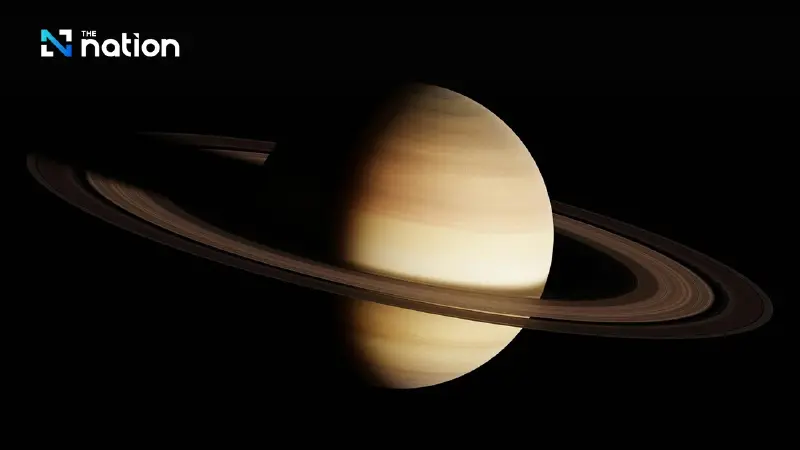


Stargazers in Thailand are being encouraged to look towards the western horizon shortly after sunset on Sunday as Venus and Saturn appear just 1° apart in a rare evening conjunction.
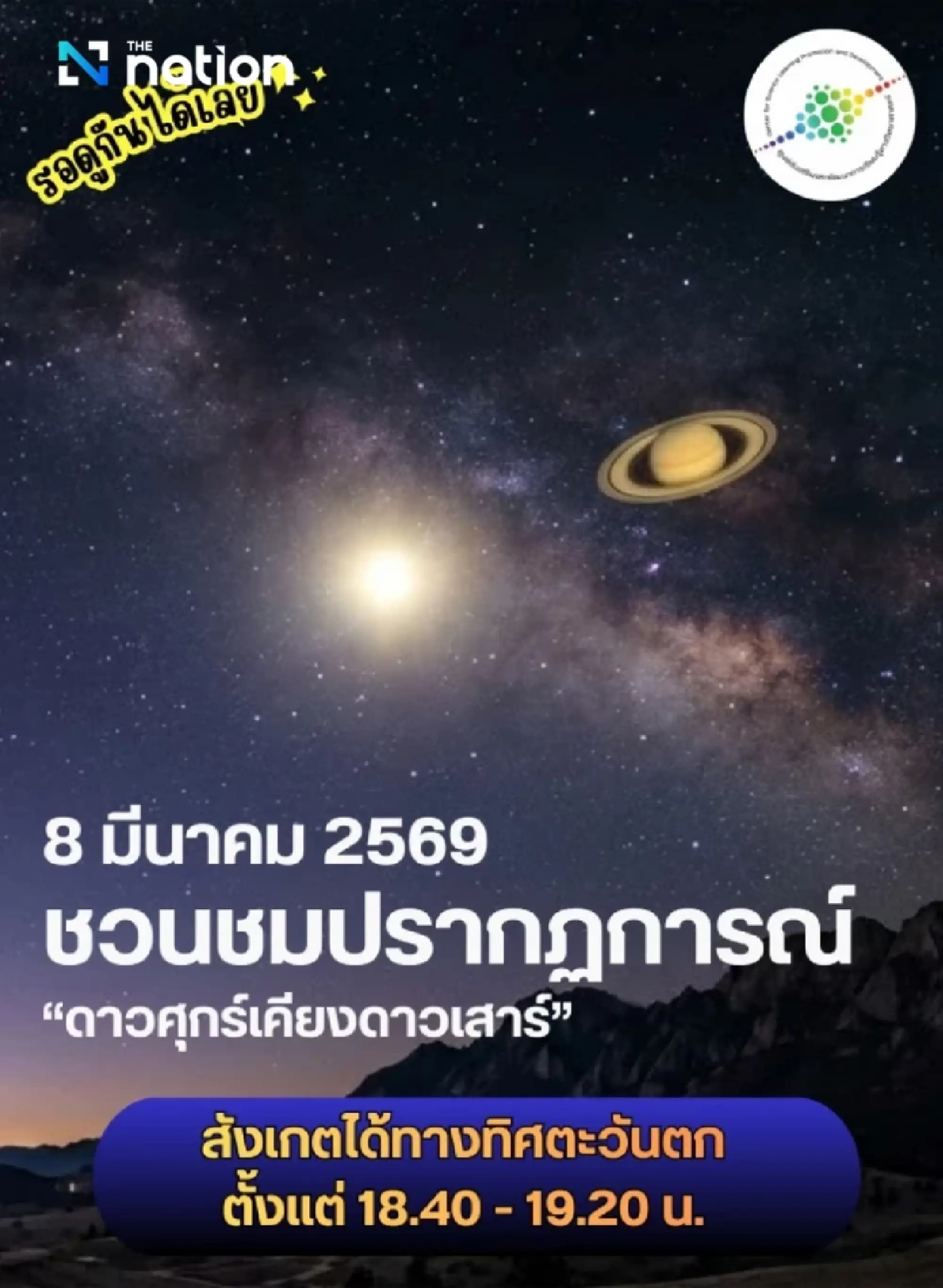
Bangkok Planetarium is urging stargazers in Thailand to look towards the western horizon about half an hour after sunset on Sunday to catch the rare conjunction of Venus and Saturn. A conjunction is when two planets appear close together in the sky from Earth’s perspective, even though they remain far apart in space. Venus and Saturn will appear about 1° apart on March 8.
During the event, the two planets will appear strikingly close together in the evening twilight. This is only a visual alignment: although they look like near neighbours from Earth, they are in fact separated by roughly 800 million miles in space.
Bangkok Planetarium said stargazers could observe the Venus-Saturn conjunction from 6.40pm to 7.20pm on Sunday.

Viewing details
To see the pair, look towards the western horizon shortly after sunset. The best viewing window is about 30 to 45 minutes after sunset, as both planets will be low in the sky and will set relatively quickly.
Venus will be the much brighter object, shining as a brilliant white point of light. Saturn will appear fainter nearby. On March 8, Venus is expected to sit about 1° to the upper right of Saturn.
Both planets should be visible to the naked eye, though binoculars may help observers pick out dimmer Saturn more easily against the twilight glow.

Why this conjunction stands out
This conjunction is notable because it comes as Venus is becoming more prominent in the evening sky, while Saturn is heading towards solar conjunction later this month and will soon disappear from the evening sky for a time. Space.com lists the Venus-Saturn conjunction as one of March 2026’s key sky events.
It also follows a busy month for skywatchers, including a total lunar eclipse earlier in March.
