
Thailand hotspots hit 1,488 as Myanmar tops 6,000
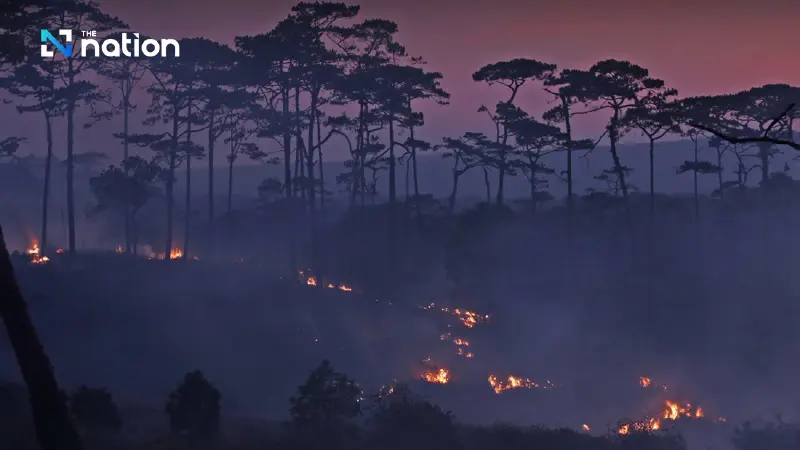


Thailand recorded 1,488 wildfire hotspots on March 23, with more than 80% found in forest areas, while Myanmar remained the region’s worst-hit source of haze.
Thailand’s wildfire and haze situation remains a serious concern, with satellite data showing 1,488 hotspots nationwide on March 23, most of them concentrated in forest areas.
The Geo-Informatics and Space Technology Development Agency (Public Organisation), or GISTDA, said data from the Suomi NPP satellite using the VIIRS system found that more than 80% of the hotspots were located in forest zones, underlining the growing threat to ecosystems and the worsening build-up of PM2.5 pollution in the atmosphere.
Forest areas account for most hotspots in Thailand
Of the 1,488 hotspots detected across Thailand, 614 were found in conservation forests, the highest number among all land categories, followed by 583 in national reserved forests.
Agricultural areas recorded 105 hotspots, while communities and other areas accounted for 90. Agricultural land reform areas reported 87 hotspots, and roadside areas a further 9.
The data suggest that forest fires remain the main driver of the country’s current haze problem, with the concentration of hotspots in wooded areas posing a direct risk to both environmental systems and air quality.
Myanmar and Laos remain major regional concerns
Thailand is not the only country facing severe wildfire conditions. GISTDA said several neighbouring countries in the region were also recording large numbers of hotspots, raising the risk of transboundary haze drifting into Thailand.

Myanmar remained the worst affected, with 6,581 hotspots, followed by Laos with 1,850. Thailand ranked third with 1,488, ahead of Cambodia with 627, Vietnam with 361 and Malaysia with 165.
The figures highlight the regional scale of the fire crisis and the continued threat posed by cross-border smoke pollution.
GISTDA urges public to track real-time wildfire data
GISTDA urged the public to follow hotspot updates and wildfire risk forecasts in real time so they can better prepare for haze exposure and take precautions to protect their health.
The agency said the information is available through its disaster monitoring platform, which provides ongoing updates on hotspot activity and fire-risk areas across the country.
