
Thailand readies nationwide drought response as El Niño looms
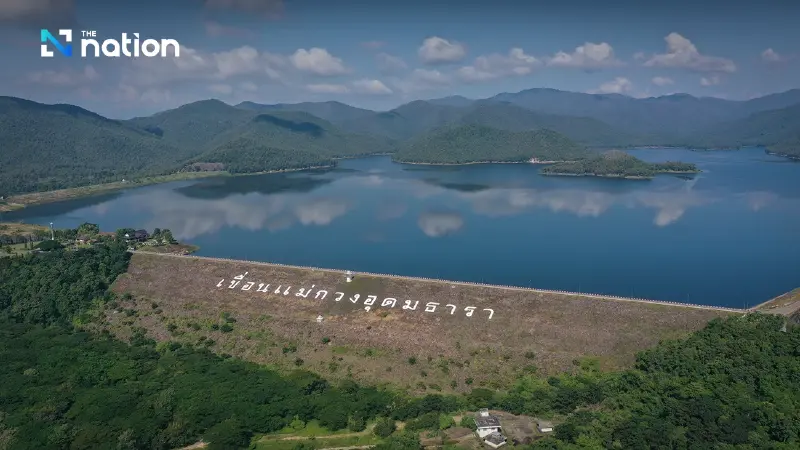


Thailand’s Royal Irrigation Department says it is ready for possible El Niño conditions, stepping up water management and drought relief in at-risk areas nationwide.
The Smart Water Operation Centre (SWOC) of the Royal Irrigation Department recently outlined Thailand’s water situation and outlook for 2026, saying the country is likely to enter an El Niño period in the middle of the year, which could bring below-normal rainfall.
From the start of the year to mid-April, cumulative rainfall was found to be 57% below normal, the department said.
To address the situation, the Royal Irrigation Department said it has been closely monitoring weather conditions and systematically planning water management in advance.
As a result, water levels in large and medium-sized reservoirs nationwide remain at manageable levels, with total storage standing at more than 47.18 billion cubic metres, or 62% of combined capacity, around 1.99 billion cubic metres higher than in the same period last year.

Although the overall water situation remains under control, the trend of below-normal rainfall, together with rising water demand, could increase the risk of water shortages in some areas, particularly those outside irrigation zones.
The department said it has been working with relevant agencies, including the Office of the National Water Resources, the Thai Meteorological Department and local authorities, to continuously monitor, assess and plan water management in line with weather conditions and available water reserves.
For water allocation during this dry season, more than 29.85 billion cubic metres of water have already been used, equivalent to 89% of the planned amount.
In the Chao Phraya River basin in particular, water delivery has been closely monitored to ensure supplies remain sufficient to meet demand towards the end of the dry season, while also reserving water for the start of the coming rainy season.

The department has also set out systematic water management measures to cope with both short-term and long-term situations, including:
- planning water management two years in advance
- improving water storage efficiency during the rainy season
- controlling and slowing water releases in line with the situation
- adjusting crop cultivation plans to suit available water reserves
- promoting 3R measures — Reduce, Reuse and Recycle — to improve water-use efficiency

At the same time, assistance has been accelerated for people in areas at risk of water shortages. The department has deployed more than 6,700 units of machinery, water pumps and water trucks, of which 597 units have already been used to provide support across 46 provinces.
Under its irrigation employment programme, more than 47,856 workers have already been hired, helping to generate extra income for farmers and the public while also addressing drought-related problems.
As for water quality in major rivers, the department has continued monitoring salinity levels and found that they remain within normal limits and do not exceed standards, meaning the water is still safe for consumption and agriculture.

The Royal Irrigation Department said it will continue to closely monitor both water quantity and water quality, while adjusting its water management plans in line with the situation to ensure adequate supplies for public demand and reduce the risk of future shortages.
More information on the water situation is available at: https://www2.rid.go.th/th/main.
