
Phuket faces 100-day water countdown if dry weather persists
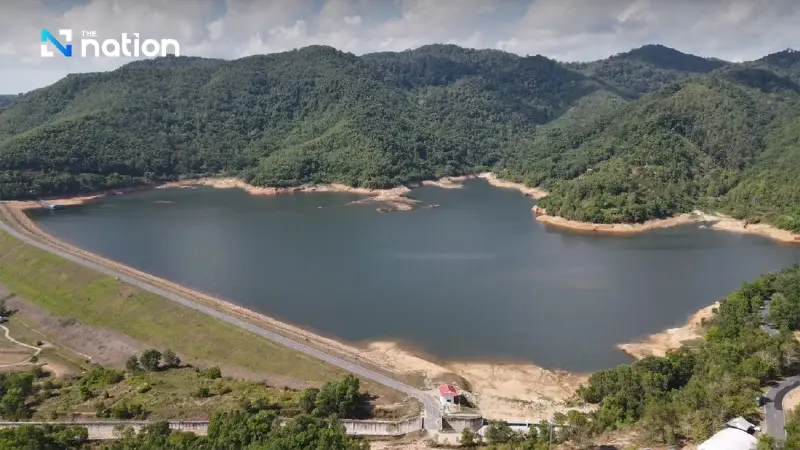


Phuket is facing water supply risks during the dry season, with current reserves estimated to last another 100 days, as agencies accelerate water management measures and prepare emergency backup plans.
The Provincial Waterworks Authority (PWA) Phuket branch joined a meeting to discuss water supply management measures, chaired by Phuket Governor Nirat Phongsitthaworn, in preparation for the risk of water shortages during the dry season on Monday (March 23).
The meeting was told that the province’s three main reservoirs currently hold a combined total of around 12 million cubic metres of water, or 52% of total capacity, which would be sufficient to meet demand until late June if no further rain falls. Rain is expected to return between late April and early May.
Phuket faces structural limitations in water storage as it is an island with mostly mountainous terrain, making it difficult to retain water. Rainwater also runs off quickly into the sea, resulting in flooding during the rainy season and water shortages during the dry season. At the same time, water demand continues to rise due to the expansion of tourism and urban development.

In terms of water management, the province is currently able to produce more than 126,720 cubic metres of tap water per day from eight water production stations. It can also receive an additional 100,000 cubic metres of raw water per day from the Royal Irrigation Department, while also sourcing water from the private sector and managing community water sources to cope with rising demand.
At the same time, Phuket has prepared for emergency situations by surveying more than 2,647 backup water sources across the province, including groundwater wells and shallow wells, while also compiling an integrated water database to monitor the situation in real time.
The governor has instructed all relevant agencies to urgently gather water-related data, including local water production capacity and available private-sector water sources, to strengthen management efficiency.
The province is also monitoring progress on long-term projects, including the expansion of the Phang Nga–Phuket water supply system and a study into diverting water from Ratchaprapha Dam, in a bid to improve long-term water security amid ongoing climate challenges and continued economic growth.
