
Senator warns land bridge project carries high investment risks
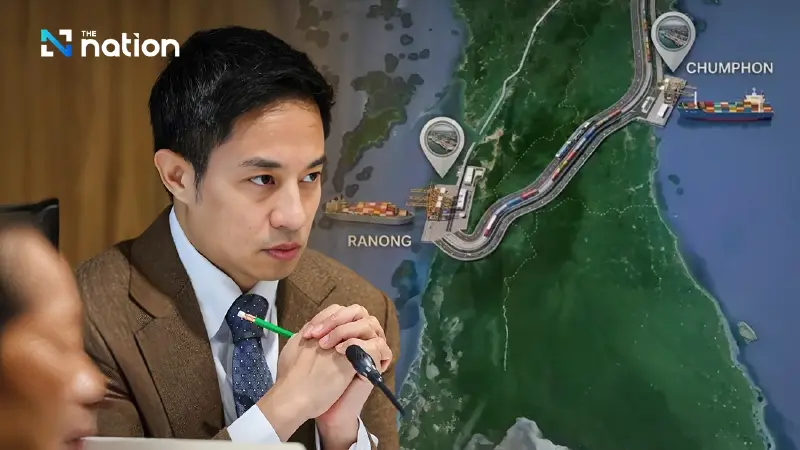


Senator Norasate warns Thailand’s 1-trillion-baht land bridge project risks low returns, high debt and flawed studies.
Senator Norasate Prachyakorn has warned that the 1-trillion-baht land bridge project carries high investment risks, citing low projected returns that fall far below the standard for public investment projects.
“Previous reports revealed that it's not worth it because the Economic Internal Rate of Return (EIRR) is only at 1.24 percent, which is far below the 12 percent standard for public investment projects,” he said.
Norasate also raised concerns over the project’s financing structure and potential partnerships with foreign investors, saying that if the government proceeds, a public-private partnership (PPP) model would be more appropriate to reduce risks borne by the state.
“I think the PPP model might be the best because we have to share risks with the private sector and bring in operators from the port, logistics, and shipping industries,” he said. “The government should minimise the immediate public debt burden and ensure proper risk-sharing, especially regarding demand risks.”
He also expressed doubts over the credibility of the new feasibility study, given the government’s pledge to present a new land bridge report within 90 days.
Despite government claims that the project could create 100,000 jobs, Norasate said previous studies relied on unrealistic assumptions.
Thailand has planned to build the land bridge project since the early 2000s, but the plan has never materialised. The current government, however, is accelerating the 1-trillion-baht project, drawing criticism and concerns from local communities.
The project is designed to construct railways, motorways, and two deep-sea ports to transport goods between the Andaman Sea and the Gulf of Thailand, but many question its environmental impact and investment returns.
According to a recent National Institute of Development Administration (NIDA) poll conducted in southern Thailand, 54.43% of respondents had heard of the land bridge project but only understood it to a limited extent.
The senator said there are too many flaws in current feasibility studies, suggesting more public hearings and clearer communication with local communities and the public.
“We (senators) visited local communities in southern Thailand last year. Local residents, including fishermen, will be impacted the most, and many are deeply concerned about environmental consequences. The current environmental and health impact assessment report needs to be corrected,” he said.
He also said that even parliamentarians still lack clear information on how the government plans to proceed with the project, as information remains unclear and insufficient at this stage, adding that current polls cannot represent the real opinions of southern residents.
He added that uncertainty remains over whether enough global shipping operators would actually use the land bridge route, warning that overly optimistic projections could leave the state exposed to long-term financial risks.
