
Thailand tightens drone rules with training and online permits
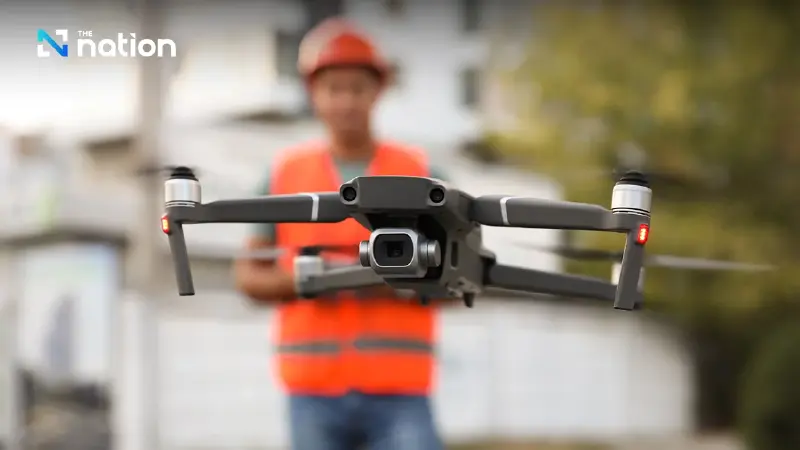


CAAT’s new drone rules require training, electronic registration and online flight permits for medium-risk operations from May 17, 2026.
Thailand will introduce tougher rules for drone operations from May 17, 2026, requiring pilots involved in specialised or medium-risk flights to complete approved training, register their aircraft electronically and obtain flight permits through an online system.
The Civil Aviation Authority of Thailand (CAAT) has issued a new announcement covering unmanned aircraft, or drones, weighing up to 25 kilograms. The move marks a major update to the Ministry of Transport’s 2015 rules, which have been in use for more than a decade.
The new regulations are aimed at supporting the growing use of drones in commercial activities and modern aviation technology while maintaining public safety and airspace security.

Under the 2026 rules, drone operations classified under the “Specific Category” will be subject to stricter oversight. These include medium-risk flights such as commercial operations, cinematography, surveying, flights in restricted or specific areas, and missions that deviate from general flight conditions.
Operators in this category must conduct risk assessments and receive CAAT approval before each mission.
Drone pilots will also be required to complete CAAT-certified training courses covering aviation law, air traffic rules, safety measures and risk management. Operators must hold the appropriate operational rights for the type of aircraft they use.

CAAT has also strengthened registration requirements. Every drone must be registered through an electronic system, and its registration number must be clearly displayed on the aircraft for identification and tracking.
The registration format will follow the standard XX-NN-NN-NNNN. The printed letters and numbers must contrast with the drone’s surface and be at least 0.3 centimetres high.
Before each operation, applicants must submit flight plans online, including the purpose of the flight, date, time, coordinates, pilot names and insurance documents.
CAAT may also require additional measures before granting approval, such as flight manuals, risk management plans or flight demonstrations.
The new framework changes several key requirements from the 2015 rules. Training, previously voluntary, will become mandatory within one year. Registration will move to an enhanced electronic system, while flight plans will be required for all operations under the new category. Permit validity will be extended from two years to five years, and submissions will shift fully online. The minimum third-party insurance requirement remains at 1 million baht.

CAAT said operators already licensed under the 2015 rules may continue operating until their permits expire. However, those seeking to conduct flights under the new Specific Category must comply with the additional 2026 requirements immediately.
The regulatory change comes as Thailand’s drone industry expands across logistics, agriculture, surveying and digital media. Authorities say the aim is to balance innovation with long-term aviation safety and public confidence.
