
US and China signal opposition to proposed Hormuz shipping tolls
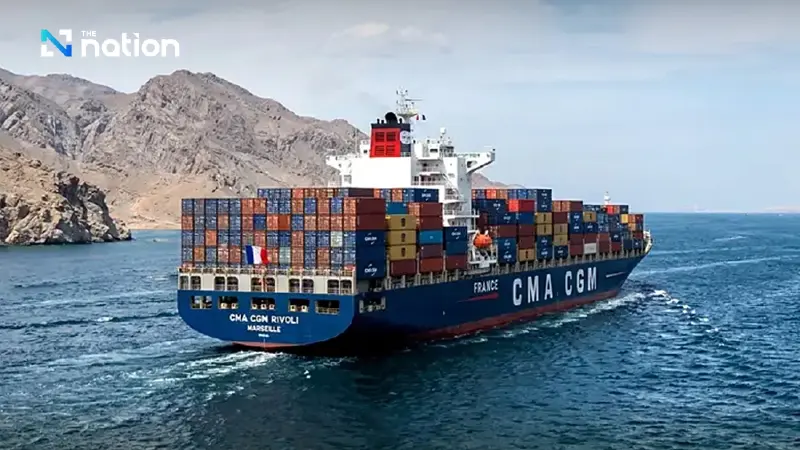


Washington says Marco Rubio and Wang Yi agreed that international waterways must remain toll-free as Trump prepares to meet Xi Jinping.
- The US Secretary of State and the Chinese Foreign Minister agreed in a phone call that no tolls should be charged for shipping through the Strait of Hormuz.
- This agreement marks a rare area of cooperation between Washington and Beijing, as both oppose Iran's proposal to collect tolls as a condition for reopening the waterway.
- Both diplomats affirmed their shared commitment to the principle of free and unimpeded passage through international sea lanes.
- The current US position opposes any restrictions, a shift from President Trump's earlier suggestion of potentially charging fees for passage.
US Secretary of State Marco Rubio and Chinese Foreign Minister Wang Yi agreed in an April phone call that shipping through the Strait of Hormuz should not be subject to tolls, the State Department told Reuters on Tuesday (May 12).
The disclosure points to a rare area of overlap between Washington and Beijing as both sides look for ways to push Iran to relinquish its grip on the strategic waterway.
The issue is expected to feature in talks later this week between President Donald Trump and Chinese President Xi Jinping.

State Department spokesman Tommy Pigott said the two senior diplomats were aligned on the principle of free passage through international sea lanes.
“They agreed that no country or organisation can be allowed to charge tolls to pass through international waterways like the Strait of Hormuz,” Pigott told Reuters in response to questions about the call.
The State Department had not previously issued a readout of the Rubio-Wang conversation, marking a departure from its usual practice.
The Strait of Hormuz has been almost completely shut by Iran since joint Israeli-US airstrikes on the country on February 28, rattling global energy markets. Before the war, the route carried one-fifth of the world’s oil and gas supply.
China’s embassy did not challenge the US description of the April call, saying it wanted all parties to help restore regular movement through the strait.
“Keeping the area safe and stable and ensuring unimpeded passage serves the common interest of the international community,” embassy spokesperson Liu Pengyu told Reuters.
Tehran has insisted on the right to collect tolls from vessels using the waterway as a condition for ending the war.
The US has responded by imposing a naval blockade on Iran.
Trump had earlier raised the idea of charging US fees on traffic through the strait or cooperating with Iran to collect tolls.
But after criticism at home and abroad, the White House said Trump now wants the Strait of Hormuz reopened to traffic without restrictions.
Reuters
