
Cabinet to review plan to end 60-day visa waiver next week
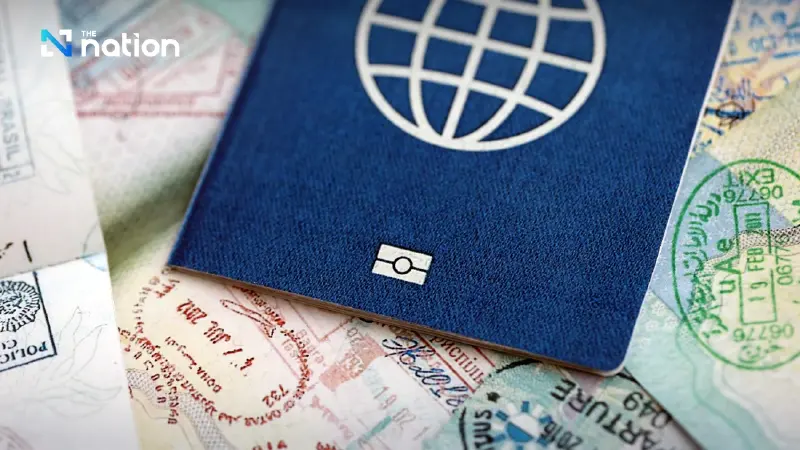


Thailand’s Foreign Ministry and Tourism and Sports Ministry have agreed to cancel the 60-day visa-free stay for nationals of 93 countries, with the proposal set to be submitted to the Cabinet next week.
Deputy Prime Minister and Foreign Minister Sihasak Phuangketkeow on Tuesday said visas came in many categories, adding that the 60-day visa-free period for tourists might be too long. He said some people may not be entering Thailand for tourism, but using the measure as a way to stay in the country, meaning it must be managed more carefully.
He added that the proposal to cancel the 60-day visa-free scheme had been prepared since the Anutin 1 government, but was postponed because of the election period. It now needs to be expedited, he said.
Under the process, the Cabinet Secretariat must seek opinions from relevant agencies. However, Sihasak said he believed there should be no problem, as the visa committee chaired by the Foreign Ministry already includes relevant agencies overseeing the issue.
“We are not targeting any particular country, but are looking at activities that may create problems for Thailand. Visas must be issued with an appropriate period for tourism, which should probably not exceed 30 days, and the criteria must be set in line with the intended purpose,” he said.

Tourism and Sports Minister Surasak Phancharoenworakul said the cancellation of the 60-day visa-free measure, known as P.60, for 93 countries, which has been in place since 2024, would be proposed to the Cabinet for consideration next week.
He said all agencies had agreed that allowing visitors to stay for too long did not meet the objective of tourism. At the same time, it created a loophole for ill-intentioned people to use Thailand as a base for criminal activity.
Once the P.60 measure is cancelled, the previous 30-day visa-free measure, or P.30, covering 57 countries, will immediately take effect in its place.
Countries not included in P.30 to be reviewed to support new tourism markets
Surasak said some countries not previously included in the P.30 list may have been left out, even though Thailand now supports tourism from those markets, has developed new diplomatic ties, or the Tourism Authority of Thailand has been promoting them as new tourist markets.
The government will therefore conduct a screening process with security agencies, taking into account diplomatic and tourism-economic impacts at the same time, to consider which countries should be included in the new P.30 list in line with current diplomatic considerations.

At the same time, some countries may be granted P.15, or 15-day visa-free entry, to ensure the measure genuinely serves tourism purposes while reducing crime risks.
Other visa categories, such as long-stay visas for medical treatment, education and other purposes, will not be affected.
“I have instructed the agencies to submit their recommendations in order to strike a balance between security and the tourism economy, so these views can be discussed at a joint meeting with all relevant parties,” Surasak said.
“Each matter will be considered based on suitability, with opinions sought from all sides, including the public sector, private sector and civil society, so that the resulting policy or recommendations truly come from those involved in tourism and sports.”
