
Train driver, barrier operator detained as SRT admits drug-screening gap after deadly bus crash
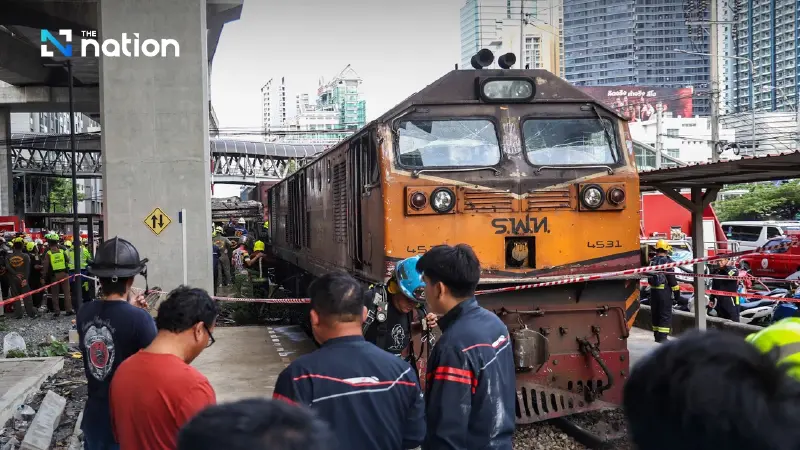


Makkasan police have sought court detention for the train driver and railway barrier operator in the fatal Asok-Din Daeng train-bus collision, while the SRT says a preliminary test found cannabis and methamphetamine in the driver’s system and admits drug screening was not routine before each shift.
Two railway staff face detention request over fatal collision
The State Railway of Thailand is preparing disciplinary action against a train driver involved in a collision with a public bus after a preliminary test found cannabis and methamphetamine in his system, while the agency admitted that narcotics screening for train drivers had not previously been conducted as a routine pre-duty check.
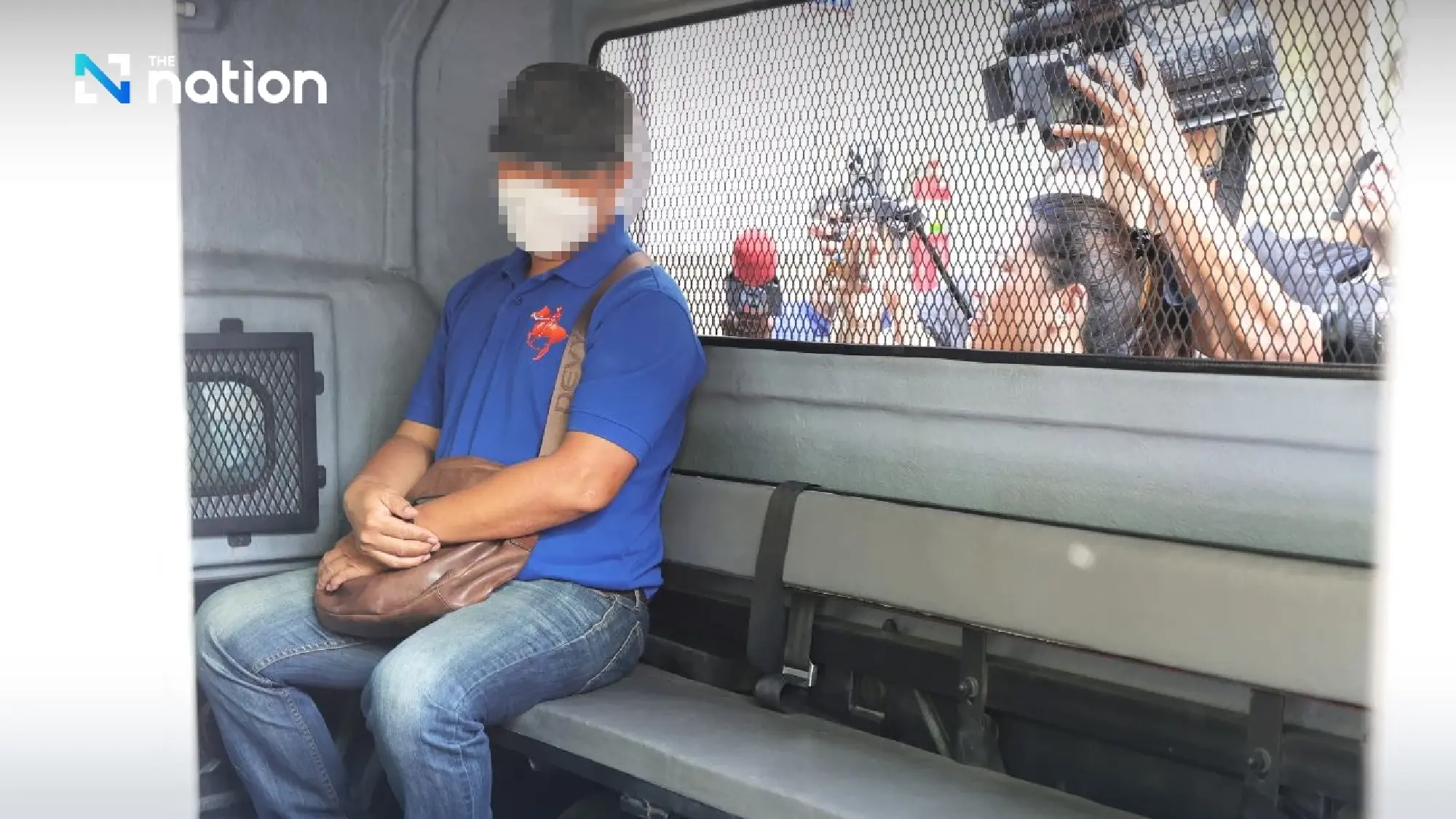
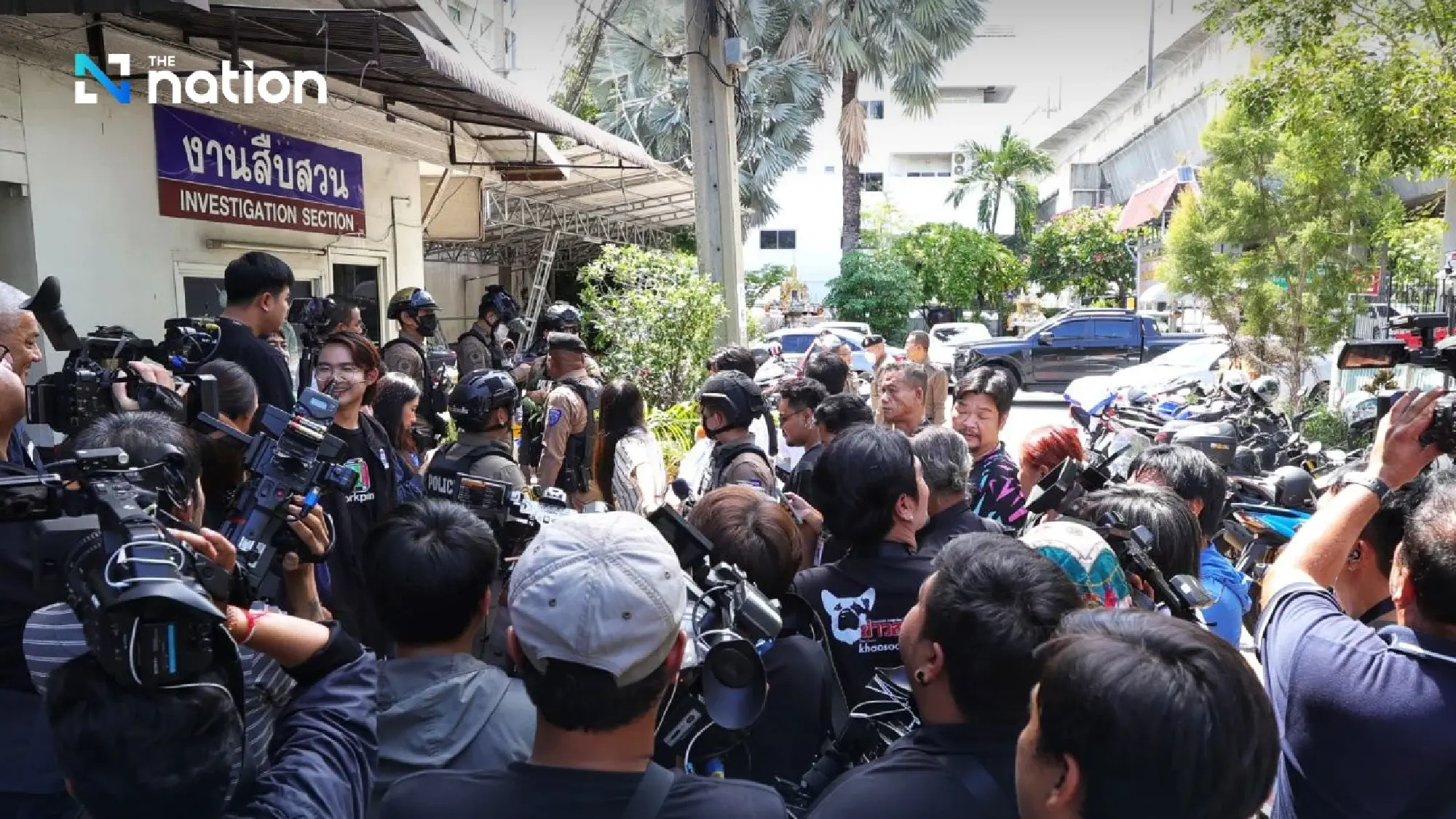
The case took a further turn on Monday (May 18) when investigators at Makkasan Police Station summoned two railway staff — Sayomporn, the train driver, and Uthen, the railway barrier operator — for questioning before taking them to the Criminal Court on Ratchadaphisek Road for detention proceedings. Local media reported that both face a charge of committing a negligent act causing death and serious injury in connection with the train-bus collision on Asok-Din Daeng Road, near the Airport Rail Link’s Makkasan station.
Police have opposed bail for both suspects. Khaosod reported that investigators objected to bail both at the inquiry stage and before the court.

Barrier operator apologises, denies negligence
While being taken into custody, Uthen apologised to the families of those killed and said he felt guilty over the incident. However, he insisted he had not been negligent, saying he had followed procedure by waving the red flag, pressing the button to lower the barriers and signalling for the train driver to stop.
Sayomporn, the train driver, kept his head down and did not answer reporters’ questions about why he had not stopped the train, whether he had seen the signal lights or flag signals, or about the physical examination that found narcotics in his system.


SRT says drug tests were not routine before each trip
Anan Phonimdaeng, acting governor of the State Railway of Thailand, said the SRT was preparing to consider disciplinary action against the train driver as a first step after preliminary test results found cannabis and methamphetamine, known in Thailand as yaba, in his system. However, the agency is still waiting for official confirmation from the hospital.
Anan said train drivers normally undergo alcohol testing and a basic health check before operating a service, with test results recorded. But drug screening had not been carried out before every trip. In the past, narcotics checks were conducted mainly through random testing of new staff and during health examinations.
Following the crash, the Department of Rail Transport ordered accelerated drug checks for all train drivers.
Driver passed alcohol check, licence process under review
According to the SRT, Sayomporn had worked as a train driver since 2023, or for about three years. Before the train operated on May 15, he underwent an alcohol test and no alcohol was detected.
On reports that the driver did not yet have a licence issued under the new rail-transport system, Anan said the SRT was in the process of applying for licences for all train drivers.
He explained that train-driving licences had previously been issued by the SRT itself. After the Rail Transport Act came into force on March 27, 2026, drivers were required to apply for licences through the Department of Rail Transport. The SRT has submitted the names of its drivers, and the department is processing digital licences individually.

Black box shows emergency braking 100 metres before impact
Anan said data from the train’s speed recorder showed that Train No 2126 travelled about 2.8 kilometres from Khlong Tan station to the crash site.
The train was travelling at an average speed of about 34 kilometres per hour, and emergency braking was applied only around 100 metres before the point of impact — too late to stop the train in time, according to the SRT.
He said a normal braking distance, including decision time, may be about 1,000 metres at a maximum speed of 120kph. The distance becomes shorter at lower speeds, but also depends on the train’s weight.
Barrier had not closed, so rail signal did not activate
Anan said train drivers normally follow signal lights installed along the railway line. At a level crossing, the railway signal works properly only when the road barriers on both sides are fully lowered.
In this case, he said, the barriers had not been lowered because traffic was blocking the crossing. As a result, the railway signal that the train driver would normally see did not activate. The driver was therefore required to observe hand or flag signals from the railway staff at the crossing.
Anan said a flag signal can normally be seen from about 300 to 500 metres away. Given the train’s average speed of 34kph, the driver should have observed that the barrier system was not fully in place and slowed down before deciding whether to stop, he said.
SRT also probes uniform issue and assistant’s role
The SRT is also investigating reports that the train driver was not wearing a uniform while on duty. Anan said that would not be normal practice, as staff are required to wear uniforms while working.
He said the train was operated by a driver and supported by a mechanic, who served as a technical assistant and helped observe signal lights and flag signals. The mechanic was injured in the crash but has been discharged from hospital and is expected to be questioned by both the SRT’s fact-finding committee and police.
Brief background: deadly crash at Asok-Din Daeng crossing
The accident occurred on Saturday (May 16) when a freight train collided with a public bus at a railway crossing on Asok-Din Daeng Road in Bangkok, close to the Airport Rail Link’s Makkasan station. Reuters reported that eight people were killed and 32 injured, with all fatalities on the bus.
Preliminary reports said the bus had stopped on the tracks at a red light, preventing the crossing barriers from closing. The freight train, which was carrying containers, was unable to stop in time. The crash sparked a fire and also involved nearby cars and motorcycles.
Police initially charged the train driver with negligence causing death, and investigators said they were examining whether additional charges should be brought. The bus driver was also expected to face charges once he recovered enough to be questioned.
