
Food service firms face staffing crunch as SSW freeze hits Japan
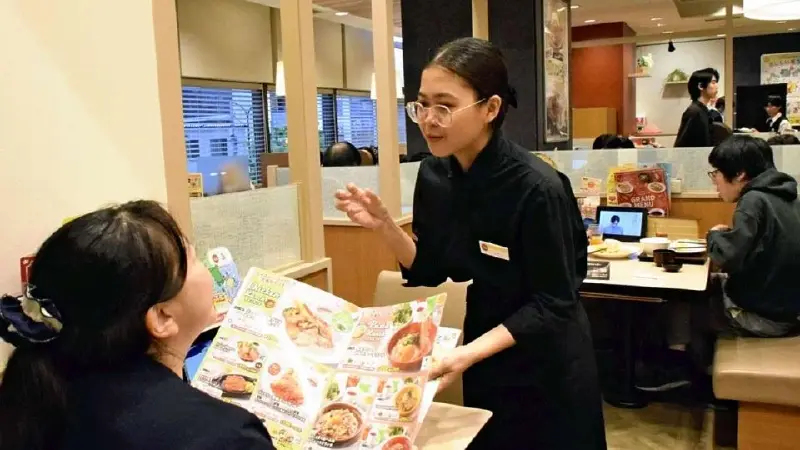


A halt on new SSW type 1 approvals for restaurants has disrupted hiring plans at Yudetaro, Skylark and other operators as the 50,000 cap nears.
- Japan has suspended the acceptance of new foreign workers for the food service sector under the Specified Skilled Workers (SSW) program because the industry is about to hit its 50,000-person quota.
- The sudden freeze has forced restaurant chains like Yudetaro and Skylark Holdings to halt or revise recruitment plans, disrupting their ability to hire international students as full-time employees.
- The policy change is expected to worsen chronic labor shortages, potentially leading to reduced business hours, declining service levels, and increased competition among companies for existing SSW workers.
- Industry groups are now urging the government to raise the worker limit, warning that the suspension will disrupt operations and could force companies to cancel store-opening plans
Japan’s food service operators are being forced to redraw recruitment and store-management plans after the government, in principle, stopped accepting new foreign workers for the sector under the Specified Skilled Workers (SSW) programme in mid-April.
The suspension was introduced because the number of SSW type 1 workers allowed in food service is expected to hit the sector’s 50,000 ceiling as early as this month. Type 1 is a residence status granted to people with specified expertise or skills, and restaurants have increasingly relied on such workers as they struggle with a chronic labour shortage.
For Yudetaro, the soba chain, the freeze has removed a key assumption behind future staffing. “We create store operation plans based on future hiring prospects,” said an official from the company that operates the chain. “Now, we don’t have such prospects, so we are very concerned.”
The company had planned to provide scholarships to 20 students from Myanmar in fiscal 2026, expecting that they would obtain SSW type 1 status and eventually be hired as full-time employees. With new acceptance in the food service sector now suspended, however, the company is unsure whether it will be able to employ them and has not yet decided how to deal with the international students.
Yudetaro has also been hiring more foreign nationals with SSW status for store work in recent years. The official said replacing those workers with domestic recruits may not be realistic. “There is no guarantee that we will be able to hire Japanese workers instead.”
Skylark Holdings Co has also had to put plans on hold. The company employs about 270 foreign workers with SSW type 1 status at Japanese family restaurant chains, including Gusto and Bamiyan. It had planned for about 30 international students already working part-time to take exams this year to obtain the status, with a view to hiring them later as full-time employees. The plan has now been postponed.
“There are many foreign workers interested in customer service and cooking, so it’s disappointing that their path to building a career has been cut off,” a company official said.
SSW type 1 was created in 2019 to bring skilled workers into industries facing labour shortages. It permits a maximum stay of five years. A separate type 2 status, which requires more advanced skills, can be renewed indefinitely.
Quotas for type 1 workers are set by sector. Food service is capped at 50,000 workers over the five years through the end of March 2029, a lower ceiling than in some other fields. Food and beverage manufacturing has a quota of 133,500, while nursing care is capped at 126,900.
The pressure has grown as demand from international visitors recovers following the COVID-19 pandemic. By the end of December, 43,869 type 1 workers had been accepted in the food service sector, a figure 8.5 times higher than three years earlier. Preliminary figures showed the total had reached 46,000 by the end of February, bringing it close to the limit.
As the number approached the cap, the government decided in March to suspend, in principle, the acceptance of new type 1 workers who would be employed in food service.
Shohei Sugita, a lawyer familiar with issues involving the employment of foreign nationals, said the abrupt change has made it difficult for companies to adjust. “Many companies create their human resource management plans on an annual basis, making it difficult for them to respond to sudden changes,” he said. “As a result, they are forced to operate their stores with limited staff, which could lead to long working hours and declining service levels, such as reduced business hours.”
Industry groups are urging action. The Japan Foodservice Association is preparing to ask the government to raise the limit. An association official said the suspension would worsen staffing problems and could force companies to revise store-opening plans. “Suspending the acceptance of type 1 workers will exacerbate the labour shortage and could lead to the revision of store opening plans. Also, a sudden revocation of job offers will undermine trust from foreign workers.”
Competition for existing type 1 workers is also becoming more visible. DAI, which operates pork-broth soy sauce ramen restaurants mainly in Aichi Prefecture, expanded its long-term leave system for type 1 workers in April so they can make temporary visits back to their home countries.
“By enhancing employee benefits, we aim to prevent current employees from quitting and attract type 1 workers from other companies,” a company official said.
More companies may also seek to make up for the shortage of foreign workers by improving working conditions and strengthening efforts to recruit Japanese employees.
Asia News Network
