
Sihasak warns Cambodia against raising bilateral disputes at UNSC
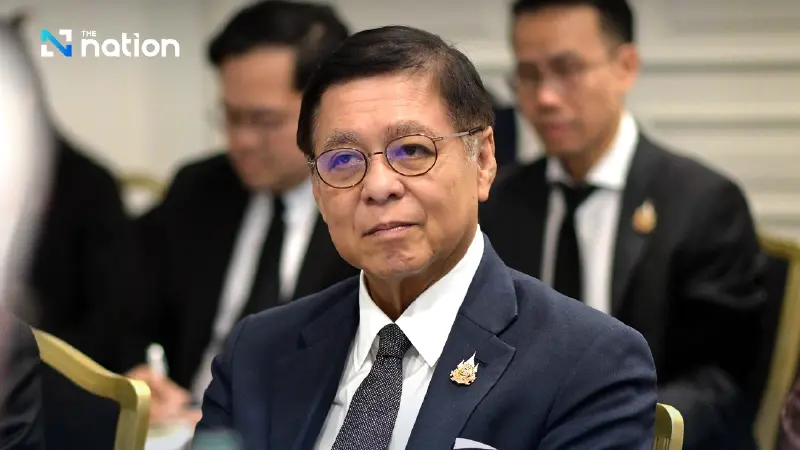


Thailand’s foreign minister has warned Cambodia against using international forums to attack Bangkok, saying the move could undermine efforts to rebuild trust.
Deputy Prime Minister and Foreign Minister Sihasak Phuangketkeow has urged Cambodia to stop using international platforms to attack Thailand, warning that such moves could undermine recent efforts by the two countries’ leaders to rebuild trust and improve ties.
Speaking on Sunday (May 24) after completing his mission with Prime Minister Anutin Charnvirakul during an official visit to France, Sihasak said he would travel on to New York at the invitation of Chinese Foreign Minister Wang Yi to attend a special meeting of the United Nations Security Council (UNSC), which is currently chaired by China.
Sihasak had held talks with Prak Sokhonn, Cambodia’s deputy prime minister and foreign minister, to follow up on the direction agreed earlier by Anutin and Cambodian Prime Minister Hun Manet during the ASEAN Summit in Cebu, the Philippines, on May 7.
According to Sihasak, both leaders had agreed to create a more constructive atmosphere, improve relations and rebuild mutual trust as a starting point for addressing shared problems, including land and maritime boundary issues.
However, he expressed deep concern over Cambodia’s latest stance, saying it was inconsistent with that understanding.

Thailand objects to Cambodia’s UNSC remarks
Sihasak said Keo Chhea, Cambodia’s ambassador and permanent representative to the United Nations in New York, had used the May 21 UNSC open debate on “Protection of Civilians in Armed Conflict” to raise bilateral issues and criticise Thailand.
He said the Cambodian representative had accused Thailand of encroaching on Cambodian territory and had referred to the impact of the conflict.
Sihasak said such conduct went against the joint statement of December 28, 2025, under which both countries had agreed to resolve problems through internal dialogue and avoid escalating bilateral issues on international platforms.
“At this point, we need to speak to each other sincerely, and Thailand has come with that approach because the leaders have already spoken. It should not be a case of saying one thing and doing another,” Sihasak said.
“We need to look ahead. I would like to say, with concern, that I hope Cambodia will change course and look to the future by working with Thailand to create a better atmosphere and build trust, so that we can address problems that are not easy to solve and cannot be resolved in a single day. Time is needed, and many more rounds of talks will be required.”
Thailand points to UNCLOS on maritime boundary talks
Sihasak also reiterated Thailand’s position on maritime boundary issues, saying the current approach did not amount to a return to the old bilateral negotiation format.
He said Thailand had already announced the cancellation of the 2001 memorandum of understanding on the overlapping maritime claims area between Thailand and Cambodia, widely known as MOU 44.
As both Thailand and Cambodia are parties to the United Nations Convention on the Law of the Sea (UNCLOS), Sihasak said future discussions should first be conducted within that international legal framework to explore possible ways forward.
If no conclusion can be reached under UNCLOS, he said other international mechanisms could then be considered, including compulsory or voluntary conciliation. However, he said both sides should first try to discuss the matter rather than assume that bilateral talks would be of no benefit.
Asked what Thailand would do if Cambodia continued to criticise Thailand on the global stage, Sihasak said the matter depended on Cambodia’s actions.
If Cambodia maintained such conduct, he warned, the understanding reached by the two leaders in Cebu would not be able to move forward. That, he said, would harm both sides, particularly efforts to improve the situation and build better relations.
“Everything now depends entirely on Cambodia,” he said.
