
Why are Chinese-language apps drawing public suspicion?
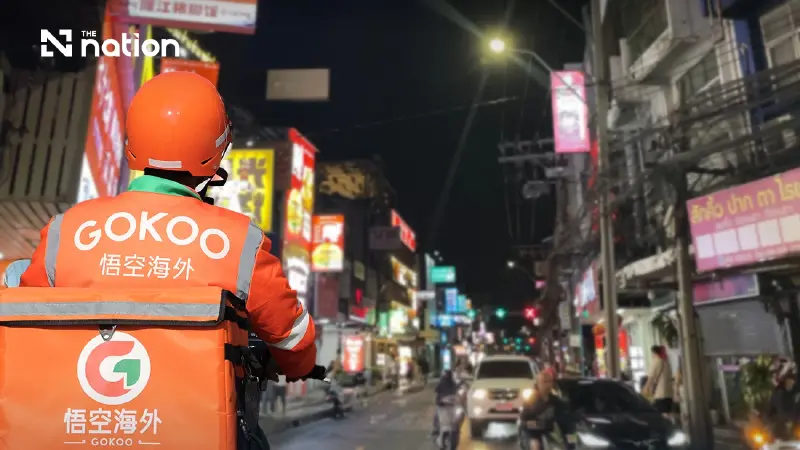


Public scrutiny over Chinese delivery apps is intensifying after an alleged restaurant in Huai Khwang, prompting wider questions about closed-loop businesses and ownership structures.
Social media posts showing a rider working for a Chinese-linked delivery platform have also ignited suspicions about the platform's legality in Thailand, with some questioning whether the company complies with foreign ownership under Thai laws.
A Thai-Chinese affairs expert urged the Thai government on stricter law enforcement and transparent investigations, ensuring foreign investment benefits Thailand in order to address concerns over closed-loop business networks.
Pagon Gatchalee, deputy secretary of the Thai-Chinese Journalists Association and the writer behind the Facebook page Ai Zhong, said such Chinese applications are designed to only serve the growing number of Chinese residents, investors and visitors in Thailand and overseas.

By offering services in Chinese, they reduce language barriers and make it easier for newcomers to navigate daily life.
One example drawing public attention is Gokoo, which has grown beyond food delivery into a one-stop lifestyle platform offering tourism, property, medical and visa services in mainly Chinese language for Chinese communities overseas.
How one social media post sparked scrutiny
A Thai netizen pointed out an unfamiliar uniform and no license plate on a Facebook group of delivery posts.
The rider was identified as working for Gokoo Food, a Chinese-language delivery platform operating in Thailand through a joint venture involving Thai and Chinese companies.
While the online discussion focused on the rider and the missing licence plate, it has expanded into broader questions about whether Chinese-language platforms fully comply with Thai law, which agencies oversee them, and how rider employment, company ownership and platform operations are regulated.
The app is widely used in Bangkok districts with large Chinese communities, including Huai Khwang, Ratchada and Sutthisan. It also operates in Pattaya, Phuket, Chiang Mai, Rayong and several other provinces.
Gokoo is not a new entrant to the Thai market, nor is it the only Chinese-linked platform operating in the country.
Two other Chinese-language delivery and lifestyle platforms, E-GetS and Feixiang, also operate in Thailand, although Feixiang is no longer considered a major player.
Foreign ownership under scrutiny
Under Thailand's Foreign Business Act, foreign investors are generally restricted from holding more than 49 percent of shares in certain businesses.
As a result, the issue has recently drawn the attention of the Department of Business Development (DBD), which is investigating three Thai-registered Chinese-language food delivery platform operators over possible violations involving foreign ownership and nominee shareholding.
According to DBD, initial checks found that Gokoo and Feixiang have Thai shareholders holding more than half of their shares.
Meanwhile, E-GetS has a foreign-majority ownership structure through a Cambodian juristic person holding 90 percent of its shares.
The company has received Board of Investment promotion and a foreign business operation certificate, but authorities are continuing to examine its investment source, management control, authorised signatories and shareholder relationships.
No wrongdoing has been confirmed.
Pagon said authorities have the right to investigate businesses if there are concerns over nominee shareholding arrangements, adding that such inspections should be viewed as part of normal law enforcement rather than unfair accusations.
“It is Thailand’s right to do so to investigate further. I believe that if this happens in China, the Chinese authorities will be even more intense than what Thailand does”, Pagon added.
Gokoo clarifies its business operations
In response to the public scrutiny, Gokoo said it operates in full compliance with Thai law.
The company said all payments on its platform are made in Thai baht, that it employs only Thai workers, and that it is registered as a Thai legal entity under Gokoo Online Co., Ltd. with a registered capital of 30 million baht.
Addressing the viral image of a rider on a motorcycle without a license plate, Gokoo apologised for any cases involving obscured or missing license plates.
The company said it has launched an internal investigation and is taking corrective action against any violations.
BOT responds to RMB payment concerns
The Bank of Thailand said all regulated payment service providers are required to provide payment services only in Thai baht. The central bank also reported that between February 2025 and May 2026, at least 5,000 accounts used for yuan transfers through person-to-person QR codes were suspended.
Although Thai language was selected as the interface language, much of the app remained in Chinese.
The review also found that many of the listed restaurants appeared to be Chinese restaurants located in Bangkok districts with large Chinese communities, including Huai Khwang.
Pagon said the growing number of Chinese apps and businesses entering Thailand, as well as other countries in the region, reflects their recognition of the market's potential.
“The government should seize this opportunity to strengthen the economy by attracting investment and spending from this group, while also ensuring proper inspections and regulatory oversight. That will help maintain fairness and transparency, and ensure these investments generate long-term benefits for Thailand's economy," Pagon opined.
Gokoo also said in its statement that it plans to introduce additional language options for users.
Thais fear of Closed-loop business networks
Pagon said many Chinese residents and visitors prefer an ecosystem similar to what they are accustomed to in China, allowing them to adapt more easily while living or travelling abroad.
However, he said the growth of these services has also reignited concerns among some Thais that Chinese businesses are creating self-contained business networks with limited integration into the broader Thai economy.
"This has raised questions among Thais about how much these business networks contribute to Thailand's economy and what impact they could have on the country's long-term economic development," Pagon said.
Thailand has faced similar concerns before.
The "zero-dollar tour" cases were among the country's most prominent examples of concerns over closed-loop business models in the tourism sector.
More recently, controversy surrounding a Chinese restaurant in Huai Khwang that allegedly refused Thai baht payments added fuel to the debate, with some Thai entrepreneurs expressing concern that revenue generated within such business networks may circulate primarily within those networks rather than the wider economy.
While public attention has focused on Chinese-language platforms, the issues under investigation concern ownership structures, sources of investment and whether Thai shareholders are acting as nominees for foreign investors, rather than the use of the Chinese language or services targeting Chinese communities.
