
Dairy farmers urge government action over raw milk glut after milk powder imports
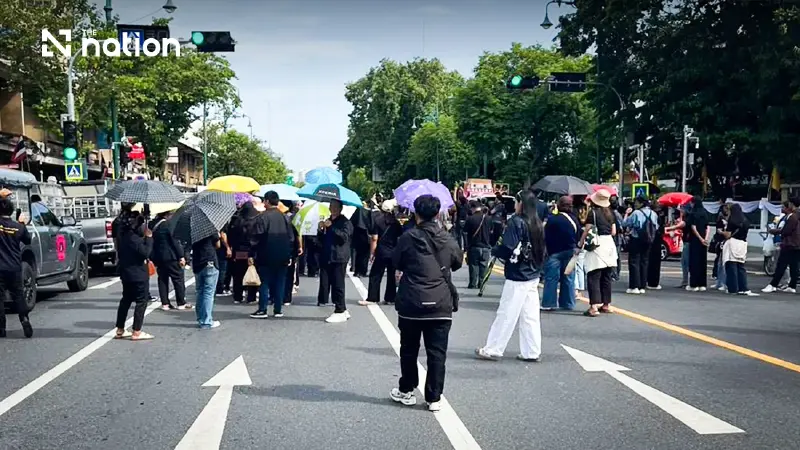


Representatives of 60 dairy cooperatives and more than 2,000 farming families have petitioned Prime Minister Anutin Charnvirakul, seeking urgent action on falling raw milk prices, payment delays and milk powder imports.
At Government House today, July 14, 2026, Apai Suttisang, Deputy Permanent Secretary of the Ministry of Agriculture and Cooperatives, together with ministry officials, met representatives of the Dairy Cooperative Federation of Thailand Ltd, chairpersons of 60 dairy cooperatives nationwide, and dairy farmers representing more than 2,000 families.
The group travelled to Government House to submit a petition to Prime Minister Anutin Charnvirakul, reflecting the hardship faced by Thai dairy farmers.
They also staged a road blockade to pressure the government to resolve the problem of excess raw milk in the market.
The raw milk oversupply emerged after the implementation of the Thailand-New Zealand Closer Economic Partnership Agreement (TNZCEP) and the Thailand-Australia Free Trade Agreement (TAFTA) from January 1, 2025.
The farmers said the agreements had led to large volumes of milk powder being imported into Thailand. As a result, farmers have been unable to sell raw milk, raw milk prices have fallen, dairy cooperatives have faced lower liquidity, and debts owed to farmers and financial institutions have increased.
Some industrial operators have also reduced purchases of raw milk from Thai farmers.

The Dairy Cooperative Federation of Thailand submitted four demands to the government:
1. Delay skimmed milk powder import approvals
The group asked the government to postpone consideration of skimmed milk powder imports for 2026, second round, under the TNZCEP, TAFTA and WTO commitments until the full volume of Thai farmers’ raw milk under the 2025/2026 memorandum of understanding, amounting to 211 tonnes per day, has been completely sold.
They also called for the government to urgently complete the 2026/2027 raw milk purchase MOU by August 2026, with a single nationwide purchase price.
2. Expand the school milk programme
The group asked the government to expand the 2027 academic year school supplementary food, or milk, programme so that students from kindergarten to Mathayom 3 can receive milk.
They also asked for the number of milk-drinking days to be increased from 260 days per year to 365 days per year, in order to improve nutrition among Thai children and strengthen security for dairy farmers and Thailand’s dairy industry.
3. Resolve overdue raw milk payments
The group called on the government to urgently address the problem of operators failing to pay farmers for raw milk, particularly cases involving the Dairy Farming Promotion Organisation of Thailand and private-sector operators.
They asked the government to introduce measures to accelerate follow-up action and protect farmers’ rights so that they receive payment for raw milk as soon as possible.
4. Improve milk product labelling rules
The group asked the government to revise labelling criteria for dairy products so that there is a clear distinction between products made from fresh cow’s milk, using raw milk from Thai farmers, and products made from imported milk powder.
They said clearer labelling would ensure consumers receive accurate and transparent information, allowing them to choose products that support raw materials produced by Thai farmers.
Source: Thansettakij
