
Indian passenger arrested with 6kg etomidate at Suvarnabhumi
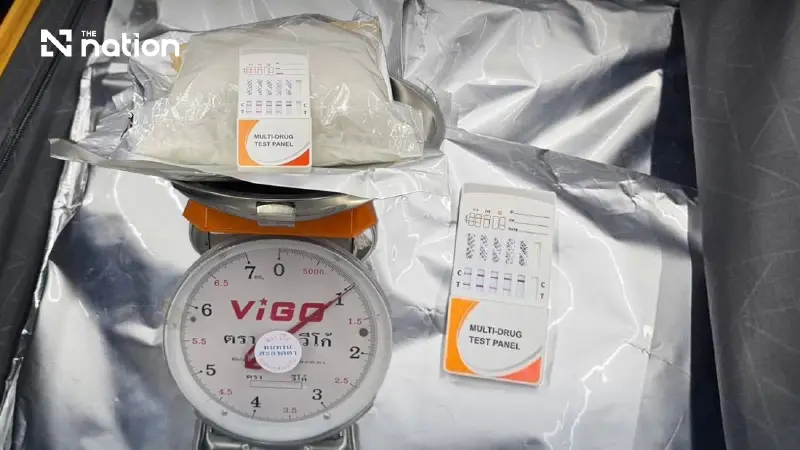


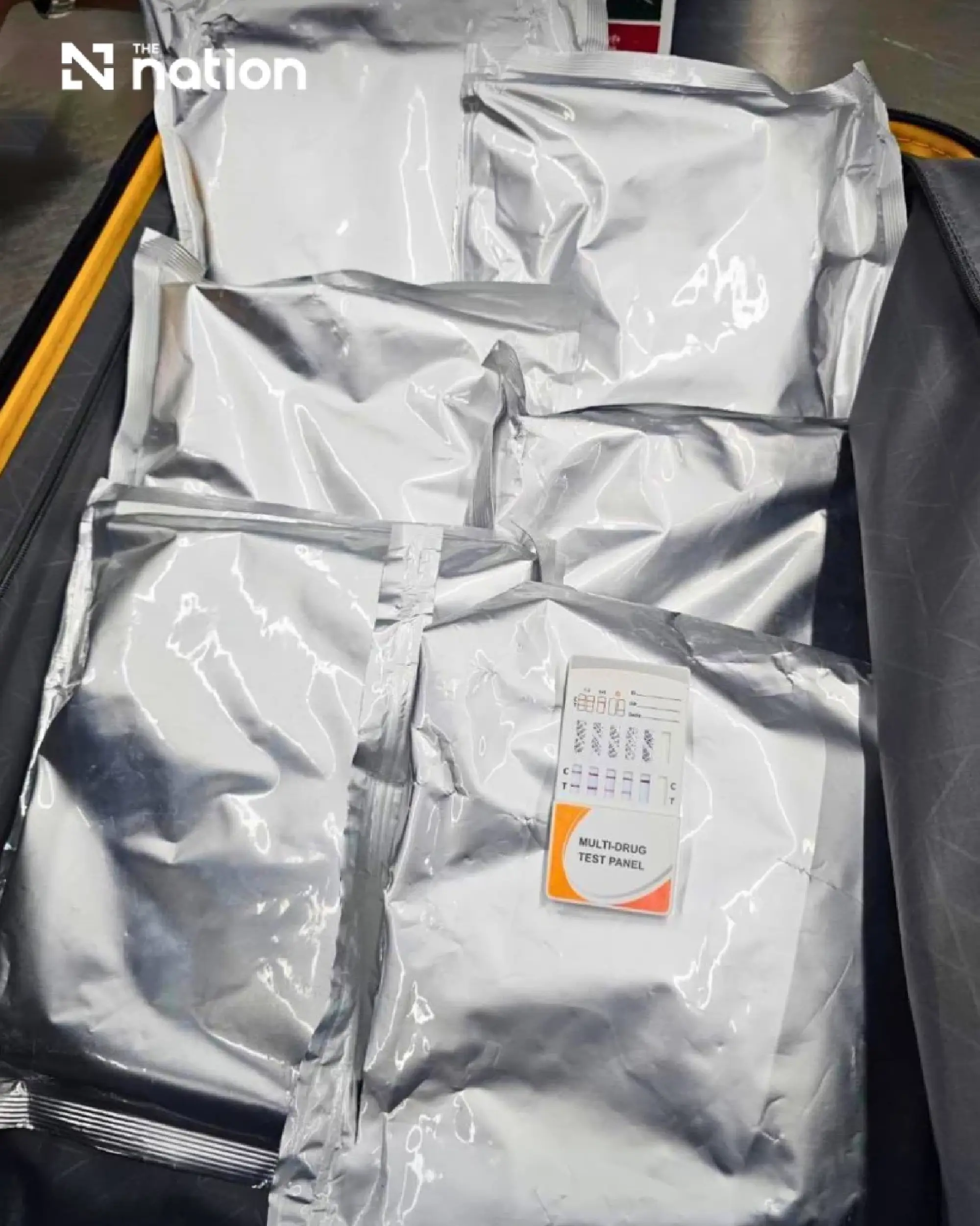
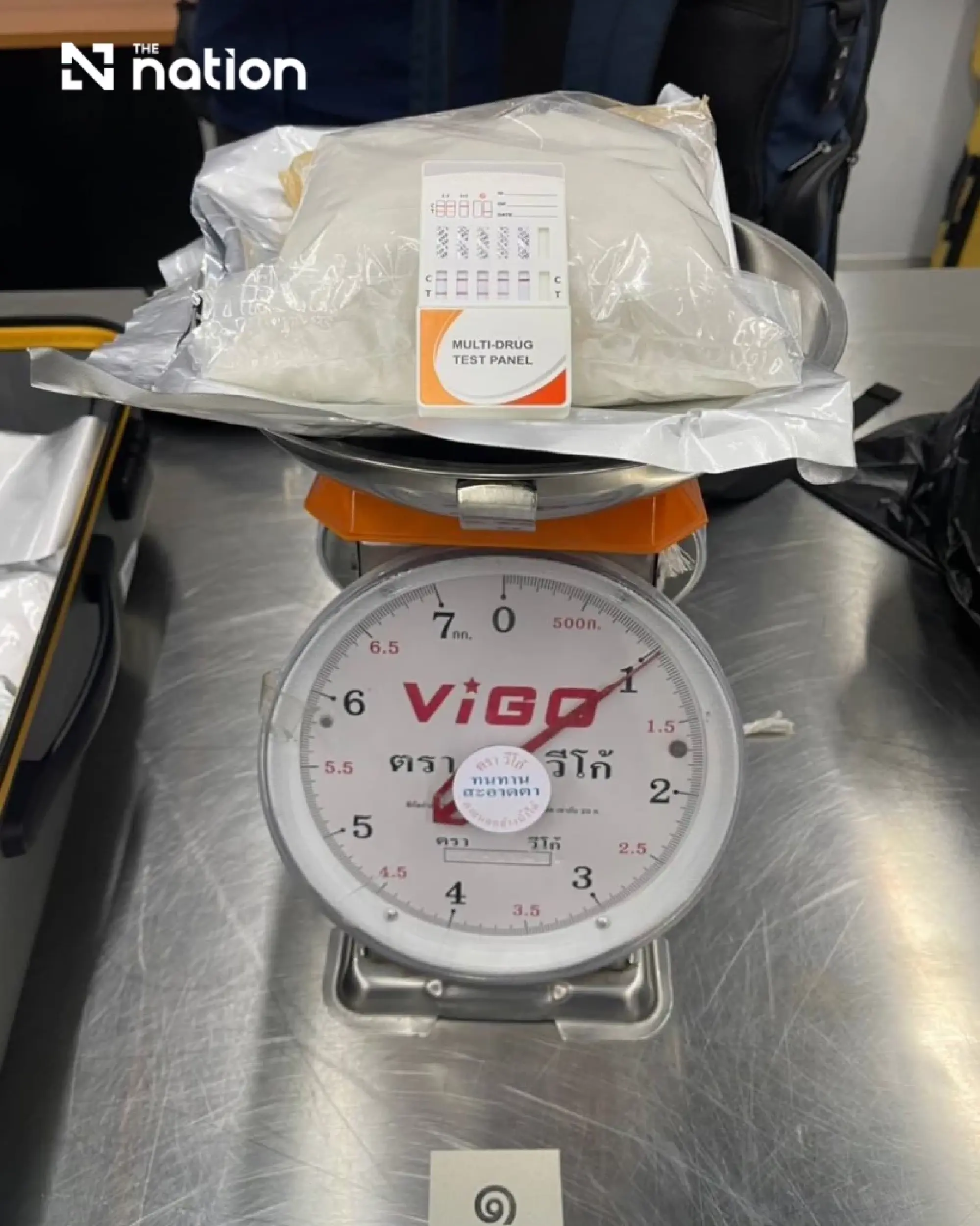
Customs officers arrested an Indian passenger arriving from Mumbai after finding 6kg of etomidate worth more than 4.2 million baht at Suvarnabhumi Airport.
Customs officers arrested an Indian passenger at Suvarnabhumi Airport on July 24 after finding about six kilogrammes of etomidate, a controlled anaesthetic classified as a Category 2 psychotropic substance.
The man had arrived from Mumbai, India, with Suvarnabhumi as his final destination. The substance weighed approximately 6,000 grammes including its packaging and was valued at more than 4.2 million baht, according to the Customs Department.
Officers from the Suvarnabhumi Airport Passenger Control Customs Office conducted the search with the airport’s Investigation and Suppression Division.
Authorities said the alleged import violated Thailand’s Narcotics Code, the Customs Act of 2017 and other relevant laws.

Customs tightens checks across entry routes
Customs director-general Phanthong Loykulnanta said the department had intensified surveillance and enforcement at airports, border checkpoints and postal parcel channels across the country.
The operation followed instructions from Prime Minister and Interior Minister Anutin Charnvirakul and Deputy Prime Minister and Finance Minister Ekniti Nitithanprapas to strengthen drug prevention and suppression.
Customs is working with other agencies to intercept the import, export and transit of controlled substances through every available route, Phanthong said.
The department is also seeking to prevent Thailand from being used as a transit point for illicit substances.

Etomidate found in ‘zombie’ vape liquids
Etomidate is a fast-acting, short-duration anaesthetic intended for use in medical settings.
It was previously classified as a specially controlled medicine, but was reclassified in late July 2025 as the 45th substance on Thailand’s Category 2 psychotropic-substance list, placing it in the same legal category as ketamine.
Customs said etomidate was increasingly being mixed into e-cigarette liquids commonly known among users as “zombie cigarettes” or “K-pods”.

The substance acts rapidly on the brain and may initially cause dreamlike sensations, detachment from reality and euphoria.
Larger amounts can cause an irregular heartbeat, seizures, temporary paralysis, respiratory depression, unconsciousness or fatal shock, the department warned.
Phanthong urged the public, particularly young people, to recognise the serious risks associated with e-cigarettes containing controlled substances and warned that their effects could be life-threatening.
